
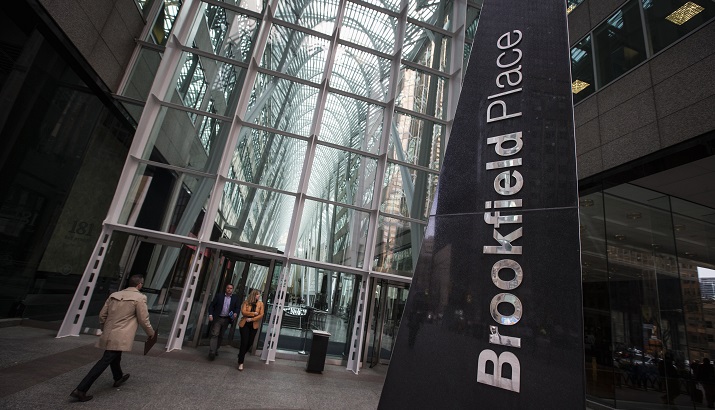
New Delhi, July 6 -- Canadian alternative investment firm Brookfield Asset Management Inc, which manages a diverse portfolio in India across real estate, infrastructure, renewable energy, private equity and private credit, and has made a name with big ticket deals, has made at least its fifth liquidity move from its India portfolio this year.
The investment firm has offloaded nearly a fifth of its remaining 34.3% unitholding in Energy Infrastructure Trust (EIT) through open market transactions, stock exchange data show. It sold 6% ownership interest for Rs 302 crore ($32 million).
This comes just over a month after it divested 4.58% in the infrastructure investment trust (InvIT) for Rs 231.34 crore (around $24.3 million).
In March, Brookfield had sold another small chunk of the InvIT for Rs 143.9 crore ($15.2 million).
Brookfield owned a 41.9% stake in the InvIT at the end of December last year. This fell to 38.9% at the end of March and has now come down to around 28.3% after the latest sale.
The Canadian firm has made two other liquidity moves from its India portfolio this year, both from green energy company CleanMax Enviro Energy Solutions Ltd, which made its stock market debut via a Rs 3,100 crore initial public offering (IPO) in February. Brookfield first sold shares worth Rs 796 crore in a pre-IPO round in the same month and then offloaded shares worth Rs 904 crore during the IPO itself.
It also sold units of telecom tower operator Altius.
The Canadian investor had trimmed its holdings in EIT last year, too. It offloaded a 33.1% stake worth more than $200 million in EIT in multiple tranches in September last year to several investors including IIFL Management Services, Ambit Wealth, Edelweiss Tokio Life Insurance, Star Health, Tara Emerging Asia Liquid Fund, Trust Investment Advisors, 360 One, Balkrishna Industries, LGT Wealth India and Future Generali India Life Insurance.
Back then, it first sold a 25.5% stake worth Rs 1,388 crore and then followed it up by selling more units worth Rs 306 crore and Rs 108 crore in two subsequent tranches within the same month, bringing its stake down from 75% to 41.9% in the InvIT.
Brookfield had also monetised its investment in 2021-22 selling units worth Rs 631 crore ($90 million then).
The Canadian investor has pulled out over $360 million to date via sale of its units and its remaining units are worth $155 million. But the real returns have come from dividend payments by the InvIT. Brookfield is estimated to have pumped out over $700 million via quarterly payouts, taking total harvest of $1.05-1.1 billion.
Besides Brookfield, other major investors in the InvIT include ICICI Prudential Mutual Fund, Bank of Baroda, Axis Max Life Insurance, Tata Investment Corporation, and QRG Investments.
The BSE-listed InvIT, currently trading around Rs 78 per unit, has a market capitalisation of Rs 5,172 crore.
Brookfield made several other monetisation moves from its India portfolio last year. It sold a part of its stake in The Leela hotel owner Schloss Bangalore Ltd via an IPO and offloaded a 1.6 GW portfolio of renewable energy assets to Malaysia's Gentari. It also sold a 50% stake in a real estate asset and pulled out more than $100 million from a real estate investment trust.
EIT's assets
EIT operates a gas pipeline linking India's east and west coasts and that is connected to state-run gas distributor GAIL (India) Ltd's network. The pipeline runs from Kakinada, Andhra Pradesh, to Bharuch, Gujarat. The InvIT fully owns Pipeline Infrastructure Ltd (PIL), a special purpose vehicle that acquired the East West Pipeline from Reliance Industries Holdings Pvt Ltd in 2019.
PIL entered into a pipeline usage agreement with Reliance Industries. Under the agreement, Reliance has contracted capacity on the pipeline for 20 years, ensuring steady cash flow to PIL even if actual revenues fall due to lower gas volume or tariffs. Reliance can utilise any unutilised capacity payments made under the contract in future, and will participate in upside sharing if actual capacity charges under the gas transportation agreement exceed contracted capacity payments in a fiscal year.
Published by HT Digital Content Services with permission from VC Circle.