
New Delhi, July 3 -- Mumbai-based ValueQuest Group, which expanded into the private equity space in 2023, is doubling down on its bets on India's manufacturing and industrial sectors. Earlier this year, the firm increased the target size of its ValueQuest Tristar Fund, which was launched last year.
The firm had initially targeted a corpus of Rs 600 crore ($70 million then), with a Rs 400-crore greenshoe option. It has since raised the target corpus of the Category-II alternative investment fund (AIF) to Rs 1,500 crore, along with a Rs 500-crore greenshoe option. The fund invests in sectors such as aerospace, defence, precision engineering, manufacturing and energy transition, backing businesses that stand to benefit from shifting global supply chains and India's industrial push.
The fund marked its first close in June last year after securing Rs 563 crore in commitments from limited partners (LPs). While it initially planned to invest Rs 60-125 crore per company, it has now increased the cheque size to back portfolio companies.
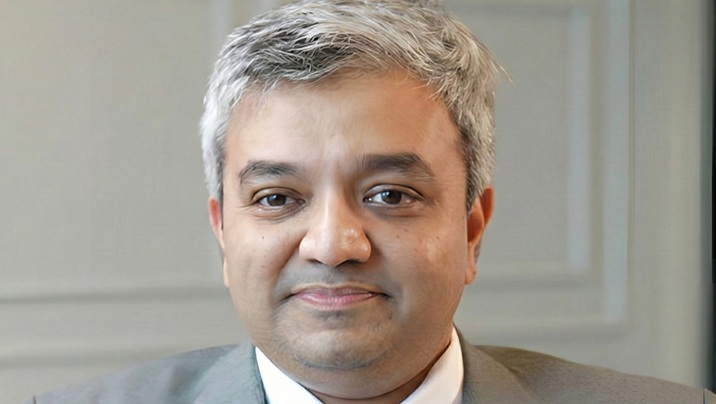
In an interaction with VCCircle, Arvind Ananthanarayanan, managing director and fund manager of ValueQuest Tristar Fund, discusses why the fund was upsized, its investment strategy, and the sectors it is bullish on. Edited excerpts:
How has the strategy for the fund evolved, especially after it was upsized?
The thesis of the fund is based on the understanding that there is substantial confluence of AI, geopolitics, supply-chain fragility, and energy shocks. All of these are playing into each other, creating an industrial capex cycle, or maybe a supercycle, which is likely to last several decades. Aerospace and defence form the cornerstone of this entire theme.
As we went into the fund deployment cycle and started speaking to companies, we realized there would be further rounds where they will need more capital. The demand is strong and this is a window in time. If they can capture this window, there will be substantial upsides.
It was possible to tie up larger amounts of capital. There was also an overwhelming response from our LP base, no doubt also due to the platform and brand name. These themes resonate well with the informed investor. The combination of demand and supply meant that we upsized the fund from Rs 1,000 crore to Rs 2,000 crore, comprising a corpus of Rs 1,500 crore and a greenshoe of Rs 500 crore.
What does the LP base look like?
It is mostly domestic. There are also HNIs, but we are also looking at a few institutions, but largely it is domestic capital.
So far, how much of the capital has been deployed, and how many investments have you made?
There have been three investments, and a couple more are in advanced stages of discussion. For these three, there will probably be follow-up rounds of funding.
Are you eyeing a larger cheque size than previously planned?
The cheque size now would range from Rs 100 crore to Rs 220-250 crore (over the course of the fund). This aligns well with the previous point about companies requiring a larger corpus of capital to support their growth journey and the supply-demand mismatch, which they're seeing in their respective fields.
Why operate in this cheque-size range? What kind of companies are you looking at?
We look to invest in companies that are 36-60 months away from a potential public listing. We take that size scale because when we enter these companies, there is a proven product-market fit, established unit economics and customer relations, at least for the initial bunch of trials that are in place.
Our job is to help the company grow with our capital. However, it's not just money. We also provide checks and balances, and contribute on the board. We participate in M&A discussions, identify and make robust the second line of management in these companies such as CFOs and other key hires. We also help improve financial controls and reporting standards to prepare the companies for listing.
We don't make venture capital-style bets on businesses with unproven unit economics or loss-making enterprises. In that sense, we are a late-stage growth vehicle. However, we recognize that some of these companies/sectors are not at a stage where they have the same level of maturity as consumer or financial services businesses.
How much stake do you aim for?
Our sweet spot is companies with market capitalization of around Rs 1,000-2,500 crore. These are all engineering-led businesses. If you look on the basis of EBITDA, it would be anywhere from Rs 50 crore to Rs 150 crore.
We take up a substantial minority stake, anywhere between 10% and 20%, but never exceeding 25%.
What other factors do you look for before investing?
Corporate governance standards and internal reporting. All of this should be very clearly maintained and met. If that is not the case, then no matter what value accrues, as a minority shareholder, you may not end up getting it at any cost.
The second thing that we are careful about is how well the promoter is willing to delineate control. If the promoter wants to be the nodal nerve centre as the company grows, it is not going to work out.
We want a promoter who is fair in their dealings because the aerospace industry, in particular, is a very small ecosystem. If you get your name besmirched with one OEM, sooner or later, it will affect your relationships elsewhere. We are careful about the kind of people we invest in.
Our philosophy is: dhanda, banda, bhaav (business, promoter, valuation). We want good businesses, with good unit economics, some kind of IP, an ability to manufacture using tribal knowledge, and the ability to expand scope. We speak about valuations, and get in at a fair valuation, because it is very unlikely that someone will give a good company, run by a good promoter, for a song and a dance.
Which subsectors or themes are you most excited about? How is the industry evolving?
Firstly, we are investing in manufacturing businesses. In the aerospace industry, we like players who address the engine market and critical component suppliers such as manufacturers of tubes, ducts, radiators, and heat-exchanger solutions. In defence, we like companies producing critical parts.
As we are on the foothills of growth in the sector, we are confident that growth will cover for everything here. This is India's moment. If at this time, promoters get left behind due to either error in governance or an inability to raise funds, there are others waiting to fill the breach.
How many companies do you plan to have in the portfolio? How much capital have you reserved for follow-on investments?
The range will be around 8-12. If our existing portfolio companies require more capital, it will be closer to eight. If they are well capitalized and we have to look for other companies, it could go up to 10. If there are a few highly promising companies with very little capital demand, we might end up with 11-12 companies.
What is the current status of the fund? How much have you raised and when do you expect the final close?
We have raised nearly Rs 1,850 crore of the Rs 2,000-crore target for the Tristar Fund. We aim to reach the final close over the next three months.
Published by HT Digital Content Services with permission from VC Circle.