
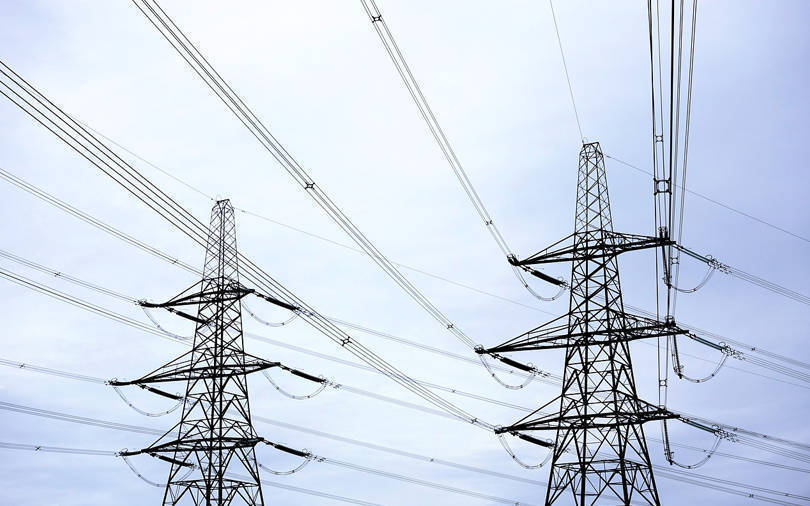
New Delhi, July 9 -- About a half-dozen states in India are looking to monetise their roads and power infrastructure assets through infrastructure investment trusts (InvITs), taking a cue from the central government-owned companies that have adopted this route, a senior industry executive told VCCircle.
Until now, states have only monetised a few road assets-all through the toll-operate-transfer mechanism-even though InvITs was one of the monetisation routes included in the National Monetisation Pipeline announced in the FY22 budget. Meanwhile, the central government-owned National Highways Authority of India (NHAI) has monetised many of its assets through the National Highways Infrastructure Trust (NHIT) and Raajmarg Infra Investment Trust (RIIT). Similarly, the central government-owned transmission utility Power Grid Corp has floated the Powergrid Infrastructure Investment Trust to monetise its assets.
Now, states such as Rajasthan, Maharashtra, Gujarat, Uttar Pradesh and Madhya Pradesh are actively exploring InvITs as a way to monetise their infrastructure assets, which are largely roads and power transmission networks, according to NS Venkatesh, CEO of Bharat InvITs Association.
The association was also in discussions with the Tamil Nadu government, but those talks were with the previous government and the talks would have to be resumed with the new administration, he added.
Venkatesh said he expected at least one state to come out with an InvIT this fiscal year and the others to follow soon.
"We are in discussions with the state governments to identify the assets that can be monetised through InvITs and the structure through which this needs to be done, that is whether it is should be through existing InvITs [which would then bid for the assets] or be by setting up a separate InvIT for the state government," he said.
The states have now started discussing this possibility with the top law firms and investment bankers, he added.
Bharat InvITs is an industry association that works to promote InvITs across various sectors such as roads, power transmission, telecom towers, supply chain, warehousing, pipelines and energy generation.
These discussions have been ongoing for the past few months after the association approached the states with a proposition to monetise their assets through the InvIT route.
The InvIT advantage
Venkatesh said that, during the discussions, the industry group pointed out the states can gradually move brownfield projects into InvITs and recycle the capital raised from the InvITs to develop greenfield projects.
"We also pointed out that the infrastructure asset only gets transferred as a concession and that, at the end of the concession period, the asset goes back to the government. So, the government does not lose control over that particular asset," he said.
While Venkatesh didn't have an exact figure on the value of state-owned assets that could be unlocked through this route, he said that the association estimates that these could come to around Rs 2 trillion.
These assets could accelerate the growth of the industry, from 18-19% to 21-22% on an annualised basis, he said, adding that the states' entry into could give investors more confidence in the asset class.
Venkatesh, however, said that two wrinkles need to be ironed out before states can float InvITs-identifying assets that can generate operating cash flows, since InvITs are mandated to have 80% of their assets to be income-generating, and standardising the bidding process to accommodate the industry practices.
"The bidding process has been standardised through the NHAI's process, so that template can be taken," he said.
Meanwhile, large institutional investors such as pension funds and insurers and high-net-worth individuals are showing a lot of interest in investing in state-sponsored InvITs.
"There is tremendous interest," said Venkatesh, adding that this can be evidenced from the 14x oversubscription for the maiden public issue of the NHAI-sponsored Raajmarg Infra Investment Trust.
Published by HT Digital Content Services with permission from VC Circle.