
New Delhi, June 1 -- India's REIT market has evolved significantly over the years, with six REITs currently listed and more expected to hit the market. As the sector matures, investor awareness has increased, broadening the appeal of this hybrid financial instrument that combines features of both debt and equity.
K Raheja Corp-backed Mindspace Business Parks REIT, which was listed in 2020, recently reported its quarterly earnings and business updates. The trust has undertaken back-to-back acquisitions while recording growth in leasing activity and distributions per unit (DPU). Mindspace REIT has rapidly expanded its presence in Chennai over the past few months through a series of acquisitions, including the $321-million purchase of International Tech Park Chennai (ITP Chennai), Radial Road, from CapitaLand Investment in partnership with 360 ONE Asset.
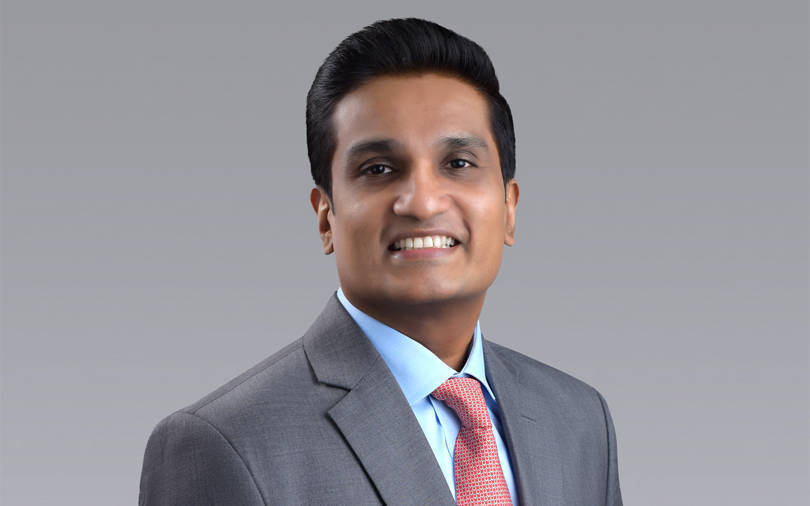
VCCircle caught up with Ramesh Nair, managing director and chief executive officer of Mindpsace REIT, to discuss the trust's growth roadmap, the impact of geopolitical tensions on commercial real estate, and the opportunities and risks posed by AI. Edited excerpts:
You recently sealed back-to-back deals in the Chennai market. What was the rationale and what are your thoughts on the market?
Chennai has a vacancy rate of only 7%, half the national average (of 14-15%). There is also very little institutional-grade supply expected in Chennai over the next two years, giving us a strong runway for leasing, plus other supporting infrastructure in the vicinity.
There are significant mark-to-market opportunities (the ability to raise existing rents to current market rates) in the assets we have acquired: International Tech Park Chennai (ITP Chennai), Radial Road, and Commerzone Pallikaranai. The existing rents can be increased to current market levels.
Further, if one looks at the data, net absorption in Chennai has doubled from approximately 3 million square feet before Covid-19 to 6 million square feet currently. Within the South Indian market (which accounts for 60% of national demand), Chennai represents a 10% share.
Following these acquisitions, Mindspace REIT has become the number two player in the Chennai market after DLF.
As a strategy, we target assets with institutional sellers, Grade-A projects that offer significant mark-to-market opportunities.
Are you looking at more acquisitions in Chennai, and what are the cities on your radar currently?
We are not looking at immediate acquisitions in Chennai since we have just lapped up two assets in quick succession. Our current strategy is to strengthen our position in existing markets: Mumbai, Hyderabad, Pune, and Chennai. In three of these four markets, we are number one. In Chennai, we have now become number two.
The latest acquisitions will take our total leasable portfolio to 44.2 million sq ft from the current 39 million sq ft across key markets.
While there are no acquisition plans in the near future, we continue to evaluate potential assets from third parties as well as the sponsor pipeline. Although our primary focus is on existing markets, we continue to evaluate potential opportunities in the National Capital Region (NCR) and Bengaluru.
Among tier-II markets, we see great opportunities in Kochi, Coimbatore, Lucknow, Indore, and Jaipur. However, we have no plans for these markets currently.
If one looks at the broader demand pyramid, 60% is driven by South India, comprising Bengaluru (30%), Hyderabad (20%), and Chennai (10%). West India contributes 25%, comprising Mumbai (15%) and Pune (10%), while NCR contributes the remaining 15%.
What is the impact of the West Asia conflict on the real estate market?
On the positive side, geopolitical tensions in the Middle East, a region that has recently become a major data centre market, could cause a shift in demand toward India.
Conflicts often lead to a depreciating rupee, which makes India more cost-attractive for global capability centres (GCCs). Since their costs, from a dollar perspective, remain stable, companies effectively get "more money" for every dollar spent in India.
On the challenges, global conflicts lead to oil price surges, which have a direct impact on construction. Construction costs have risen around 6.5% over a four-month period.
We have noticed significant price hikes for key materials, including cement (up 8%) and paint (up 15%). However, since these materials are purchased over a two- to three-year development cycle, such spikes often neutralize as prices eventually stabilize or drop.
On the leasing front, some global clients have delayed travel plans, which has prevented them from inspecting spaces. Additionally, some clients have shown hesitancy regarding major capital expenditure due to the global uncertainty.
Despite the war beginning only in March, the market still saw a 7% increase in net absorption during the first quarter of the year.
Is the AI-led disruption already impacting momentum on the ground?
Despite the AI story being around for three-four years, the top six to seven IT services firms took 6 million square feet of space last year. Over the last three years, net absorption has actually increased 18%, 16%, and 15%, respectively, even as talk about AI's disruptive potential has intensified.
We believe the shift will not be from office to "no office," but rather toward "better office" environments.
While AI-led disruption may lead to job displacement, it will be compensated by the emergence of entirely new roles that didn't exist a few years ago, such as machine learning engineers, prompt engineers, AI product managers, and cybersecurity specialists.
The current anxiety related to AI is similar to what we see every time there is a technological shift. With the introduction of spreadsheets (Excel/Lotus 1-23), people feared they would eliminate bookkeepers and accountants. Instead, they led to the rise of a large financial analyst profession.
At Mindspace, of our 220 clients, not a single one has returned or given up office space due to AI-related job losses. The impact of new technology is often blown out of proportion initially before a real, more balanced impact settles in. Just as malls survived the rise of e-commerce, offices will adapt to AI.
How has the financial performance of Mindspace REIT been in recent quarters?
We have achieved a 40% mark-to-market gain this quarter (Q4FY26) and believe there is still 20% inbuilt potential within existing assets.
Over the past two years, rentals have grown at an 8% CAGR, revenue at 22-23%, and net operating income at 25%.
The trust has provided over 30% total returns to unit holders in the past year, outperforming general equity markets.
What are the future growth strategies of the trust?
The REIT's sponsor has 15 million sq ft under development, which could eventually be offered to the REIT.
Our future strategies include increasing the data centre footprint by converting existing land parcels, expanding mixed-use portfolios with more hotels, food and beverage and retail offerings within campuses, and maximizing FSI utilization, particularly in Hyderabad and Navi Mumbai.
Increasing the data centre footprint is one of the company's four-five major future strategies. We believe the geopolitical conflict in the Middle East, which has been a growing data centre market, will lead to a shift in demand toward India. The REIT plans to expand by converting existing land parcels within its current portfolio into data centres.
If we look at third-party assets in the segment, the market for purchasing ready-made data centre assets is currently limited, as very few such assets have been created in the current cycle compared to the office sector.
Published by HT Digital Content Services with permission from VC Circle.