
New Delhi, June 22 -- The biggest hurdle in deal-making with mid-market promoter-driven companies seeking an exit is the lack of corporate governance and the inconsistent quality of accounting and financial statements, according to a top executive at Baker Tilly ASA, a consultancy firm that typically advises mid-market ecosystems.
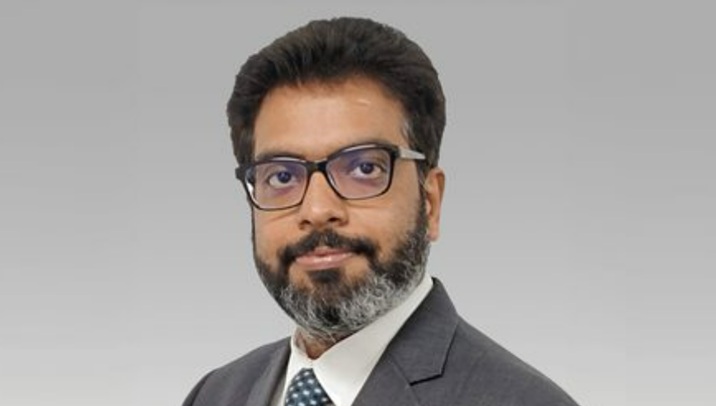
The quality of books maintained by mid-market companies (typically with annual revenue of Rs 200 crore to Rs 1,000 crore) has a ripple effect, as deals take longer to materialise at subpar valuations, Nitin Arora, national head of transaction advisory services at Baker Tilly ASA, told VCCircle.
Baker Tilly ASA is part of the global consulting firm Baker Tilly and ranks among the top 10 accounting and consulting firms in India. The firm has nine offices in India with 1,200 employees.
A few recent deals that Baker Tilly advised include private equity firm GEF Capital's Rs 200 crore investment in water treatment firm Membrane Group India, Singapore-based WOG Technologies' acquisition of Bell Cooling Towers, German special chemicals firm Bodo Moller's acquisition of Bengaluru-based Aqua Engineering Services, and personal hygiene firm Soothe Healthcare's funding round from private investors.
In the interaction with VCCircle, Arora also said that while assets were available to buy, there was a dearth of quality assets because private investors were looking for stable and scalable companies rather than subscale assets. Edited excerpts:
How is your deal pipeline looking for the year?
We handle mid-market transactions. So, we are into $5-50 million transactions. In the mid-market, our focus has been more on the industrials, automotive, and world economy sectors. Our pipeline is good as we started pivoting toward larger deals, specifically targeting the Rs 100-200 crore range. We are working on more than 10 transactions across Delhi and Mumbai.
What are the challenges being encountered in mid-market transactions?
Mid-market companies (with top-line revenue from Rs 200 crore up to Rs 1,000 crore) are mostly unlisted, promoter-driven companies. Mid-market companies showing a second line of succession are seeking growth capital, while those without one are pursuing exits.
With regards to exits, there are only two options. One is the buyout funds. The second is the classic sell-out to a strategic investor, whether from India or outside, but it's a complete exit. The biggest challenge we are seeing in the mid-market is that if you do not have good corporate governance, good-quality book-keeping, good compliance, deals typically take a longer time to happen, and they have a very subpar valuation.
Are there enough assets available for mid-market deals?
It's becoming increasingly difficult to find an asset that is available for 100% acquisition and is clean. So, today, PE firms such as Bain, Carlyle, or Samara, for instance, all of them have capital to invest, and they're all looking for that one good guy who wants to sell. Buyers are chasing more sellers, causing sellers to become greedy. They think, 'If three people are calling me, perhaps I'm selling too cheaply, and I should increase my price.'
Assets are available, but good-quality assets that can be acquired are not there. Today, private investors do not want to buy subscale as they have been burned. They are now looking for companies that are more scalable and stable.
How is the current dealmaking situation?
The Iran war escalated from February onwards. But it's been a year since the US raised tariffs. When the tariff situation started, we immediately felt pressure in deal-making for assets exporting to the US because their sales suddenly dropped, immediately impacting margins. Luckily, none of the deals we closed last year had US exposure.
Over the last two to three months, the problem has been inflationary pressure as every raw material price has gone up, leading to shrinking margins. It definitely impacts valuation. If this continues for another three months, then you will start feeling real pressure on the balance sheets of the company that wants to sell; either they will have to defer the decision, or they will have to explain it to the buy side that this was an exceptional item and needs to be adjusted, because profitability is definitely going to take a hit in FY27.
Do you think this could have a ripple effect on valuations as well?
There will be deferred decisions on deals. Those in a hurry will reduce the valuation and sell, but those who are not in a rush will state their margin pressure is temporary. I don't see valuation getting significantly impacted because it's not a very sustainable long-term event. COVID was a long-term event. It impacted for years. This may be for three to four months; hopefully, it should not impact.
Are you seeing deals getting deferred?
Not deferment of deals. But I am saying that people are becoming more conscious and are evaluating inflation's impact.
What are your observations about cross-border deals in the current scenario?
In 2025, cross-border deals totalled 318, with 173 being outbound and 145 inbound. We are seeing a lot of interest in inbound in the mid-market space. Inbound is happening mainly from the US, Europe, Japan, and Korea. These are the three or four markets that are actually pouring money into Indian markets. I see it will drive the China-plus-one strategy because many people are consolidating and want to de-risk from China, and want to open up to Japan. There are more than 20,000 Japanese companies in Japan; there are only 1,500 Japanese companies in India.
Which sectors are particularly getting inbound interest?
From a cross-border perspective, we are seeing interest more for industrials and manufacturing, but from private equity, we are seeing interest in consumer brands and consumer-facing deals are happening both ways. So, when they come to India, they only look for consumer brands because they want to introduce new products to India and use the distribution network. For inbound cross-border deals, the trend is still largely into sectors such as renewables, auto components, and fintech.
Published by HT Digital Content Services with permission from VC Circle.