
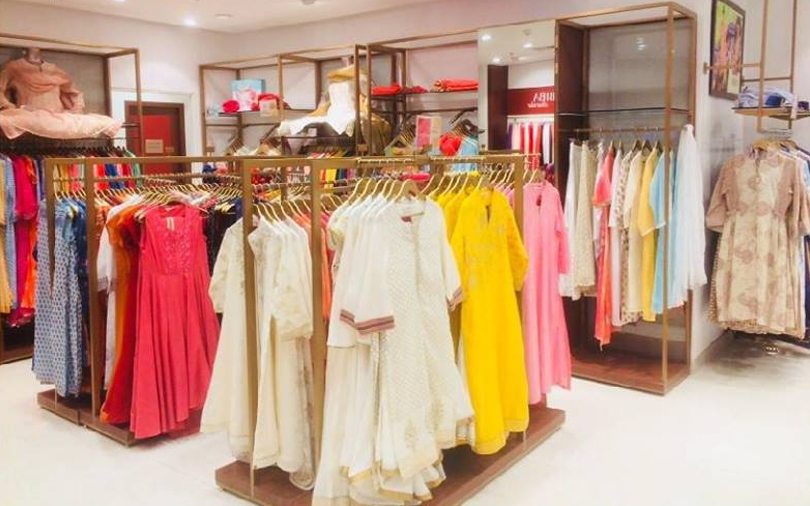
New Delhi, June 2 -- Biba Fashion Ltd, an ethnic wear retailer backed by private equity firms Warburg Pincus and Faering Capital, posted a drop in revenue for the year through March 2026 as weak consumer demand and store closures continued to weigh on the business, VCCircle has learnt.
The company, which owns the mid-to-premium ethnic wear brand BIBA and the value-focussed label Rangriti, reported a 5.5% drop in revenue to around Rs 730 crore in FY26 from Rs 773 crore the year before, according to provisional financials reviewed by VCCircle.
The company is yet to formally report FY26 financials.
Queries sent to managing director Siddharth Bindra remained unanswered till the time of publishing this article.
Business model
Founded by Meena Bindra, Biba Fashion designs and sells ethnic wear for women and girls under the BIBA and Rangriti brands. The business originated as a partnership firm in 1988 before being incorporated in 2003 and converted into a public limited company in March 2022.
The company follows an asset-light operating model, with most manufacturing outsourced through job-work arrangements and limited capital expenditure requirements.
While this structure supports scalability, the company continues to face intense competition in India's fragmented ethnic apparel market alongside changing consumer preferences.
In June 2022, the company established wholly-owned subsidiary Kashida Apparels to set up a backward-integrated manufacturing facility in Indore with an annual capacity of 3.3 million garments. Operational since the fourth quarter of FY24, the unit is expected to fulfil nearly 30% of Biba's production requirements.
Financial performance
Biba's current financial performance mirrors the slowdown it last witnessed in the post-pandemic years. Revenue had fallen to Rs 520-630 crore during FY21 and FY22 due to pandemic-related disruptions, before recovering nearly 40% in FY23 to cross Rs 870 crore. Since then, however, it has largely remained stuck in the Rs 750-800 crore range.
Profitability has deteriorated more sharply. The company generated net profit margins of 14-15% in FY15 and FY16, but those margins shrank to around 2% during the pandemic years and remained in low single-digits thereafter. In FY24 and FY25, Biba reported net loss margins of around 10-12%. For comparison, a 2025 report by management consulting firm Wazir Advisors estimated that ethnic apparel brands have delivered average profit after tax margins of around 10% since 2020.
At the operating level, however, the company recorded some improvement. Operating profit before depreciation, interest, and taxes (OPBDIT) margin rose to 7.5% in FY25 from the previous year, aided by cost rationalization measures, according to documents reviewed by VCCircle.
Demand weakness
Weak consumer spending and strategic store closures have continued to weigh on the retailer's performance. To protect margins, Biba reduced employee costs, lowered fixed overheads and shut loss-making outlets.
The company has also relied on deeper discounting to clear excess inventory. According to the documents reviewed by VCCircle, inventory levels moderated to around Rs 315-320 crore as of March 2026. However, stock build-up has remained a challenge for several years, an issue highlighted by VCCircle last year.
Capital support
To address near-term funding needs, the company's promoters infused Rs 14 crore into the business in FY25. Earlier, Warburg Pincus and Faering Capital had together invested around Rs 300 crore through a mix of primary and secondary transactions in 2013. Warburg injected an additional Rs 30 crore in 2020.
To date, Biba Fashion has raised around Rs 526 crore, according to VCCEdge, the data and research platform of VCCircle.
Published by HT Digital Content Services with permission from VC Circle.