
New Delhi, June 29 -- Nexus Select Trust, India's only retail-focussed real estate investment trust (REIT), is targeting a doubling of its portfolio by FY30, with plans to expand to 30-35 malls and 18-20 million square feet of gross leasable area.
To achieve this, the Blackstone-backed trust plans to complement its organic growth with aggressive inorganic expansion. It is also sharpening its focus on tier II and III markets, which it sees as the "markets of the future" amid strong consumption growth. The trust is equally bullish on east India, particularly Kolkata, as it identifies unique spending patterns in categories such as beauty and jewellery in the region.
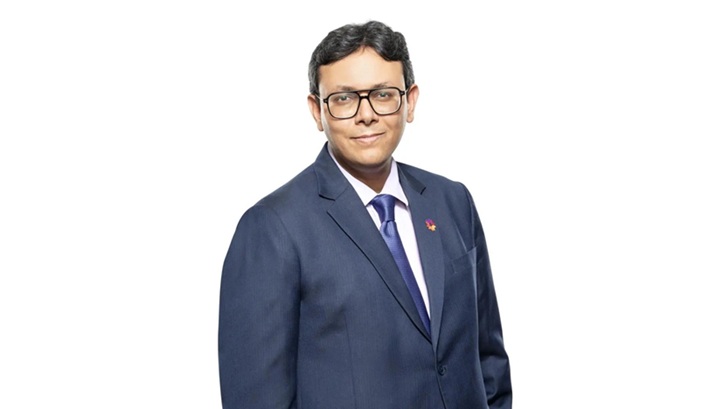
VCCircle caught up with Pratik Dantara, chief investor relations officer and head of strategy at Nexus Select Trust, to discuss the REIT's expansion plans, opportunities in smaller cities, the outlook for consumption, and expectations for distribution per unit (DPU). Edited excerpts:
What is the broader game plan and strategy of Nexus Select Trust? The trust aims to double its portfolio in the next few years. Where are you headed and what really drives these investments and acquisitions?
We laid out a broader vision of doubling our portfolio over a period of five years. By FY30, we would ideally like to have 30-35 malls in our portfolio. From a gross leasable area standpoint, we aim to reach about 18-20 million square feet.
Going ahead, inorganic growth will be a big lever. Our existing core portfolio will probably grow at about 8-9% every year. However, if we want to double in five years, we need to deliver around 16% CAGR. The balance growth will effectively come from inorganic opportunities.
How do you plan to go about it?
The first pillar is under-construction malls. In 2025, for the first time, we entered into a strategic tie-up for an under-construction mall with one of the reputed developers in Mumbai. The agreement is that they will build the asset and transfer it to us at a predefined value. We get involved in the design of the mall so that it's easier to lease out in the future.
The second pillar is operating expertise. Our strength is not that of a developer. We are more of an operator and can run a mall much more efficiently.
The third pillar is expanding existing assets. Wherever we have adjacent space available in our existing retail malls, we buy those spaces. For example, in Chandigarh, we bought an additional 60,000 square feet.
Blackstone is an investor that assembles multiple assets under a portfolio. It is not a builder-sponsor like in the case of other REITs. Can you compare the positives and negatives of a parent with a construction portfolio versus an investor-sponsor arrangement?
The benefit of a construction portfolio is that the REIT has a constant funnel of assets. The downside is that those assets typically come in very expensive and often serve as exits for the sponsor.
For us, not having a constant flow acts as a bonus, as negotiations with third parties are always done in good faith. We will do whatever is best for the REIT.
Blackstone has been very supportive in saying that if there is an asset that can go directly into the REIT, it will not participate in that transaction. South City Mall, which Blackstone acquired recently in Kolkata, was different because the asset had a school, some land in Dubai and residential units to sell in Sri Lanka.
As a REIT, we couldn't have acquired that directly. Blackstone is trying to get some of these things out of the entity, so that what remains is purely the mall, which can then come to Nexus.
While a lot of developers have forayed into commercial real estate, retail as an asset class has participation from a limited number of developers. Can you compare the life cycle and returns of office space and retail assets?
Retail takes a long time to build. A developer has to acquire a land parcel, build an asset, which easily takes four-five years, and then it takes a couple of years for the asset to get leased out. It's almost seven years before a developer can see some cash flows.
When you compare that with offices, the lead times are much lower.
Residential development works on a negative working capital cycle. Developers take money from customers and then build the asset.
The closest comparison is office real estate. It typically sees an escalation of 15% every three years, so broadly you can earn about 4.5-5% every year. The beauty of the retail business is that apart from a minimum guaranteed rent, you also have revenue-sharing arrangements. That's the alpha that retail can generate.
Retail investors and operators are increasingly getting into tier II and III markets. What potential do you see in smaller cities and towns, and what's the pipeline like for Nexus?
Tier I and II markets are equally attractive for us. Our experience in tier II and III cities has been very good. We've been growing in double digits in terms of gross merchandise value or consumption. People in these markets had the money, what they lacked was choices. Now, with the kind of options available in their cities, they are more than happy to shop there.
The number of malls we have in Mumbai, Delhi and Bengaluru is only a handful. Out of our portfolio, we probably have six malls in these markets, and they account for nearly half of our sales. The remaining 12 malls probably contribute the rest. The growth is very strong in tier II markets.
Tier II and III markets are going to be the markets of the future for us.
Have you seen any change in tenant mix in retail assets over the years ?
Broadly, about 50-55% (of our tenant mix) is fashion. The second-biggest anchor is cinemas and family entertainment centres.
Over the years, with (the rise of) e-commerce, the influence of hypermarkets in driving footfalls has gone down. Some of the emerging categories we are seeing are linked to premiumization: beauty, personal care, jewellery, eyewear, and watches. These players want to be present in malls.
East India has been a big focus area for Nexus lately, with the acquisition of Diamond Plaza and Blackstone's acquisition of South City Mall. What is attracting the platform to this region?
In one of the markets we're looking at in east India, beauty spending is far exceeding fashion spending. We're seeing different kinds of trends in some of these eastern markets.
Our plans to expand in the east are now culminating. Hopefully, this year we should see a lot of action. Kolkata is obviously one of our focus markets.
What growth can we expect in distribution per unit (DPU) going forward?
The consumption story in India remains pretty strong. We are seeing strong consumption growth momentum despite the noise around the macro environment.
The guidance today is around Rs 9.8-10 per unit, but if the consumption momentum continues, we could see around 10% DPU growth next year.
Published by HT Digital Content Services with permission from VC Circle.