
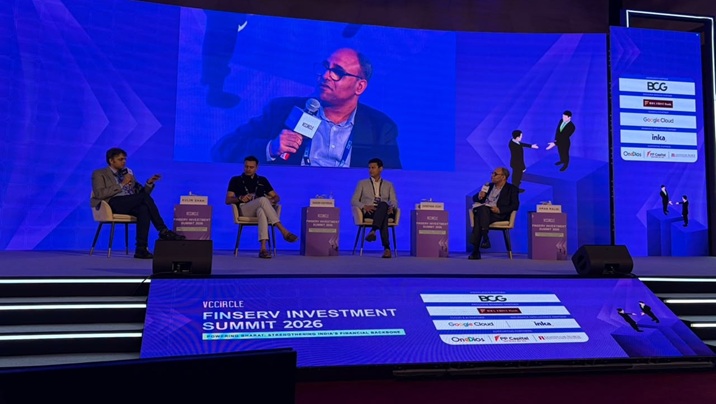
New Delhi, Sept. 22 -- Bima Sugam, launched by the Insurance Regulatory and Development Authority of India (IRDAI) last year, is a powerful infrastructure layer but will not, by itself, create demand for insurance, industry executives said during a panel discussion at the VCCircle Finserv Investment Summit 2026 in Mumbai on Friday.
The platform, a centralised digital public infrastructure marketplace for life, health and general insurance, allows users in India to buy, manage and renew policies and settle claims. It is designed to provide a common digital rail for insurance discovery, purchase, portfolio management and claims.
"There is a tremendous amount of potential that Bima Sugam brings about, but (I don't think) it will change the demand or availability. That is for people in the distribution space or in the business of selling insurance," said Shreyans Vijay, executive director at Coverfox Group.
With insurance still underpenetrated in India, IRDAI has set a vision of "Insurance for All by 2047" for the country.
The panellists agreed that while Bima Sugam can help modernise the underlying infrastructure, the "last mile" will remain human and highly execution-dependent.
The panel, titled "Insurtech's UPI Moment: Bima Sugam, Embedded Distribution & Beyond", also included Kulin Shah, chief operating officer and head of products at Onsurity, and Saurabh Vijayvergia, founder and CEO of CoverSure.
Asked whether Bima Sugam could pose a threat to insurtech players, Vijayvergia said the platform would be complementary to what they have built.
"It is complementary to what we have built, as insurance is a language problem," he said
Bima Sugam's impact could potentially be comparable to the changes seen in the mutual fund industry around 2012-13 following regulatory reforms that streamlined product categories and helped accelerate distribution, he added.
"It is going to give a lot of impetus or a lot of growth for niche players too, for example, (the ones focussed on) SMEs. It will help the retail customer, but it will also give players like us the whole platform to create niche personas and deliver insurance/benefits to them," Shah said.
The panel also discussed how embedded insurance needs to move beyond its legacy model of being offered as a single, untapped checkbox towards a more contextual and high-frequency model.
India will move from "push" to "pull" only when embedded offerings provide daily utility rather than merely an occasional promise of protection at the time of a claim, the panellists said.
Published by HT Digital Content Services with permission from VC Circle.