
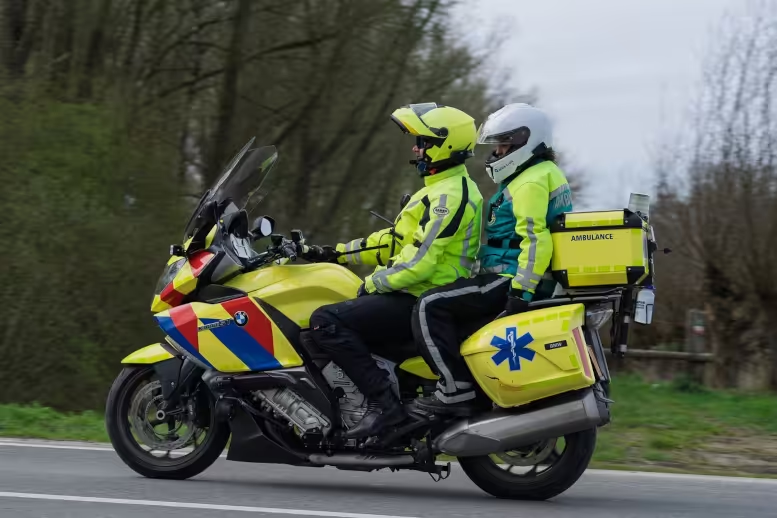
India, Aug. 3 -- The Ministry of Road Transport and Highways has proposed amendments to the Central Motor Vehicles Rules, 1989 to formally regulate two-wheeled road ambulances. These vehicles are designed to provide rapid emergency response and last-mile medical access, especially in rural, remote, and hilly areas.
Key Provisions
- Applicability: L2-category two-wheeled road ambulances manufactured on or after 1 October 2027 must comply with AIS-209 (Part 1):2026.
- Emergency Top Lights: Must meet AIS-209 standards from October 2027.
- Area of Operation: Registration and permitted zones will be determined by State Governments.
- Fitness Requirements: Treated as transport vehicles; fitness certificate renewal every two years.
- Dedicated Inspection Checks: Covers secure mounting of patient-conveyance units, tyres/rims, warning lights, stretcher locking, patient-restraint systems, loading/unloading mechanisms, and fire extinguisher validity.
Safety & Functional Framework (AIS-209)
Defines construction and functional safeguards, including:
- Vehicle stability, braking, and gradeability.
- Parking brake and rear visibility.
- Coupling integrity and conspicuity devices.
- Safe patient loading, restraint, and protection from environmental exposure.
Impact
- Establishes national standards for design, safety, and operation.
- Enhances accountability and reliability of two-wheeled ambulances.
- Supports faster emergency response in areas where......
Published by HT Digital Content Services with permission from Travel Media.