
New Delhi, Aug. 31 -- Kochi-headquartered retail-broking firm Geojit Financial Services is redesigning the technology around its core broking platform as it seeks to turn a transaction-led business into a broader wealth platform-without replacing the trading engine at its heart.
The investment and retail-broking firm is building an API layer and modular architecture around its existing transactional backend, allowing it to introduce new products and digital services without disrupting high-volume trading. At the same time, it is bringing equities, mutual funds and insurance into a more unified digital experience, with AI and real-time data expected to play a growing role in advisory and automation.
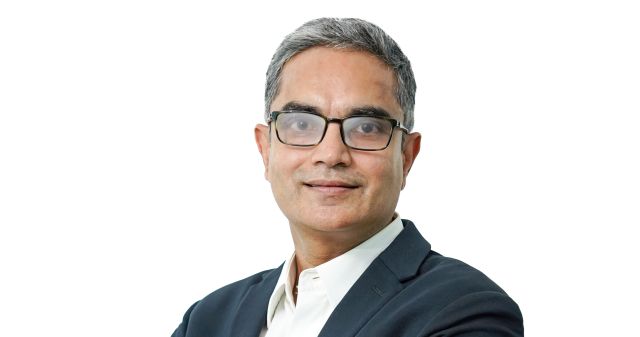
"We are modernising the engine while rewriting the experience," said Jayakrishnan Sasidharan, executive director and Chief Information Officer (CIO), Geojit Financial Services.
The strategy is built around a simple principle: preserve the stability of the transaction core while creating the flexibility to innovate around it. "Ripping and replacing core systems is famously risky in financial services," Sasidharan said. "Our approach is to modernise the engine rather than replace it."
Keep the core, change everything around it
Geojit is placing an API layer around its existing transactional backend, allowing the company to develop and deploy new capabilities without making frequent changes to the systems responsible for trading. The approach also supports a more modular back office, where individual components can be introduced or replaced without reworking the entire system. The objective, Sasidharan said, is to move from rigid legacy systems towards "plug-and-play, modular components" that can help the company launch new products much faster.
For a business where availability and transaction performance are critical, the separation between the core and the customer experience also reduces the risk associated with wholesale modernisation, said Sasidharan.
Towards a common digital experience
The technology overhaul is ultimately aimed at changing how customers interact with Geojit. The company is working towards a common digital experience across broking, mutual funds, insurance, advisory and customer service. Its backend, however, will remain distributed, with specialised engines for different businesses connected through a common data layer. This is intended to provide a consolidated view of the customer without forcing disparate businesses into a single monolithic system.
Customers are expected to start seeing the benefits of the new architecture within the next two quarters, he said. The broader ambition is to move from individual product transactions to a more complete understanding of the customer's financial relationship with Geojit.
AI moves from alerts to advice
AI is being positioned as part of this broader architecture rather than as a series of standalone pilots. Initial applications include faster onboarding, personalised financial guidance and contextual investment insights. "We are moving away from generic market alerts to provide proactive, plain-language wealth guidance tailored to what each customer actually owns," Sasidharan said.
AI and real-time data will also support operational automation, including routine customer-service queries and selected portfolio-management workflows. The objective is to connect these capabilities across the customer lifecycle. A customer who starts with equity trading and later adopts mutual funds or insurance, for instance, could increasingly be served through a single, data-driven relationship.
Security moves beyond the perimeter
The technology shift is also changing Geojit's approach to resilience and cybersecurity. Sasidharan said that the company is looking at an elastic architecture that can absorb sharp increases in retail activity during volatile markets while maintaining availability. "At the application layer, it plans to monitor user behaviour and API interactions to identify anomalous transaction patterns or unauthorised calls before they reach critical databases," he said.
Sasidharan added that the company is also evaluating AI-led autonomous monitoring, which could analyse multiple signals in real time and move the company towards predictive threat detection.
Privacy enters the architecture
Data governance is becoming another part of the technology architecture as Geojit expands its use of customer data and AI. The company is looking to strengthen consent management and privacy controls as it addresses requirements under India's Digital Personal Data Protection framework.
"One of the complexities for financial institutions is balancing data-erasure requirements under the DPDP framework with regulatory obligations to retain certain trading records for seven years," said Sasidharan, adding that Geojit is looking at granular consent and governance mechanisms that can satisfy both requirements without adding friction for customers.
Digital, but not digital-only
Geojit's answer to digital-first brokers is not to abandon its physical distribution model. The company plans to combine a modern digital experience with its network of more than 500 branches, retaining access to human advisors for customers who want personal guidance, particularly around significant financial decisions.
"We are not trying to copy the digital-first playbook," Sasidharan said. "Speed, simplicity and low pricing are no longer differentiators; they are simply the baseline expectations."
Geojit instead sees its advantage in combining digital tools with the trust of a long-standing customer base and physical presence. "We are building a 'phygital' wealth partnership," Sasidharan said.
The company is also changing how it measures the transformation. Beyond account additions and app logins, it will track the depth of customer relationships, including adoption of multiple products, portfolio engagement and use of wealth-management tools.
Operational efficiency will be another measure, whether automation and modular technology can reduce service turnaround times and manual intervention while allowing the business to scale without technology costs and headcount rising proportionately. The larger ambition is to make Geojit less a platform for executing transactions and more a technology-led wealth partner built around the customer's entire financial relationship.
Published by HT Digital Content Services with permission from TechCircle.