
New Delhi, May 13 -- India's education system may be heading towards its biggest technology-led disruption since the rise of digital learning platforms, but the benefits of the AI wave risk remaining concentrated among a small section of students and institutions unless access and literacy expand rapidly.
As generative AI tools begin reshaping classrooms, assignments, curriculum design and workforce preparation globally, India's schools and universities are entering an uneven transition phase - one where elite institutions are integrating AI aggressively while large parts of the education ecosystem are still struggling with awareness, infrastructure and teacher preparedness.
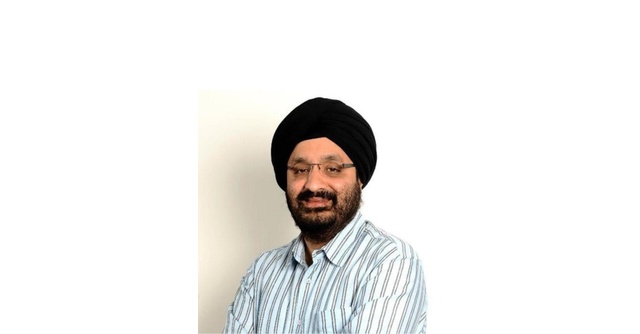
According to digital transformation expert and author Jaspreet Bindra, who is the co-founder & CEO of AI & Beyond, an AI-focused learning and advisory firm, "this emerging imbalance could evolve into India's next major digital divide".
"This is the biggest issue," Bindra, who previously held leadership roles at companies including Mahindra Group and Adobe, said in an interview with TechCircle. "The top layer of educational institutions is rapidly adopting AI. In the rest, people have no idea what's happening."
The comments come at a time when AI adoption is accelerating across India's education and edtech sectors, with schools, coaching platforms and universities increasingly experimenting with AI tutors, automated assessments, and content generation and personalised learning systems. But Bindra believes India is still far from becoming uniformly "AI-native".
"I don't think all of India is ready for AI-native classrooms," he said. "But certainly there can be some institutions or schools which can experiment with that."
According to him, the early adopters are primarily premium schools, higher education institutions and digitally mature academic ecosystems. "The higher level colleges, institutions, schools, the more expensive ones are bringing in AI fairly rapidly into their classrooms," he said.
The shift is also becoming visible at the student level, particularly among digitally connected urban demographics. "Even if the classrooms are not AI native, the students are gradually becoming those," Bindra said.
Some parts of India's institutional framework, however, are already adapting faster than expected. Boards such as CBSE, he pointed out, have introduced AI-focused coursework at the school level, indicating that AI literacy is beginning to move closer to mainstream education.
"What I've also learned is that certain boards like the CBSE have been ahead of the curve and they have a separate course on AI," he said. Yet the larger disruption, according to Bindra, is not simply about introducing AI tools into classrooms. It is about redesigning the way education itself is delivered and evaluated in a world where generative AI can instantly produce essays, summaries, coding assignments and near-perfect responses.
"Most institutions frankly still treat generative AI as a plagiarism problem," he said. "And AI detectors are not actually going to solve this."
Instead of banning AI, institutions may need to shift towards what Bindra describes as a "human plus AI" framework, where AI becomes an augmentation layer rather than a prohibited tool.
"The challenge is how you bring in AI as an aid- as a human plus AI," he said. "A better approach is disclosure that if something has been answered using AI, disclose it, some kind of process tracking and some kind of viva-style validation."
That transition could fundamentally reshape examinations and pedagogy across schools and universities. Traditional homework-heavy assessment models may gradually give way to oral evaluations, in-class work and process-oriented assessments.
"It will also mean that we will need to have more one-on-one viva-like oral defenses, more in-class work rather than homework," Bindra said. "The pedagogy and the way examinations are done might need to change."
The curriculum itself, he argued, can no longer remain isolated from AI's growing role across industries and professions. Rather than rewriting syllabi entirely, educational institutions may need to layer AI capability across disciplines.
"Every subject needs two layers now - learning the subject itself, and then learning how AI changes the way that subject can be learned and can be practiced," he said.
That could reshape fields ranging from law and management to humanities and creative arts. "Law students could learn legal reasoning plus AI-assisted research. Management students could learn strategy plus AI-enabled decision making. Art students, humanity students could learn interpretation plus AI-assisted creation."
Beyond technical proficiency, Bindra believes the AI era will place even greater importance on human and cognitive capabilities that machines cannot easily replicate.
"AI literacy, critical thinking, communication, domain expertise, ethical judgment, privacy - all these become important," he said. "Human skills like curiosity, empathy, collaboration, and adopting a portfolio approach not learning just one thing but learning multiple things."
For India, however, the success of this transition may depend less on technology adoption alone and more on whether AI capability can be democratised beyond elite institutions. Bindra believes teacher training could become the most important starting point. "One teacher then trains or teaches 50 students," he said. "So I would begin with training the teachers first on how to use AI before I get to the students."
He also called for AI literacy to be treated similarly to digital public infrastructure initiatives that scaled internet and digital services access across the country.
"We need to serve AI to everyone," he said, pointing to a recent AI literacy programme developed for the Government of India that has already reached nearly 75 lakh learners.
That said, as India's education sector enters the early stages of the AI era, the debate may increasingly move beyond whether AI belongs in classrooms to a more consequential question: who gets access to the future of learning first.
Published by HT Digital Content Services with permission from TechCircle.