
New Delhi, March 3 -- India's supply chain finance market is becoming more data-driven. Still, the shift is colliding with practical constraints: fragmented enterprise data, conservative banking environments, and AI models that are changing faster than most firms can operationalise.
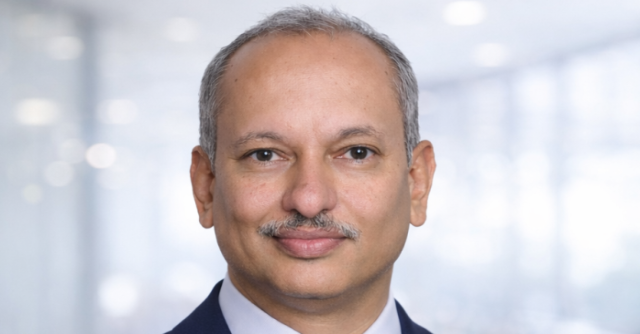
In a conversation with TechCircle, Sanjay Phadke, Executive Vice President & Head of Global Platforms and Alliances at Vayana, a company that works on supply chain finance and working capital digitisation, discussed what has changed over the last decade, where risks still arise, and what is needed for AI to deliver measurable outcomes in supply chain finance and working capital digitisation.
Edited Excerpts:
From your vantage point, what's changing fastest in supply chain finance in India right now, regulation, competition, or enterprise behaviour?
I think everything is changing very fast. Since you mentioned "vantage," it's interesting, we actually have a product called Vantage, which is like a corporate dashboard for an entire supply chain across all banks and all layers, which is a purely tech solution.
More broadly, if you look at what's happened in the last 10 years in India, change first came quite drastically on the B2C side. All of us use tech a lot more, whether it's e-commerce, banking, or social media, and everything has become digitised very fast. Then the same moved to the B2B side as well. It was slower because enterprises are generally slow, and banks, being regulated, are even more conservative, typically.
Now it's coming together in terms of data, tech, and increasingly AI. Compared to 10 years back, it's almost a wholly different world. Scale is massive. Coverage is much bigger for the supply chains getting funded now. Activity has multiplied many times. The availability of data, thanks to digital public infrastructure and otherwise, is far better. And the ability to make sense of all that data with AI, and create more intuitive and intelligent solutions, is also now available, which probably wasn't there 10 years back.
Where do you think the industry is overconfident today? Are there risks people are underestimating in supply chain finance in India?
It's hard to say, because whenever you say there is no risk, some risk will always come. One should never say everything is hunky-dory.
But where supply chain finance is being done in the right way, meaning the underlying trade has been clearly established, the financing is commensurate with the underlying trade or supply chain activity in goods or services, it's metered credit, and the relevant credit risk is appropriately captured, then, subject to those provisions, it's probably the most rock-solid asset class.
Where those fundamental principles aren't fully respected, either because of gaps in internal controls or collusions that aren't brought out by intelligent use of technology, you will have issues. That happens once in a while, not just in India but globally as well. In general, we are far better placed in India as long as we do metered, purpose-driven, short-term credit that keeps rolling over as business activity keeps rolling over.
When it comes to MSMEs, what's the biggest barrier to financial inclusion, cost of capital, lack of data, or trust?
It's a mix of those. Cost of capital is an issue, but that goes back to the availability of data, because data and a track record ultimately drive the cost of capital.
I also think it's about how fast the main bankers and the financial industry, financial partners, or financiers, are creating more appropriate products for SMEs or MSMEs. It requires more creativity to come up with the right products because MSMEs aren't a single, homogeneous type of activity. Being able to do it in a more customised fashion, while still managing the risks, is important. That's probably one of the gaps right now.
There are government schemes, risk coverage, and guarantees, which help, but those are standard products. The opportunity is in more customisable products, and that's an area where AI can potentially play a role.
Many companies describe themselves as "AI-first," but struggle to move from pilots to production. Where do you see AI genuinely delivering value today in supply chain finance infrastructure?
AI is yet to make its mark in terms of real, genuine outcomes, partly because there is a lot of change in the DNA of firms, big or small, that is required. Mindsets need to change. In some cases, the data infrastructure is not ready for AI to make its mark. Without good data, without the raw material of good information, there's no intelligence possible.
But beyond that, AI is yet to stabilise. As a technology, it's metamorphosing, earlier it was every year, then every quarter, every month, and now it's every week. Business models are yet to fully settle because the capabilities of AI models are improving as we speak. So it's a transition time where the potential is clear, but outcomes on the ground are not yet visible.
Once we have three things, one, a mindset change; two, data being available across silos within the business; and three, some semblance of stability in the underlying models, that's when you'll see a very big change in outcomes.
As ERP platforms become more powerful, will supply chain finance become an embedded feature within them, or will independent platforms remain the core infrastructure layer?
I think both will happen. ERPs will try to bring embedded intelligence to their edges, at least to start with. They will probably not want to change their core until the technology stabilises to some extent, especially with generative AI, where questions like accuracy, reliability, and hallucinations (incorrect or fabricated outputs) need to stabilise.
So AI will make its mark at the periphery for large systems, but independent platforms like us can probably bring relevant changes to realise the potential faster.
What's the most dangerous misconception enterprises have about working capital digitisation right now?
I think the misconception is linked to the availability of data. The assumption many people have is that their data is in a shape or place where it's easily available for practical considerations, including generating superior insights using AI.
In a lot of cases, that assumption isn't holding right now. Many enterprises will need serious efforts, transformation projects that aren't just linked to POCs (proofs of concept), but go into the underlying data architecture, without losing focus on security aspects. The challenge is sharing data so intelligence can be generated in a risk-free or tightly controlled-risk manner, within defined time and cost, so it delivers positive ROI. That's not an easy challenge, whether for working capital digitisation or any other transformation.
Looking ahead, what technology shift will most fundamentally change how supply chain finance platforms operate?
One is the ability to harmonise data. That will require organisations to undertake internal efforts or bring in good-quality service organisations that specialise in understanding AI's potential and leveraging it fast.
Along with that, AI literacy is important. What's critical is understanding that models can change and will keep changing for a long time. There may not be, for the foreseeable future, any plateau in model capabilities. Designing architectures that can work on top of models that are themselves changing will be a breakthrough, along with the ability to harmonise the data.
Published by HT Digital Content Services with permission from TechCircle.