
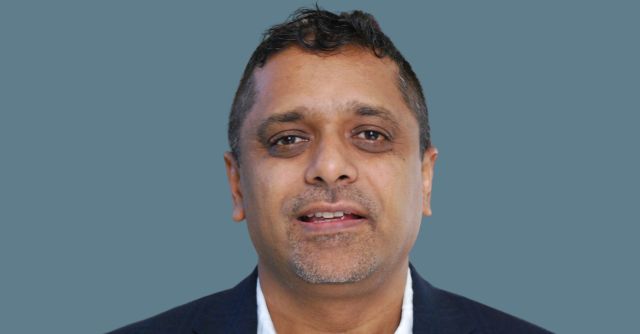
New Delhi, July 23 -- Enterprise CIOs no longer want to spend their time keeping networks running. They want infrastructure capable of managing itself while IT teams focus on AI-driven business transformation.
That shift in priorities is redefining enterprise networking as artificial intelligence moves from isolated pilots to business-critical deployments. According to Sajan Paul, General Manager, HPE Networking India, CIOs are increasingly measuring technology investments by the business outcomes they enable rather than the infrastructure they maintain, placing fresh demands on enterprise networks to become intelligent, autonomous and resilient.
"The CIO's agenda is no longer to keep the network alive. Their agenda is to ask what AI projects will benefit the business," Paul said in an interaction with TechCircle. "Their expectation today is, 'I wish my network is self-driving so I can focus on higher-order business problems.'"
The urgency, he said, stems from the unprecedented pace at which AI is reshaping enterprise infrastructure. Networking technologies that once evolved over several years are now advancing within months as AI workloads demand exponentially higher bandwidth, lower latency and real-time communication across distributed environments.
Historically, enterprises migrated from 1 Gigabit to 10 Gigabit, then to 40 and 100 Gigabit networking over multiple technology cycles. Today, the industry has already moved towards 400 Gigabit, 800 Gigabit and even 1.6-terabit switching as AI infrastructure scales rapidly.
"It's not innovation for innovation's sake. AI workloads are demanding it," Paul said, adding that networking has become the foundational layer determining whether enterprise AI can scale successfully.
That changing landscape is also altering how enterprise networks are expected to operate. Traditionally, networking teams have relied heavily on human intervention for monitoring, troubleshooting and performance optimisation. But as AI applications spread across cloud, edge and enterprise environments, Paul believes that operating model is becoming increasingly difficult to sustain.
Instead, enterprises are moving towards what Gartner terms "agentic network operations", where AI continuously monitors network behaviour, diagnoses issues, recommends corrective actions and progressively automates routine operational decisions.
"Automation is the traditional word. We need AI-led automation, what we call a self-driving network," Paul said. "Can AI mimic the human in the network? Today, if I have 100 engineers supporting my network, can AI replace much of that operational work with better intelligence?"
He noted that building such autonomous capabilities requires years of investment in training AI models using millions of historical networking incidents and technical support cases rather than relying on generic public AI models.
The shift, however, is not merely about preparing networks for AI workloads. Increasingly, AI itself is expected to operate the network, making infrastructure capable of learning from previous incidents, predicting failures and improving operational efficiency over time.
Paul also argued that enterprises looking to scale AI can no longer rely on fragmented networking environments assembled from multiple vendors.
"If you need to harness the potential of AI, we need to have a purpose-built network, or AI-native networking," he said. For HPE, AI-native networking means AI becomes part of every critical decision within the network rather than being added later through dashboards or monitoring tools. "AI should be fundamental to every decision the network takes, not an afterthought."
Looking ahead, Paul expects India's emerging AI infrastructure ecosystem to create an entirely new category of networking demand.
With AI factories, GPU clusters and hyperscale data centres expected to be distributed across multiple locations based on power availability, cooling infrastructure and submarine cable connectivity, enterprises will increasingly require high-performance AI grids capable of linking these facilities with ultra-low latency and near-zero packet loss.
"We're seeing AI factories coming into India," he said. "The challenge will be creating AI grids that connect these geographically distributed locations. These require purpose-built connectivity running at extremely high bandwidth with almost zero packet loss."
As AI becomes embedded across enterprise infrastructure, networking is also emerging as the first line of cyber defence. Paul believes identity, machine learning and networking will need to converge as organisations deploy thousands of connected devices, sensors and edge systems.
"In the network, the first packet is seen there itself. That's why every network device has to be designed with built-in security," he said, adding that validating the identity of users, devices and IoT sensors will increasingly depend on AI and machine learning.
For Paul, the larger transformation extends beyond networking technology to the evolving role of enterprise IT leadership. As AI adoption accelerates, CIOs are spending less time managing infrastructure and more time driving business growth, customer experience and competitive differentiation. Infrastructure, in turn, will increasingly be expected to manage, optimise and heal itself.
"The conversation has shifted," he said. "CIOs want to focus on customer experience and business outcomes. The expectation now is that the network should increasingly take care of itself."
Published by HT Digital Content Services with permission from TechCircle.