
New Delhi, March 6 -- India is emerging as one of the fastest-growing markets for Salesforce, as enterprises accelerate adoption of AI-led digital transformation. The company reported a 47% year-on-year rise in India revenue to Rs.13,384.5 crore in FY25, highlighting the country's growing role in its global strategy. India now hosts over 14,000 Salesforce employees across six cities and one of the world's largest Trailblazer communities, with more than 3.9 million members. The company's skilling programmes trained over 75,000 learners in digital and AI capabilities last year, reflecting the scale of the ecosystem being built around its platform.
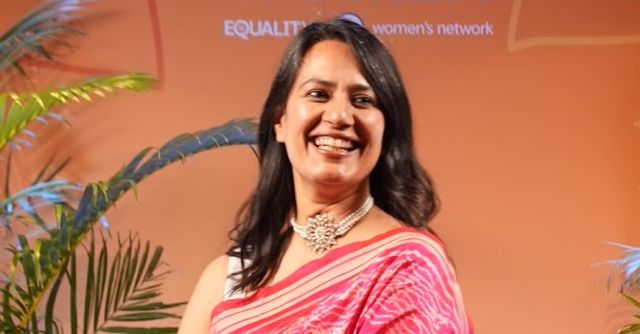
Ahead of International Women's Day, TechCircle interviewed Mankiran Chowhan, Managing Director, Sales & Distribution at Salesforce India, on leadership in the AI era, sustaining enterprise growth and addressing structural barriers that hold women back in technology careers. Edited excerpts.
India is a high-growth market for Salesforce. How are you reimagining leadership in an AI-first world while sustaining enterprise growth?
India today is not just a growth market for Salesforce-it is a proof point of what happens when strong demand for transformation meets technology that is ready to scale. Our revenue in India grew significantly, reflecting how closely our technology vision aligns with customer priorities. In an AI-first world, leadership is less about selling technology and more about delivering outcomes. Customers want faster service resolution, more precise sales engagement and proactive customer experiences.
Platforms like Agentforce enable that shift by allowing AI agents and humans to work together so that no opportunity is missed and no service interaction falls through the cracks.
For leaders, the question becomes where human energy should be directed. As AI automates routine work, the value of human judgement, empathy and strategic thinking only increases. My focus is on building teams that use AI to amplify productivity while strengthening those uniquely human capabilities.
Your leadership journey spans multiple technology cycles. What was the toughest inflection point you navigated?
The industry has gone through several paradigm shifts-from traditional enterprise software to cloud and now agentic AI. Each shift requires a different way of thinking about value.
One of the toughest moments in my career came during a period of organisational transformation when the market itself was evolving rapidly. The challenge wasn't just operational change; it was ensuring that a high-performing team stayed motivated despite uncertainty.
That experience reinforced a key lesson: high performance isn't built on numbers alone-it rests on psychological safety. When teams face uncertainty, leaders who focus only on metrics risk losing both morale and results. Creating space for honest conversations with my team-not just business reviews-helped build that trust. Accountability, to me, means owning outcomes while supporting people so they can deliver them.
Women's representation improves at entry levels but thins out at mid-management. What structural shifts are needed?
The mid-career drop-off among women in corporate India is well documented, and the causes are structural-so the solutions must be structural too. First, organisations need to rethink how performance is evaluated. Criteria that reward constant visibility, travel availability or an always-on culture can unintentionally disadvantage professionals with caregiving responsibilities. Second, women need sponsors, not just mentors. Mentors provide guidance; sponsors actively advocate for your advancement. That difference can significantly influence career trajectories. At Salesforce, initiatives such as EQE: LEAD Women South Asia aim to address this challenge through structured leadership development programmes for both mid-level and senior women leaders, focusing on areas such as AI fluency, executive presence and resilience.
Sales teams operate in high-pressure, target-driven environments. How do you embed inclusion in such functions?
Inclusion is not in tension with performance-it strengthens it. If a sales team does not reflect the diversity of its customers, organisations risk missing valuable insights and opportunities. Embedding equity in a metrics-driven function requires making it measurable and identifying exactly where women drop off in the sales career path.
I have always built intentionally diverse teams-not as a policy imperative but because homogeneous teams often have homogeneous blind spots. In a competitive market like India, that is a risk organisations cannot afford.
AI is reshaping enterprise roles. Could it become a leveller for women in tech-or widen the gap?
It could be either. On the positive side, AI platforms can reduce proximity bias and administrative workloads, allowing professionals to focus on higher-impact work. When insights and opportunities are democratised through technology, the playing field becomes more balanced.
However, history shows that the benefits of new technology waves often accrue to those who already have access to networks and resources. If AI skilling programmes and leadership development tracks are not designed with an equality lens, existing gaps could widen. Neutrality is not an option-companies must deliberately ensure the next generation of technology infrastructure is inclusive.
What interventions work in bringing experienced women back into revenue-critical roles?
Return-to-work programmes are most effective when organisations recognise the value professionals bring back with them. Women who take career breaks have not lost their judgement or ambition. In many cases, they return with broader perspectives.
At Salesforce India, the Return to Work programme offers a six-month structured pathway for women restarting their careers, with access to learning resources and mentorship. Participants return as full members of the team-it is not a trial but a long-term investment in talent.
Beyond revenue and market share, what should define leadership success?
Revenue will always matter. But if it is the only metric, organisations risk managing for today rather than building for the future. Sustainable growth depends on the quality of talent being developed, the trust organisations build with customers and the inclusiveness of their culture. These are not soft indicators-they are leading signals of long-term performance. The leaders who will define the next decade are those who understand that how you grow matters as much as how much you grow.
Published by HT Digital Content Services with permission from TechCircle.