
New Delhi, Sept. 11 -- Nearly 70 per cent of the year-to-year variation in winter PM2.5 pollution across northern India may be linked to the frequency of western disturbances, offering a potential way to assess the severity of the pollution season months in advance, researchers said.
Western disturbances are storm systems that move eastward from the Mediterranean region towards South Asia. They can improve vertical ventilation and bring rainfall, helping remove pollutants, including PM2.5, that accumulate near the ground.
The study found that winters with more frequent western disturbances generally record lower pollution, while those with fewer such systems are more likely to see prolonged and severe pollution episodes. The researchers said the frequency of these disturbances is also associated with ocean temperature patterns that can already be observed during the preceding autumn.
This relationship could allow the overall severity of winter pollution in northern India to be forecast roughly one season ahead. The forecast would indicate whether a coming winter is likely to be relatively mild or severe, rather than attempting to predict pollution on a specific day months in advance.
"Currently, many of the most disruptive air-pollution measures are taken only after severe pollution is already developing," said lead author Yuanyu Xie, an associate research scholar at Princeton University's School of Public and International Affairs in the US.
"If scientists can anticipate the overall severity of the coming winter months ahead of time, governments, businesses, and communities will have more time to prepare," Xie said.
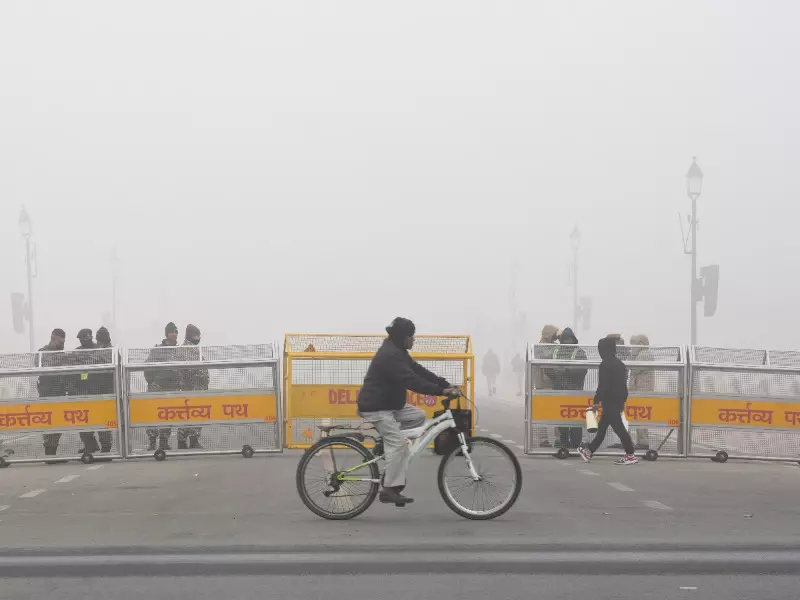
Winter pollution regularly rises across northern India, including Delhi-NCR, adding to health risks for residents. Vehicle emissions, crop-residue burning in Punjab, Haryana and Uttar Pradesh, and weather conditions that restrict the dispersal of pollutants contribute to the seasonal increase.
Authorities often respond to severe pollution with measures such as halting construction, restricting industrial activity and limiting traffic. The researchers said advance forecasts could make it easier to plan such interventions instead of introducing them at short notice.
Co-author Denise Mauzerall, a Princeton professor of public and international affairs and civil and environmental engineering, said emission reductions would remain essential.
"However, we show that forecasts of winter pollution based on observations from the previous autumn can allow additional pollution controls to be arranged in advance of extreme pollution periods," she said.
The authors said nearly 70 per cent of inter-annual variation in winter PM2.5 pollution across northern India is explained by western disturbances through enhanced ventilation and precipitation that remove pollutants.
Published by HT Digital Content Services with permission from Millennium Post.