
New Delhi, Sept. 24 -- For the students of Lady Shri Ram College for Women (LSR), the leafy lanes leading to the campus back gate no longer offer a sense of familiar comfort. Instead, they serve as a daily reminder of a chilling reality that has shaken the university community to its core.
On Thursday, September 24, 2026, regular offline classes resumed on the campus, just a day after the administration briefly shifted to online teaching.
The momentary pause was triggered by an unspeakable tragedy: the alleged gang-rape of a 17-year-old girl at gunpoint inside Aastha Kunj Park, located barely two kilometers from the college and immediately adjacent to a heavily frequented student route near the Kalkaji Temple.
A Community Shaken and Defiant
The incident, which occurred around dusk on Monday, September 21, has pierced the bubble of academic life in South Delhi. The victim, visiting the sprawling park with a friend on her 17th birthday, fell prey to three men in an area that hundreds of LSR students traverse daily to reach the nearby metro station.
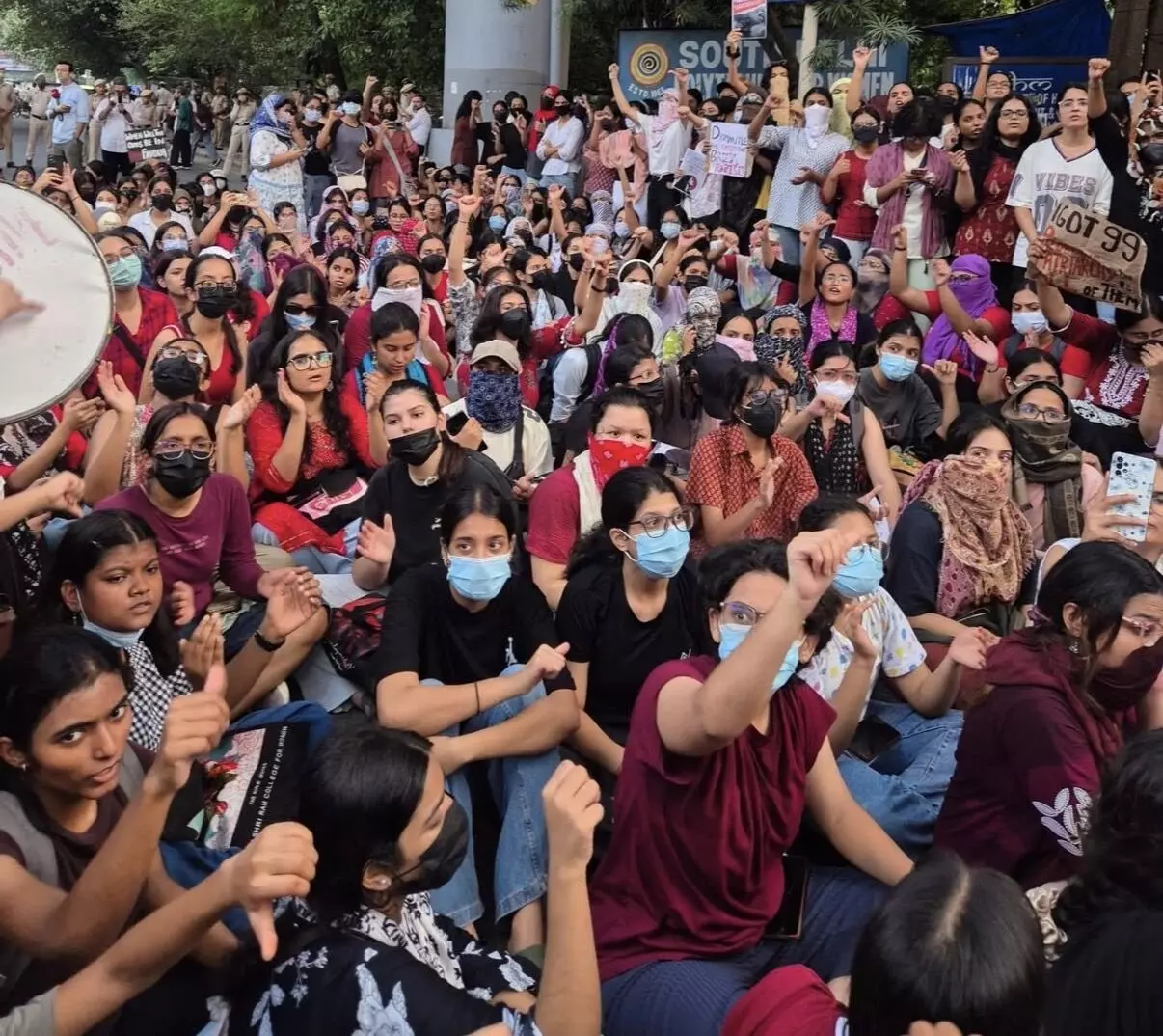
The college gates quickly became the epicenter of collective grief and fierce defiance. Hundreds of students staged a powerful solidarity march, their voices echoing through the South Delhi air.
Amidst the sea of protestors, Saavy, a student of Ram Lal Anand College and a member of AISA, captured the collective fury.
"The streets around LSR have been filled with a huge crowd chanting slogans of Azadi," Saavy said. "Whether it is Bihar's Jamui or Hathras, minors are suffering from harassment and rape cases, and these cases are coming from right, left, and centre they aren't stopping at all.
Near LSR, there are multiple safety issues, from broken streetlights to public gun violence. Neither the government nor the administration is taking this seriously. We demand accountability on this rape culture; we want azadi from patriarchy and moral policing."
The heavy atmosphere carried deep personal anxieties. Sania, an LSR student participating in the demonstration, offered a poignant glimpse into the restrictions female students face. "If you look around, most women are covering their faces," Sania shared. "It is because if our parents see us here, they will call us back home. We girls don't even have the freedom to use our democratic right to protest against the government and raise our voices."
Administrative Response and Wider Unrest
Recognising the psychological and physical toll on the campus, Principal Kanika K Ahuja confirmed the return to physical classrooms while emphasising that student welfare remains paramount, noting that faculty mentors and counsellors are available to offer support.
However, the shockwaves have galvanised student politics far beyond LSR.
On Thursday, the Akhil Bharatiya Vidyarthi Parishad (ABVP) staged a protest outside the Vice-Chancellor's office, linking the tragedy to rising threats across Delhi University.
ABVP and student leaders called for comprehensive security audits, regular police patrolling, and an overhaul of transit route security.
As LSR students return to their desks, the atmosphere remains resolute. The resumption of classes is not a return to normalcy, but a testament to their resilience and a stark warning that the fight for safety has only just begun.
Ultimately, the turbulent week serves as a stark reminder that true academic security requires systemic accountability, leaving students and authorities alike facing an urgent, unyielding demand for systemic reform.
Published by HT Digital Content Services with permission from Millennium Post.