
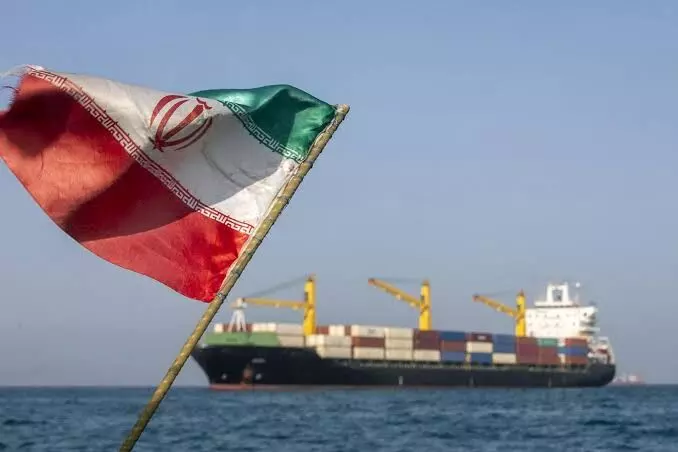
TEHRAN, Nov. 12 -- Iran has said it will not reopen the strategically important Strait of Hormuz or resume negotiations with the United States until Washington accepts seven conditions proposed by Tehran, raising fresh uncertainty over efforts to end the conflict in West Asia.
Iranian Parliament Speaker Mohammad Bagher Ghalibaf said Tehran had already communicated its position to Washington and was awaiting a formal response. He maintained that the next step towards ending the diplomatic deadlock depended on the American administration.
Speaking to Al Jazeera, Ghalibaf said Iran had clearly outlined its demands but had yet to receive a specific answer from the United States. "The ball is now in the Americans' court, and they must make a decision and announce it," he said.
Ghalibaf also warned US President Donald Trump against launching fresh military operations against Iran, asserting that another confrontation would end in failure for Washington. "If Trump decides to go to war again, he will face another defeat," he said.
The remarks came as diplomatic efforts involving Qatar continued, with Washington and Tehran remaining divided over the conditions necessary for a lasting settlement and the reopening of one of the world's most important maritime trade routes.
Iran's senior security official Mohsen Rezaei separately confirmed that no negotiations were currently taking place between Tehran and Washington. In an interview with Lebanon-based Al-Mayadeen television, he said Iran was waiting for an explicit American response to its demands before considering further diplomatic engagement.
Rezaei's comments followed Trump's meeting with Qatari mediators at the White House on Monday. Although the US president played down the possibility of another major military operation against Iran, he did not accept Tehran's existing proposal for a truce.
Iran's conditions include lifting American economic sanctions, releasing frozen Iranian assets, ending the US naval blockade of Iranian ports and providing compensation for damage caused during the conflict. Tehran has also demanded an end to hostilities across regional fronts, including Lebanon.
However, Iranian authorities have not publicly disclosed the complete list of all seven conditions, leaving some elements of the proposal unclear.
According to reports citing The Associated Press, Tehran's proposal envisages reopening the Strait of Hormuz on the sixth day after Washington fulfils its demands, with negotiations on a comprehensive agreement beginning the following day.
The proposed sequence reflects Iran's insistence that Washington take concrete steps before formal negotiations resume. The United States, meanwhile, has sought broader assurances concerning Iran's nuclear programme and regional security.
The differences have complicated attempts to reach a durable agreement following months of military confrontation and diplomatic exchanges.
Rezaei also issued a warning that Iran could target American military installations outside West Asia if they were used to launch attacks against Iranian territory.
He said US bases in European countries or other distant locations would not be exempt from retaliation if American aircraft operating from those facilities participated in strikes against Iran.
"If American aircraft take off from an American military base, even one located in a European country or some other distant region, to bomb Iran, we will strike those bases as well," Rezaei told Al-Mayadeen.
He added that Tehran possessed the capability to target installations and islands that Washington might consider beyond the reach of Iranian missiles.
The warnings highlighted the risk of a wider confrontation if hostilities resumed, even as both countries continued to signal an interest in avoiding another major military escalation.
The Strait of Hormuz remains central to the dispute because of its importance to international energy supplies. The narrow waterway connects the Persian Gulf with the Gulf of Oman and serves as a crucial shipping route for oil and liquefied natural gas exports from Gulf producers.
Before the conflict, approximately one-fifth of globally traded oil and liquefied natural gas passed through the strait, making disruptions to maritime traffic a significant concern for international energy markets.
The prolonged restrictions have affected commercial shipping and added uncertainty to global energy supplies, increasing pressure on regional governments and international mediators to secure an agreement.
Iran has maintained that reopening the waterway must be accompanied by meaningful economic relief and security guarantees. Tehran has argued that restoring maritime traffic without addressing sanctions and military threats would leave the underlying causes of the conflict unresolved.
Washington has taken a different position, seeking commitments from Iran on security and its nuclear activities as part of a broader settlement.
US Vice President JD Vance previously indicated that Iran would need to make meaningful reductions in its uranium enrichment capacity to satisfy American demands.
Tehran, however, has insisted that initial negotiations should focus on ending the blockade, restoring navigation through the Strait of Hormuz and preventing further military escalation.
The latest statements from Ghalibaf and Rezaei suggest that the two sides remain far apart despite continued mediation efforts.
With Iran refusing to reopen the waterway or return to negotiations before its conditions are met, the prospects for an immediate diplomatic breakthrough remain uncertain.
(https://www.google.com/s2/favicons?domain=https://www.hindustantimes.com&sz=32)
Hindustan Times+3
Published by HT Digital Content Services with permission from Millennium Post.