
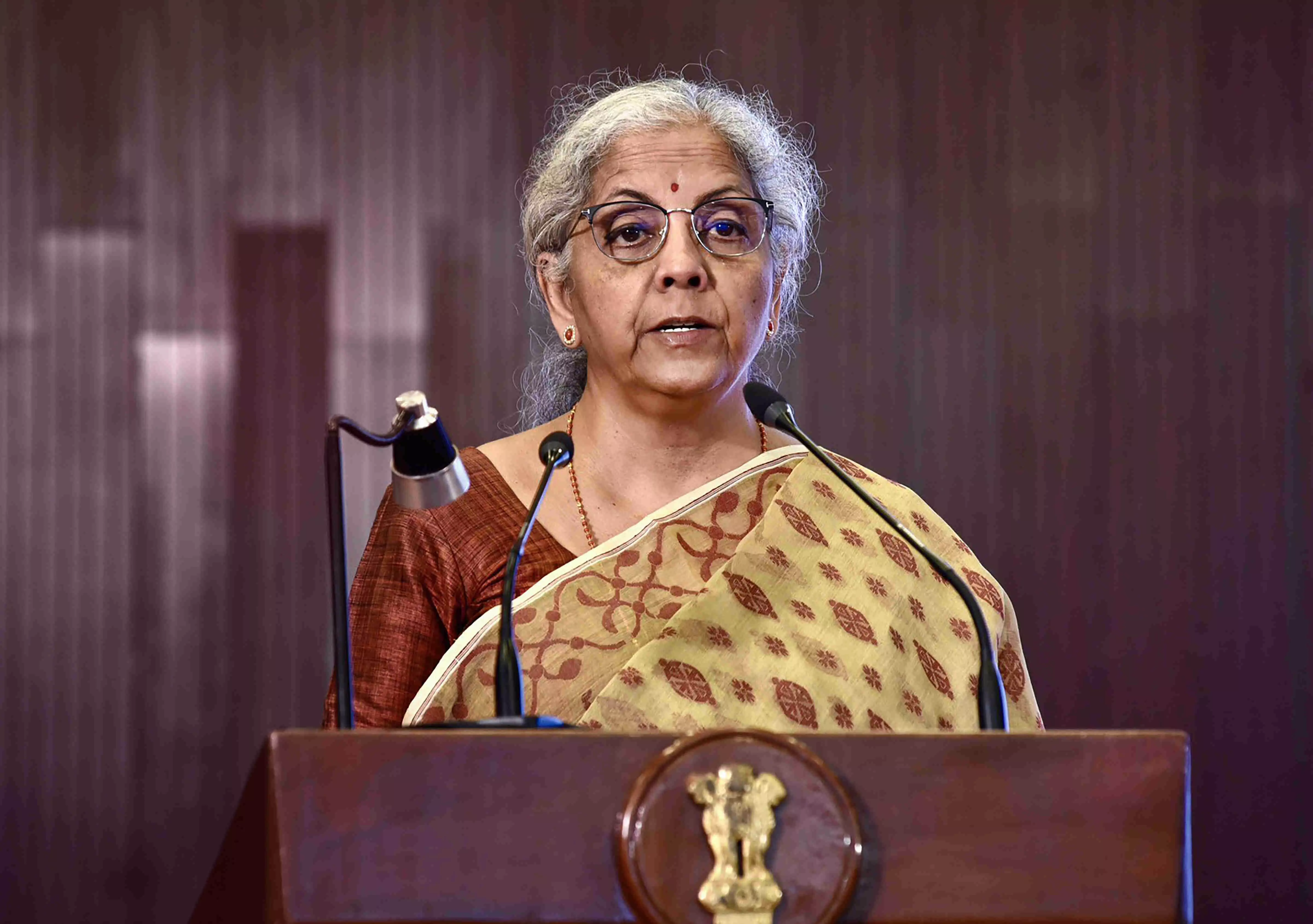
New Delhi, Oct. 5 -- Finance Minister Nirmala Sitharaman on Monday said India and the United States were continuing negotiations on a trade agreement, but the talks appeared to have reached a point where further concessions from either side could be difficult.
"The agreement's negotiations are still ongoing, although we like to believe that both sides have reached a plateau beyond which giving or taking might be very, very difficult," Sitharaman said at the Munich Security Conference. She added that the two countries could still move forward if there was room for compromise.
Sitharaman said a key issue in the negotiations was the trade imbalance in India's favour, with Washington seeking to reduce its deficit. "Naturally, the deficit is there on their side, or the balance is unfavourable for the US, so they would want to reduce that imbalance," she said.
She said trade imbalances have traditionally been addressed through negotiations, including efforts to secure greater market access for goods and services. However, tariffs are increasingly being used as a means of dealing with such imbalances.
"Tariff was an instrument of negotiation, and tariff had a certain framework within which you would apply it. Today, the framework is there, but tariffs are going," she said, describing tariffs as increasingly "weaponised". Sitharaman also cited India's trade deficit with China, which she said had grown exponentially since 2014, and questioned how far countries could go beyond negotiations to correct such imbalances.
Her comments came days after US Trade Representative Jamieson Greer said Washington and New Delhi were working to finalise a bilateral trade agreement, but that a deal was not imminent. He also indicated that US President Donald Trump and Prime Minister Narendra Modi could speak again soon to review progress.
On the India-EU trade agreement, Sitharaman described it as an example of India's approach to negotiating trade pacts. She said the agreement would cover economies representing about two billion people and a significant share of global trade and GDP, while protecting national interests in a difficult global trading environment.
Published by HT Digital Content Services with permission from Millennium Post.