
New Delhi, March 19 -- In a move aimed at tightening oversight of the energy sector, the Union government has classified petroleum and natural gas data as a matter of national security, requiring companies across the value chain to submit detailed operational information on a regular basis.
The directive, issued through the Petroleum and Natural Gas (Furnishing of Information) Order, 2026 by the Oil Ministry, mandates refiners, LNG importers, pipeline operators, city gas distributors and petrochemical firms to share granular data with the Petroleum Planning and Analysis Cell (PPAC). The March 18 gazette notification applies to both public and private entities and, in some cases, requires daily reporting.
Companies must disclose information on production, imports, exports, stock positions, storage, transportation and consumption patterns. The order states that data may be submitted in daily, weekly or monthly formats through designated electronic platforms. It also makes clear that reporting obligations override any existing confidentiality clauses.
"The obligation to furnish information under this order shall apply notwithstanding anything contained in any contract. and no entity shall refuse to furnish information. on the ground that such information is commercially sensitive or proprietary," the notification said.
The decision follows disruptions in global energy flows triggered by the ongoing conflict in the Middle East, which has effectively shut the Strait of Hormuz, a key route for India's imports. Before the conflict, more than half of India's crude oil imports came from countries such as Saudi Arabia, Iraq and the UAE via the strait. Around 85 to 95 per cent of LPG and nearly 30 per cent of natural gas supplies also passed through the same route.
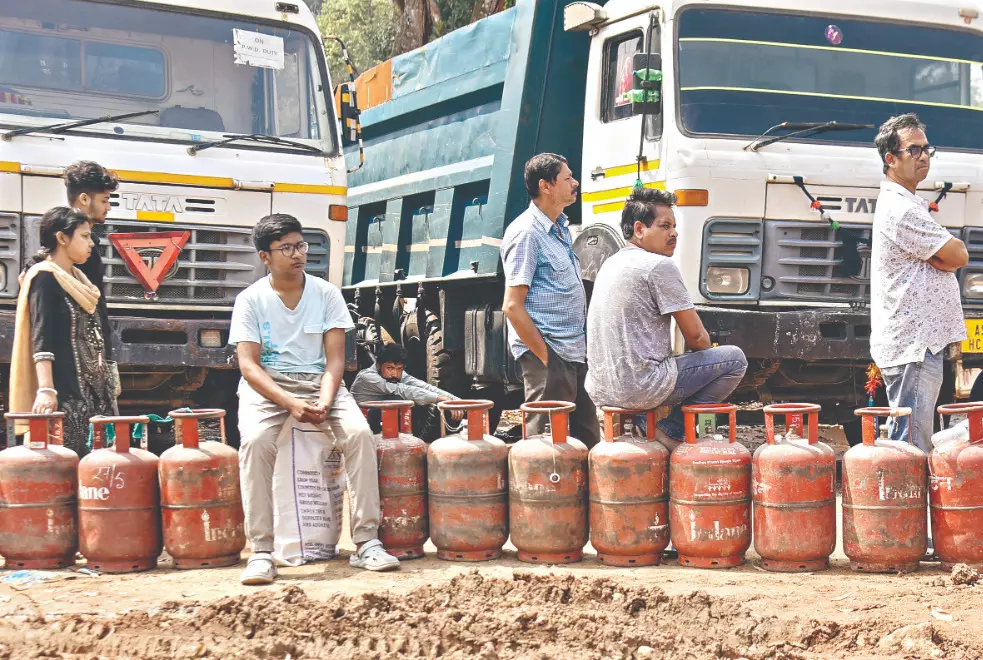
India depends heavily on imports, sourcing about 88 per cent of its crude oil, 50 per cent of natural gas and 60 per cent of LPG from overseas. While crude supplies have been partly rerouted from regions such as Russia, West Africa, the United States and Latin America, shortages of gas and LPG from Gulf nations have affected industrial and commercial users.
Officials said the new framework is intended to create a centralised, near real-time data system that allows quicker responses to supply disruptions. It is also expected to support prioritisation of critical sectors, including power generation, fertiliser production and household LPG distribution.
The order has been issued under the Essential Commodities Act, 1955, which empowers the Centre to seek information related to production, supply, distribution and stockholding of essential goods. According to the government, establishing a systematic mechanism for collecting and analysing such data is necessary in the public interest to ensure effective monitoring of the petroleum and natural gas supply chain.
The mandate covers a wide spectrum of stakeholders, including crude oil producers, oil marketing companies, storage operators, LNG terminal operators, gas pipeline companies and city gas distribution networks. Industry participants will need to upgrade their data systems to meet the stricter reporting requirements as the regulatory framework evolves.
Officials indicated that ensuring energy security will increasingly rely on real-time visibility across supply chains alongside diversified sourcing strategies.
Published by HT Digital Content Services with permission from Millennium Post.