
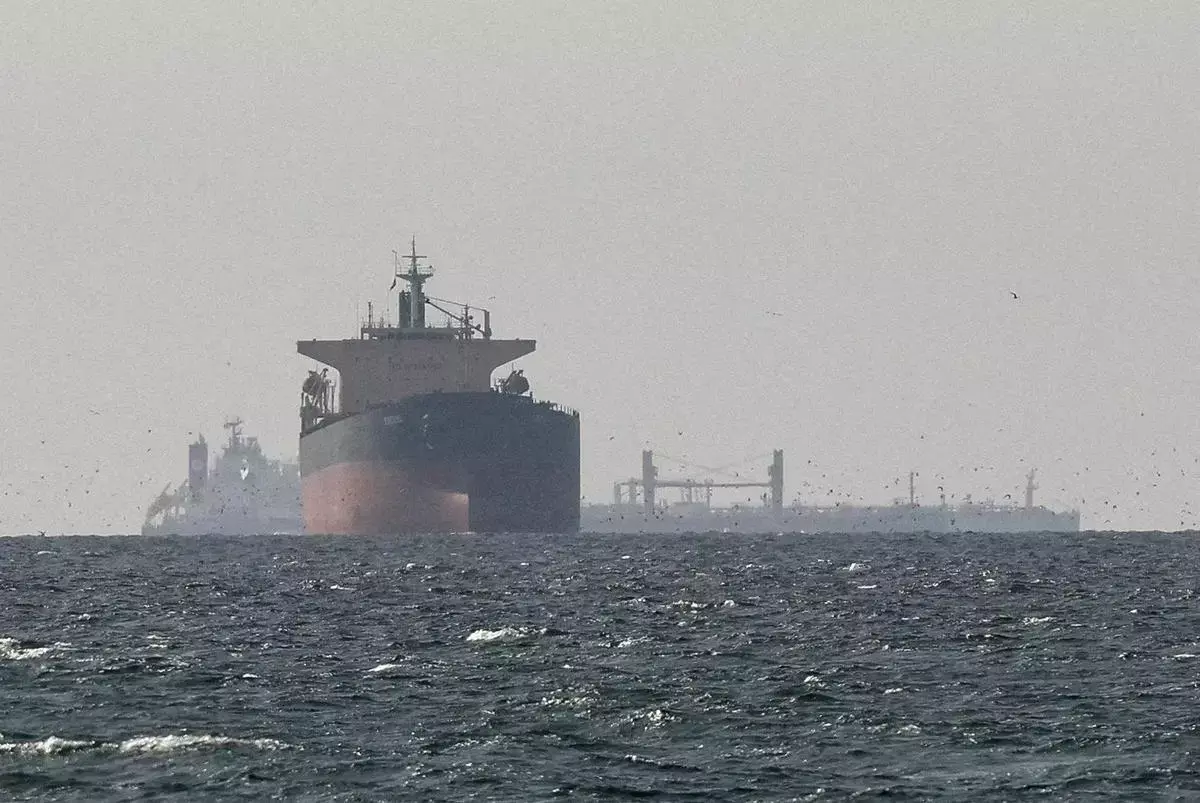
New Delhi, Sept. 19 -- State-run Engineers India Ltd (EIL) is in early-stage discussions with Saudi Arabia and the UAE to provide consultancy and engineering services for oil and gas infrastructure aimed at reducing the Gulf producers' dependence on the Strait of Hormuz, which has been severely disrupted by the Iran conflict, its chairman said.
Saudi Arabia and the UAE are planning investments of about USD 1 billion in pipelines, storage facilities, oil terminals and related infrastructure to provide alternative routes for moving crude and petroleum products to international markets, EIL chairman and managing director Atul Gupta told reporters after the company's annual general meeting.
"They are at the planning stage and we are involved in discussions at the planning stage," Gupta said.
EIL is seeking project consultancy and feasibility-study mandates for the planned infrastructure, he said.
The developments come as the conflict involving Iran and the US has disrupted shipping through the Strait of Hormuz, one of the world's most important energy chokepoints. The disruption has prompted Gulf producers to look at alternative infrastructure and routes to reduce their exposure to any prolonged interruption.
"There has been a slowdown in order inflows from the region (in the aftermath of the conflict) but we hope to see the order inflow pick up in Q3 and Q4," he said. "Definitely the conflict has opened more opportunities for us."
The immediate impact of the conflict, however, has been a slowdown in new orders from the Middle East as energy producers focus on securing and restoring existing installations, Gupta said.
"There has been a slowdown in orders from the Gulf region as those countries are busy securing and restoring their installations," he said.
The slowdown is significant for EIL because international business has become an increasingly important source of growth. Overseas projects account for 43 per cent of its order book, while international consultancy contributed about Rs 4,929 crore, or nearly 62 per cent, of the fresh business secured during 2025-26.
EIL secured fresh business worth Rs 7,978 crore in the year ended March 2026, taking its order book to a record Rs 15,109 crore as of March 31, he said adding the order book stands at around Rs 17,000 crore currently.
The company secured Rs 510 crore of orders from the Gulf region since the Iran war started, he said.
EIL has significant exposure to the Middle East, with projects and engagements across Saudi Arabia, the United Arab Emirates, Bahrain and Kuwait. It has also opened an office in Saudi Arabia and has a long-term in-Kingdom services agreement with Saudi Aramco.
For EIL, the conflict is therefore creating a mixed picture: delays to existing projects and near-term order inflows, but potentially a larger pipeline of engineering work if Gulf producers accelerate investments in alternative export infrastructure.
Gupta said opportunities could accelerate once the conflict eases, as Middle Eastern energy companies are expected to invest in pipelines, storage terminals and other facilities designed to reduce reliance on the Strait of Hormuz.
The UAE is also planning additional underground oil-storage facilities at Fujairah, he said.
Such investments could include engineering design, feasibility studies, project management and construction-management assignments - areas in which EIL has traditionally operated.
The Strait of Hormuz is particularly important to Gulf oil exporters because it provides the principal maritime route connecting the Persian Gulf with global markets. Any sustained disruption can therefore affect shipping routes, energy security and the cost and availability of crude and petroleum products.
The Middle East opportunity comes as EIL seeks to expand beyond its traditional hydrocarbons business and build a larger international presence.
International expansion has been a central part of that strategy. EIL has strengthened its presence in Saudi Arabia and continues to work across the UAE, Bahrain, Kuwait, Algeria, Guyana and Mongolia, while also expanding its business in Africa, he said.
In Nigeria, the company has secured an EPCM mandate for the expansion of the Dangote refinery, valued at about USD 360 million, in addition to a separate assignment for a four-train fertiliser project.
EIL is also diversifying into infrastructure, renewables, green hydrogen, biofuels, nuclear energy and defence as it seeks to reduce dependence on its traditional hydrocarbon business.
The company's ability to convert the current geopolitical disruption into new orders will depend on how quickly Gulf producers move from planning to actual investment and on the pace at which the conflict-related slowdown in existing projects eases.
For EIL, the Middle East conflict is thus creating a near-term drag on order flows even as it potentially opens a new class of engineering projects - infrastructure designed to make the region's energy exports less vulnerable to disruption at Hormuz.
Published by HT Digital Content Services with permission from Millennium Post.