
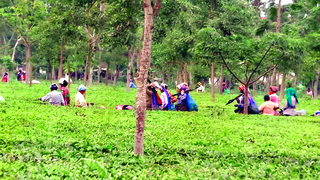
Alipurduar, March 8 -- Dark clouds of uncertainty have once again gathered over North Bengal's tea industry as a prolonged dry spell and rising international tensions create deep concern among stakeholders in North Bengal. Industry insiders fear that if the situation does not improve soon, both tea production and exports could face a significant setback this season.
According to tea industry sources, such a situation has not been witnessed in the past 15 years. Darjeeling and Alipurduar districts have experienced almost no rainfall since November. Particularly alarming is the situation in the Terai-Dooars region, where nearly 200 tea gardens reportedly did not receive even an inch of rainfall throughout February.
Although the Darjeeling hills recorded some rainfall, tea growers say it has brought little relief to plantations. Experts note that at least two inches of rain was usually required before the start of the first flush tea production. Due to insufficient rainfall, many tea gardens have become increasingly dependent on artificial irrigation, leading to higher production costs. The prolonged dry conditions have also increased the risk of pest and disease attacks, which could further affect tea output.
Chinmay Dhar, manager of Majherdabri Tea Garden in Alipurduar, said, "Such erratic weather has not been seen in the district in the past 30 years. There has been virtually no rainfall from November to February and there is a strong possibility that tea production will suffer."
Meanwhile, global developments have further heightened industry concerns. Tea exporters warn that if tensions between the United States and Iran escalate into a prolonged conflict, India's tea exports could be affected. Last year, around 18 per cent of India's tea exports were shipped to Iran, Saudi Arabia and other Gulf countries. Darjeeling's orthodox tea is largely exported to Iran, while a significant portion of green and CTC tea from Assam and North Bengal is also sent to these markets.
Ram Avtar Sharma, Secretary of the Indian Tea Planters Association (ITPA) Dooars branch, said: "If exports are disrupted, that 18 per cent of tea could return to the domestic market, creating an oversupply and pushing prices further down. Tea prices have already remained unstable over the past decade."
Published by HT Digital Content Services with permission from Millennium Post.