
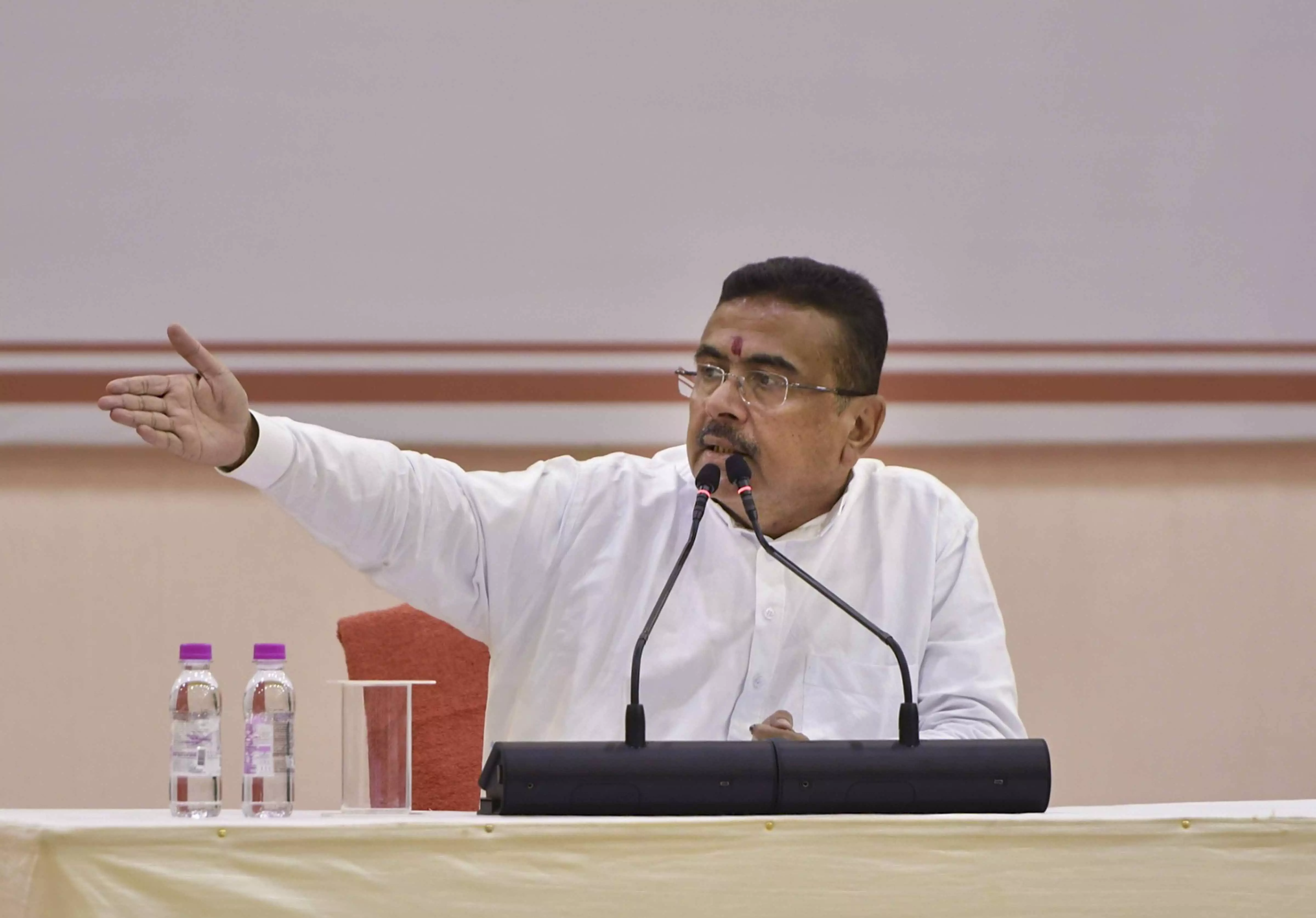
Kolkata, June 29 -- The Bengal Assembly on Monday passed two key Bills aimed at tackling rioting, destruction of public property and organised violence, with Chief Minister Suvendu Adhikari asserting that those responsible would be made to compensate victims and the state, even through the sale of their properties if necessary.
He said the legislation targeted "goondas" and would not be misused, including for political purposes.
The West Bengal Maintenance of Public Order (Amendment) Bill, 2026 and the West Bengal Public Safety and Control of Anti-Social Activities Bill, 2026-popularly called the "Anti-Goonda Bill"-were passed after a division vote, with 176 MLAs in favour, 41 against and 20 abstaining.
"If public or private property is destroyed, the guilty will not escape. If necessary, their houses and properties will be sold to recover compensation at the earliest," Adhikari said.
He began his address by referring to families of alleged victims of political violence seated in the visitors' gallery, naming Raju Samanta of Diamond Harbour, Hargobinda Das and Chandan Das of Murshidabad, and Debabrata Maity of Nandigram, and said they had come seeking justice.
Launching a political attack on the previous government, Adhikari alleged that violence had flourished because of "appeasement politics" and a failure to separate criminal activity from electoral considerations. He cited violence during the anti-CAA and anti-NRC protests in 2019, alleging that Railway tracks were uprooted at Samsi, Rejinagar railway station was set ablaze and buses, including government vehicles, were torched at Santragachi. He also referred to the violence in Howrah following protests over remarks by suspended BJP leader Nupur Sharma, and alleged that highways remained blocked for more than a day.
Adhikari alleged that during protests against the Waqf Amendment Bill, Mothabari was set ablaze and Hindu-owned shops were selectively looted while Muslim-owned establishments were spared. He alleged the then TMC government failed to deploy central forces because of vote-bank considerations.
Seeking to reassure the House, he said the law was not intended for political vendetta but to ensure accountability for those involved in riots, arson and vandalism. He claimed similar laws existed under different names in Maharashtra, Delhi, Uttar Pradesh, Karnataka, Madhya Pradesh and Jharkhand.
The West Bengal Public Safety and Control of Anti-Social Activities Bill, 2026, defines a "goonda" as a habitual offender engaged in anti-social activities individually or as part of a gang or syndicate. It provides for preventive detention of up to one year, subject to review by an Advisory Board headed by a sitting or former High Court judge. Authorities have also been empowered to conduct searches, seize properties allegedly linked to criminal activities and prosecute those who knowingly shelter persons facing detention or externment orders.
The West Bengal Maintenance of Public Order (Amendment) Bill, 2026 provides for an independent Claims Commission to assess damage caused during riots, unlawful assemblies, political demonstrations, arson, vandalism and mob violence. The Commission will determine compensation for damage to public and private property, including roads, bridges, government buildings, buses, hospitals, educational institutions, civic infrastructure, shops, factories and homes. Liability will extend to those accused of organising, funding, instigating, supporting or sheltering those responsible.
Trinamool Congress legislator Kunal Ghosh opposed the Bills, saying existing laws were sufficient and alleging the legislation conflicted with constitutional protections available to accused persons and citizens. He said the government had pushed the Bills through by using its majority.
Published by HT Digital Content Services with permission from Millennium Post.