
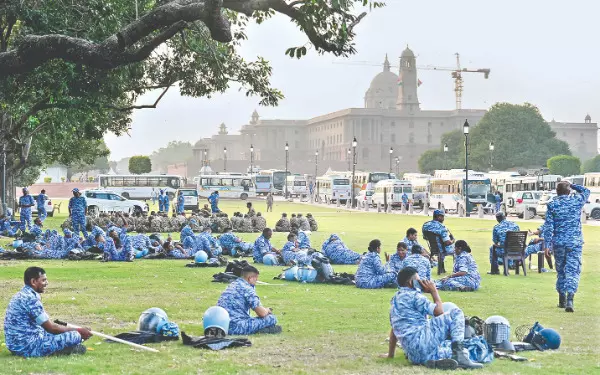
New Delhi, Oct. 9 -- As the autumn chill sets over New Delhi, the capital wears the tense, fortified air of an open emergency. With railways cutting off incoming express routes, fifty-seven metro stations facing prospective shutdowns, and barricades tightening around central avenues, the stage is set for a massive CJP and student-led mobilisation at Jantar Mantar.
The spark was ignited by mounting outrage over electoral integrity and demands for Chief Election Commissioner Gyanesh Kumar's resignation. But on the eve of the demonstration, AISA National President Neha Bora drew a stark, historic parallel to the Quit India movement of 1942.
"The history will repeat itself," Bora declared, pointing to the preemptive detentions, heavy paramilitary deployments, and police tracking trains across state lines. "Just like in 1942, arrests and blockades will not stop this movement. The government must be held accountable Gyanesh Kumar must go, and the SIR must be rolled back."
Essential safety & practical precautions for attendees
With the Delhi Police declaring the CJP application denied and warning of strict legal consequences, students navigating tomorrow's high-surveillance environment must prioritise safety:
Secure Your Communications: Expect severe internet blackouts near Jantar Mantar. Jot down critical legal aid and family contact numbers on a physical piece of paper.
Harden Your Device: Lock phones with a numeric PIN, disable biometric facial/fingerprint unlocks, keep devices fully charged, and carry a power bank.
Plan Transit Around Disruptions: With multiple metro stations restricted and long-distance trains canceled, expect extensive walking and heavy security checks. Avoid carrying anything that could be misinterpreted by security forces.
Carry Essentials: Pack physical ID proof, drinking water, and necessary prescription medications in case of sudden transit delays or detentions.
Published by HT Digital Content Services with permission from Millennium Post.