
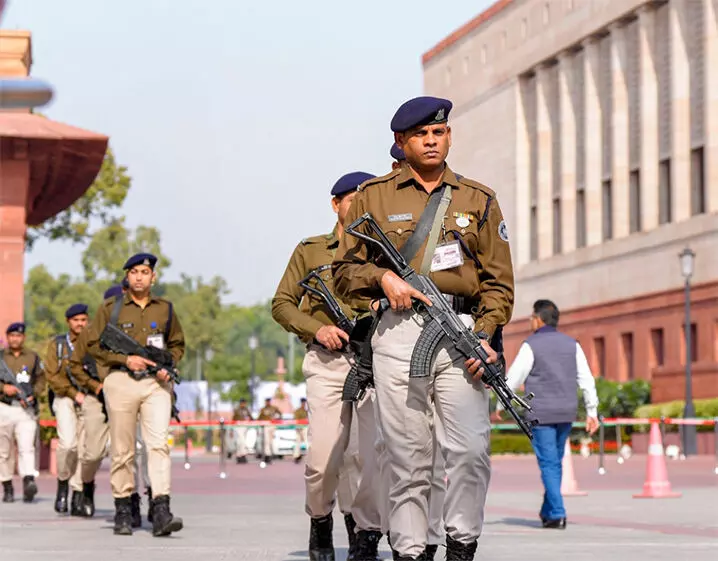
New Delhi, Oct. 22 -- In modern warfare, a nation need not lose territory to suffer strategic defeat. Its power supply can be disrupted, fuel distribution crippled, ports paralysed and industrial production interrupted. The vulnerability of critical infrastructure has consequently become a central concern of national security. It is against this backdrop that the Central Industrial Security Force's decision to reorganise its command structure around dedicated sectors for power, petroleum, coal, steel and ports deserves appreciation. This is not simply an administrative reshuffle.
It is a recognition that the security architecture of a changing India must evolve with the threats it faces.
Why geography is no longer enough
Territorial commands have traditionally offered administrative convenience and operational control over defined geographical areas. But geography alone cannot provide the depth of understanding required to secure increasingly complex industrial assets. A petroleum refinery, a coal-handling facility, a power station and a seaport may all require perimeter protection and access control. Yet, their vulnerabilities, operational processes and potential consequences of disruption are markedly different.
Sector-specific commands can develop the specialised knowledge that such differences demand. They can build institutional expertise, standardise sector-specific security practices, improve professional training and facilitate a more informed assessment of risks. They can also establish closer working relationships with the ministries, public-sector enterprises and private operators responsible for these installations.
The underlying principle is straightforward: security must be organised not merely around where an asset is located, but also around what it does, what it depends upon and what its disruption could mean for the country.
The changing face of the threat
The strategic rationale for this reform is reinforced by the changing character of contemporary conflict. Drones, precision weapons, cyber-attacks, sabotage and coordinated disruptions have expanded the range of threats confronting critical infrastructure.
An adversary may not need to destroy an installation to achieve a strategic objective. Even a temporary interruption of electricity generation, petroleum supplies or port operations could produce consequences extending far beyond the immediate site.
Critical infrastructure is therefore no longer simply an industrial security concern. Its protection is integral to economic continuity, public confidence and national resilience.
The CISF cannot independently counter every dimension of these threats. Missile defence, maritime operations, intelligence gathering and specialised cyber defence require the involvement of other agencies. Its contribution, however, is indispensable: preventing unauthorised access, detecting suspicious activity, protecting personnel, responding to incidents and supporting the restoration of secure operations. Greater sectoral expertise can make these responsibilities more effective.
Protecting an interconnected ecosystem
The proposed emphasis on dedicated East and West Coast Port Sectors is particularly relevant. Ports are gateways for international trade, energy imports, industrial raw materials and essential supplies. Their security has implications for far more than the physical premises of a harbour.
Yet specialisation must not create new institutional silos. Electricity generation depends on fuel supplies; industrial production depends on reliable power and transport; and ports connect domestic industry to international supply chains. A disruption in one sector can quickly affect others.
Sectoral commands must therefore combine specialised knowledge with coordination across sectors and with state police, intelligence agencies, maritime security organisations, emergency services and infrastructure operators. The objective must be an integrated security framework in which individual installations are protected as part of a larger national ecosystem.
From reorganisation to operational capability
Credit is due to the CISF leadership for recognising the need to align the Force's command structure more closely with the specialised requirements of the sectors it protects. The Ministry of Home Affairs' approval gives the initiative institutional authority and an opportunity to translate this vision into lasting operational improvements.
But structural reform is only the beginning. Its success must be judged by outcomes: better identification of vulnerabilities, more specialised training, effective intelligence sharing, realistic joint exercises, appropriate technological capabilities and faster responses to emergencies.
Physical security must also be coordinated with cyber-risk management, particularly where industrial control systems and operational technology are concerned. Equally important are tested contingency plans and the ability to restore essential operations after an incident. The ultimate objective is not merely to prevent an attack, but also to minimise its consequences.
The CISF has an opportunity to move beyond a predominantly installation-oriented guarding model towards a more specialised, intelligence-led and risk-based approach to critical infrastructure protection. This does not diminish the importance of traditional guarding. It makes guarding more informed, purposeful and responsive to contemporary threats. The CISF leadership has taken a timely step - the task now is to ensure that organisational innovation translates into operational excellence. It is also to ensure that the nation continues to function when its vital systems are under threat.
Views expressed are personal. The writer is former DG CISF and President of Indian Police Foundation
Published by HT Digital Content Services with permission from Millennium Post.