
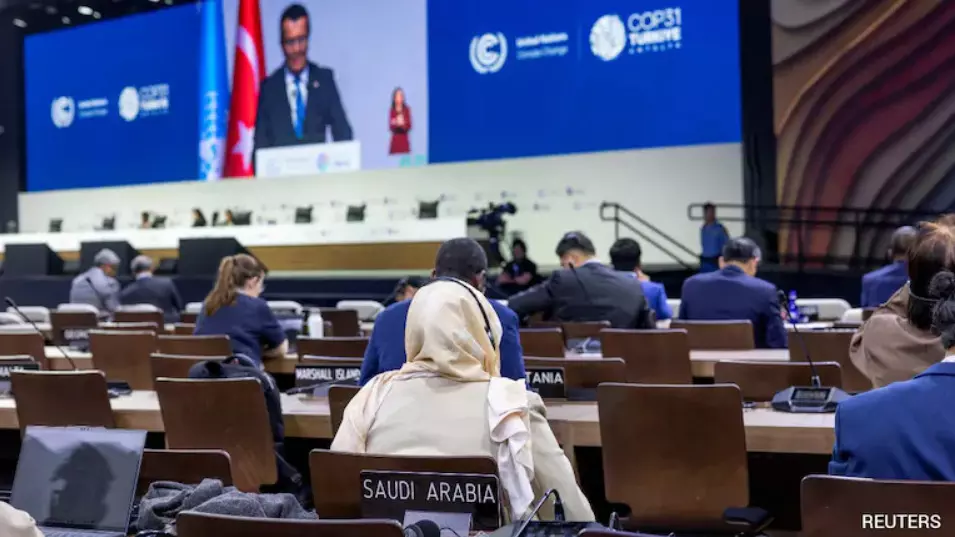
New Delhi, Nov. 23 -- Saudi Arabia has come under criticism from several countries over the collapse of the COP31 climate summit in Turkiye, with negotiators accusing Riyadh of wielding disproportionate influence and blocking efforts to include commitments to reduce dependence on fossil fuels in the final agreement.
The United Nations climate conference ended on Sunday without an overarching political agreement after negotiations stretched more than two days beyond their scheduled conclusion. The failure marked the first time since the 2009 Copenhagen summit that countries could not agree on a common political outcome.
Negotiators from Europe, small island states, Latin America, Asia and Africa alleged that Saudi officials enjoyed regular access to the Turkish and Australian conference leadership while representatives of other negotiating groups struggled to secure meetings.
Ireland's climate minister Darragh O'Brien, speaking on behalf of the European Union, accused oil-producing countries of obstructing progress. "This COP, I believe, was hijacked by some oil states," he said when asked about Saudi Arabia's role in the negotiations.
The Turkish COP presidency rejected allegations of preferential access, maintaining that no country or negotiating group had received special treatment. Saudi Arabian and Australian representatives did not immediately respond to requests for comment.
At the centre of the dispute was whether the final agreement should explicitly refer to transitioning away from coal, oil and natural gas, the principal sources of greenhouse gas emissions driving global warming.
Saudi Arabia and other major oil producers opposed language directly targeting fossil fuels, arguing that these energy sources would remain important to the global energy system for the foreseeable future.
The European Union, small island states and several climate-vulnerable countries insisted that any meaningful agreement must acknowledge fossil fuels and strengthen commitments to reducing their use.
The disagreement represented a setback from earlier climate negotiations, including COP28 in Dubai in 2023, when countries agreed to transition away from fossil fuels in energy systems.
According to negotiators, Saudi Arabia maintained that the Antalya agreement should avoid explicitly mentioning fossil fuels while incorporating stronger support for carbon capture technologies intended to reduce emissions from their continued use.
One Asian delegate involved in the negotiations said Riyadh treated these demands as non-negotiable and presented them as matters of fundamental national importance.
However, Saudi Arabia was not the only country unwilling to compromise. The European Union also hardened its position, warning that it would reject an agreement that failed to address the central causes of climate change.
Germany convened discussions involving small island states and other members of the High Ambition Coalition, which includes vulnerable developing nations and several developed countries.
The consultations produced a letter supported by approximately 130 countries, calling for explicit recognition of the need to transition away from fossil fuels.
The letter was submitted to the conference presidency as negotiations continued into the weekend, but the revised draft circulated on Sunday did not incorporate the coalition's central demand.
Instead, the proposed agreement omitted direct references to fossil fuels while retaining language supporting carbon capture and storage technologies.
The omission prompted criticism from several delegations, which argued that the draft represented a retreat from previous international commitments.
Tuvalu's climate minister Maina Talia expressed frustration over the negotiations, suggesting that Saudi Arabia had become the dominant influence over the proposed agreement.
Danish Climate Minister Samira Nawa also questioned whether oil-producing countries had been given greater influence than nations seeking stronger action to reduce emissions.
Several negotiators said Saudi Arabia's position had been strengthened by limited American engagement at COP31 and the absence of close coordination between Washington and Beijing, which had previously helped resolve disagreements at major climate conferences.
Singapore Environment Minister Grace Fu observed that the absence of major powers helping establish common negotiating boundaries had made reaching a compromise more difficult.
The summit had begun with relatively modest expectations. Host country Turkiye sought to promote greater electrification of the global economy while emphasising implementation of existing climate commitments.
However, disagreements over fossil fuels, carbon capture technologies and financial assistance for developing countries prevented negotiators from reaching consensus.
The proposed agreement also faced criticism for failing to establish sufficiently clear commitments on climate finance, particularly for countries struggling with the consequences of rising temperatures.
After negotiations continued into Sunday, COP31 president Murat Kurum acknowledged that agreement was no longer possible and announced that no further text would be presented.
Australia's climate minister Chris Bowen, who served as president of negotiations, described the outcome as deeply disappointing.
The collapse leaves unresolved questions over how governments intend to accelerate the transition away from fossil fuels and provide financial assistance to vulnerable countries.
Although the failure does not invalidate commitments made at earlier climate conferences, it represents a significant setback for international efforts to strengthen collective action against global warming.
The divisions exposed in Antalya also highlight the growing difficulty of reconciling the economic interests of major fossil fuel producers with demands from countries facing increasingly severe climate-related disasters.
Published by HT Digital Content Services with permission from Millennium Post.