
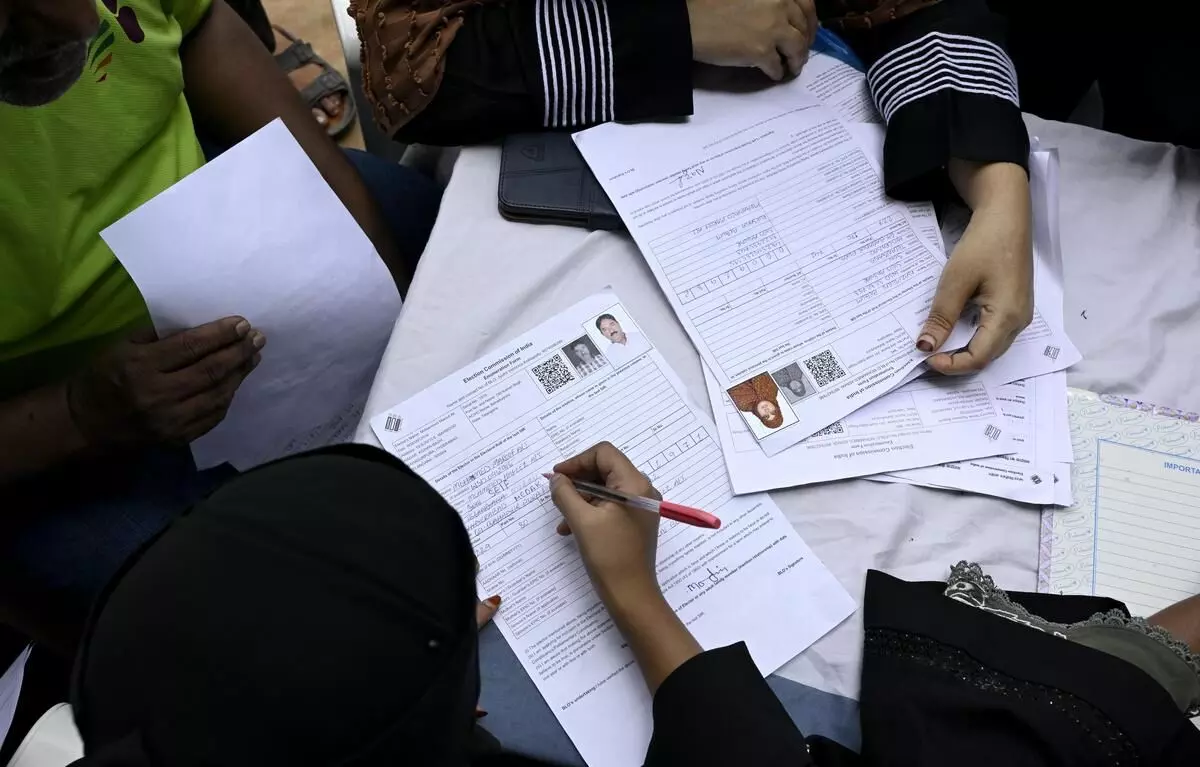
New Delhi, Oct. 5 -- The Supreme Court on Monday made it clear that the modified Form 6 used in the voter-registration process had not been approved by the court, as it heard a plea challenging decisions taken by the Election Commission amid the ongoing controversy over the Special Intensive Revision (SIR) of electoral rolls.
Chief Justice of India Surya Kant, heading the bench, said, "Modified Form 6 has not been approved by us, let us be very clear." The court indicated that it would examine the records to determine how the changes to the form were made. The remarks came during the hearing of a plea concerning alleged unilateral decisions taken by Chief Election Commissioner Gyanesh Kumar. The petitioners have challenged various decisions linked to the SIR exercise and sought action against the CEC. The Supreme Court, however, declined to pass an interim order seeking Kumar's suspension. Instead, it issued notices to the Election Commission, Kumar and the other two Election Commissioners, Sukhbir Singh Sandhu and Vivek Joshi, seeking their responses to the allegations.
The dispute over Form 6 centres on an additional declaration introduced alongside the voter-enrolment process during the SIR exercise. The declaration sought information linking new applicants to themselves, their parents or grandparents in earlier electoral rolls. The Election Commission has maintained that there was no change to the statutory Form 6 and that the additional SIR-related requirement was introduced as a separate declaration. It later removed the additional declaration from the online process in states where the SIR exercise had been completed. The issue has also figured among the objections reportedly raised by Election Commissioners Sukhbir Singh Sandhu and Vivek Joshi over decisions connected with the SIR exercise. The wider controversy concerns the manner in which decisions were taken and recorded within the poll panel.
The court is also examining whether decisions challenged before it were taken with the required participation and unanimity of the full commission. The bench indicated that if it finds that certain decisions were taken without the required unanimity, it could reconsider those decisions. The Supreme Court's observations come amid the broader legal and political dispute over the SIR exercise, electoral-roll revisions and the functioning of the Election Commission.
Published by HT Digital Content Services with permission from Millennium Post.