
New Delhi, March 11 -- State-owned fuel retailers Indian Oil Corporation (IOC), Bharat Petroleum Corporation Ltd (BPCL) and Hindustan Petroleum Corporation Ltd (HPCL) absorbing the impact of elevated global energy prices will lead to heightened margin and cash-flow volatility, Moody's Ratings said on Wednesday. "Domestic retail prices of fuels have remained largely steady since April 2022, despite swings in global oil and gas prices and the country's high dependence on imports," Moody's said in a note. "The companies will bear rising input costs from higher energy prices without corresponding increases in selling prices because the government's influence over retail pricing prevents timely cost pass-throughs." The three firms control nearly 90 per cent of retail fuel outlets in the country.
Global benchmark Brent crude rose sharply and hit a high of USD 119 per barrel on March 9 before settling just under USD 90 the following day, reflecting a heightened geopolitical risk premium. However, retail pump rates have not been revised as the three oil marketing companies (OMCs) continue to absorb the elevated global energy prices. "This reflects their role in supporting domestic fuel-price stability," the rating agency said. Domestic retail prices of petrol and diesel have remained largely unchanged since April 2022, despite global oil and gas price volatility, reflecting the government's involvement in fuel pricing. "The government's influence is reinforced by the OMCs' strong market position, as they operate close to 90 per cent of retail fuel outlets," it said. "Limited adjustment in domestic fuel prices will continue to shift cost pressures onto the OMCs."
India is highly dependent on imported oil and gas, which exposes the OMCs' cost base directly to movements in global energy prices. India imported 88 per cent and 51 per cent of its oil and gas requirements, respectively, in the fiscal year through March 2025 (fiscal 2024-25). When international prices rise, procurement and refining costs increase, while OMCs' realised prices for key fuels do not adjust in line with costs. "This gap compresses marketing margins and weakens operating cash flows, particularly during periods of sustained high energy prices", it said. During the period of elevated oil prices following the Russia-Ukraine conflict in 2022, the three OMCs incurred significant losses in fiscal 2022-23. However, these losses from the sale of petrol and diesel were temporary and were partially offset later when crude prices softened, resulting in higher marketing profits as retail prices remained unchanged. "Similarly, the recent increase in energy prices is likely to pressure OMCs' earnings in the near term, but we expect their earnings to recover as prices subsequently normalise," Moody's said.
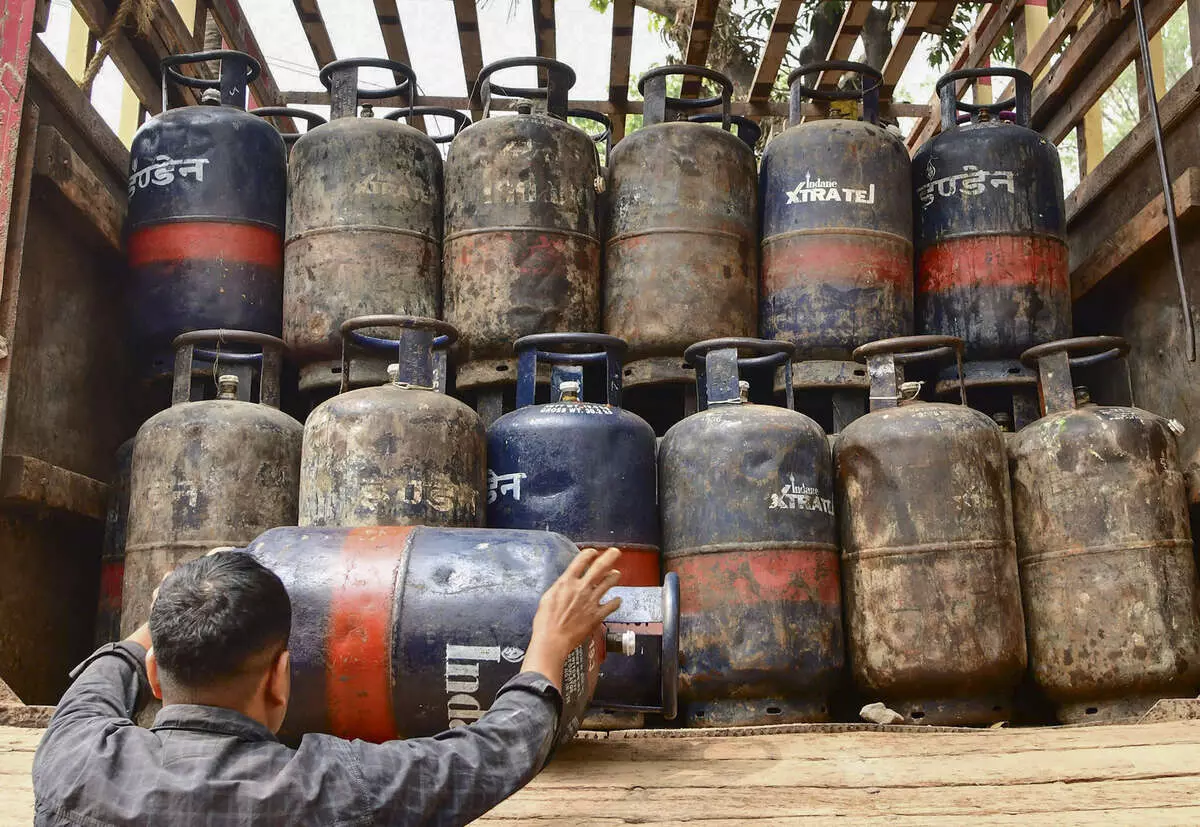
India stands out among the large Asian economies that rely on crude from West Asia. The country holds crude reserves covering 74 days of net oil imports. To ease global crude supply constraints caused by the closure of the Strait of Hormuz, the US government has also granted a 30-day waiver for India to buy Russian oil stranded at sea. Together, these measures increase crude supply options for OMCs. "The Middle East is also the primary source of LPG for India, and supplies have been severely disrupted by recent events. The government has directed all refiners in the country to maximise LPG output to ensure continued supply to domestic consumers," it said. Reflecting higher international prices, domestic LPG prices were also raised by Rs 60 per 14.2-kilogram cylinder on March 7. "We expect OMCs' losses will accumulate from selling LPG domestically below market prices, but they could be compensated later by the government," it said, adding that in August 2025, the government approved Rs 30,000 crore in total compensation for the three OMCs, which will be disbursed in 12 equal monthly instalments starting November 2025. The OMCs had incurred losses totalling close to Rs 40,000 crore in fiscal 2024-25.
Published by HT Digital Content Services with permission from Millennium Post.