
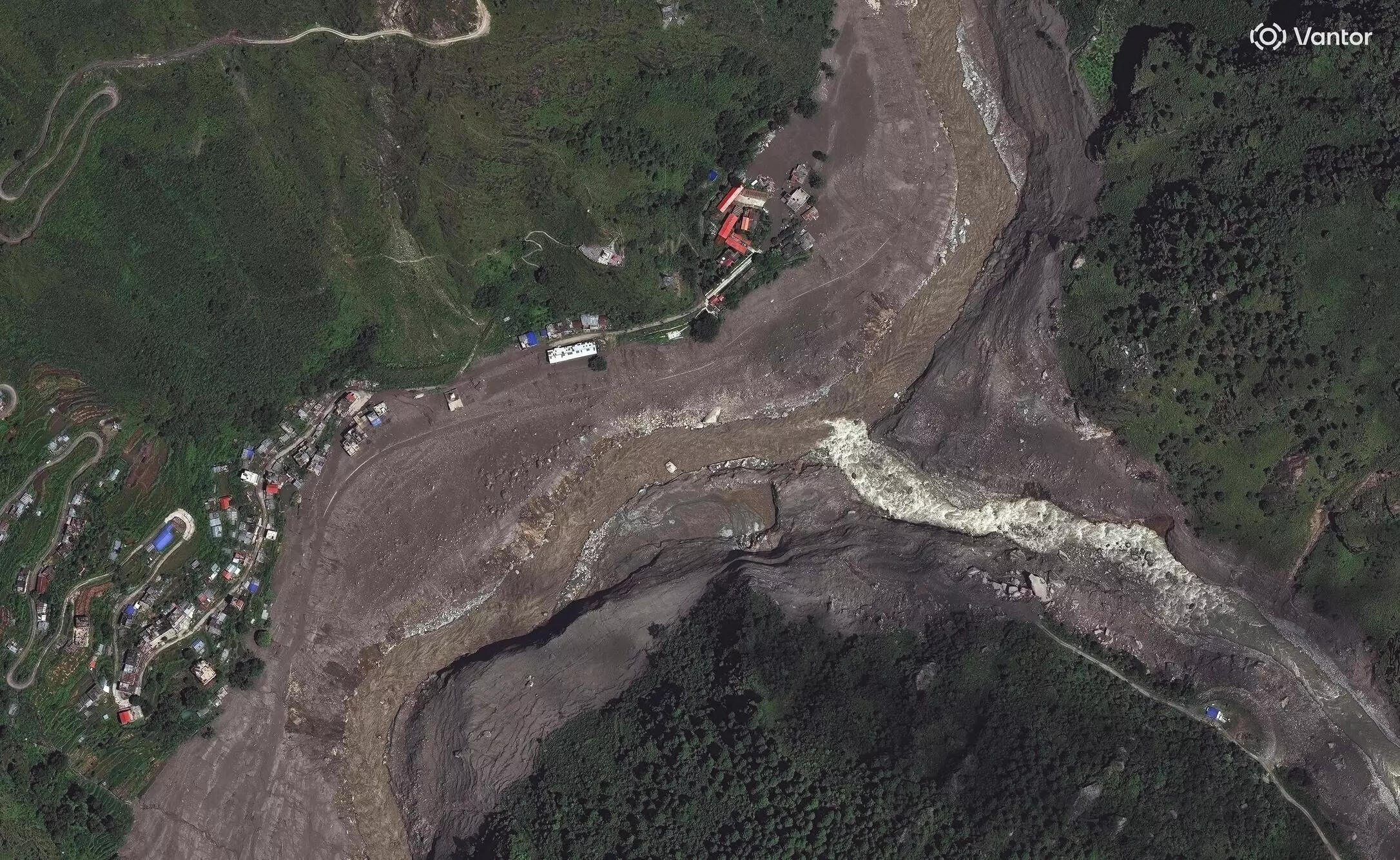
New Delhi, Aug. 29 -- A massive flash flood that swept through parts of Nepal and Tibet began after the collapse of a Himalayan glacier and the rock beneath it, according to seismic and satellite data examined by investigators.
The collapse occurred at an altitude of around 5,200 metres on August 26 and generated a powerful surge of ice, rocks and mud through river systems connecting the Nepal and Tibet regions. The event also registered as a 5.2-magnitude tremor.
The disaster has caused widespread destruction across the Himalayan region, with hundreds of people killed and thousands still missing. Around 93,000 people have been affected in Nepal, according to an estimate by the International Federation of Red Cross and Red Crescent Societies.
As of Friday night, 579 deaths had been confirmed in Nepal and five in Tibet. Nepal's disaster authorities reported 1,924 people missing, while 558 people were still unaccounted for in Gyirong county in Tibet. Ten bodies were also recovered from rivers that carried floodwaters into Uttar Pradesh.
A large number of those missing are foreign nationals, including Indian pilgrims who had travelled towards Mount Kailash and Lake Mansarovar. India has said that 320 of its citizens remain missing.
The floods have also severely damaged infrastructure on both sides of the border. More than 40 bridges have reportedly been destroyed or badly damaged, while over 40 kilometres of roads have been wiped out. At least eight hydropower projects have also suffered damage.
The enormous amount of debris carried by the floodwaters has blocked river channels, creating unstable lakes in the affected region. One of these lakes began spilling into the Lhende and Trishuli rivers on Friday, forcing rescue operations to be temporarily suspended.
Operations resumed after authorities assessed that the immediate danger had eased. However, the threat has not disappeared, with a Chinese government geohazards expert warning that more than 100 glacial lakes in the region could remain vulnerable.
The formation and overflow of these lakes could create further sudden flooding, adding to the risks faced by communities and rescue teams already dealing with the aftermath of the disaster. ()
: https://www.hindustantimes.com/ht-explainers/mapping-nepal-tibet-flash-floods-caused-by-himalayan-glacier-collapse-and-threats-ahead-infographic-101787938478691.html?utm_source=chatgpt.com "'Everything, everyone is gone': Mapping the glacier ..."
Published by HT Digital Content Services with permission from Millennium Post.