
Mumbai, Oct. 27 -- Energy supply unpredictability makes large-scale green trucking essential to insulate the Indian economy from fossil fuel dependence, notes Anand Mimani.
India's infrastructure story is expanding at a remarkable pace. Highways are expanding, ports are being modernised, and new logistics corridors are changing the way goods move across the country. As this network grows, there is another question we need to consider: what will power the trucks moving on it? Road freight is central to India's economy. According to the Government advisory body, NITI Aayog, and global energy think tank, RMI, trucks carry nearly 70 per cent of the country's domestic freight demand. The same report projects India's truck fleet to grow from around 4 million in 2022 to roughly 17 million by 2050. That is a significant shift. It also means the choices we make today about how freight is powered will have a lasting impact on our energy needs and logistics costs. For years, the discussion around cleaner trucking has largely centred on emissions. That remains important, but there is a larger business and economic argument emerging. India's freight sector is closely linked to fossil fuels and, consequently, to movements in global energy markets. The spike in global crude oil prices raises freight costs, drives inflation and erodes the competitiveness of businesses. Tens of thousands of them that roar to life every day across highways, ports and key industrial belts in India are fuelled by imported crude oil. Naturally, unpredictability in energy supply brings to the fore the need for a large-scale deployment of green trucking to insulate the economy from the risk of overdependence on fossil fuels. A more diverse and cleaner energy mix for heavy-duty transport can help build greater resilience into the logistics economy.
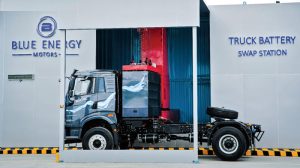
Making trucking viable Having worked closely with heavy-duty trucking, one thing is clear: fleet operators do not adopt technology simply because it is new or cleaner. It must work commercially. A truck is a productive asset. Uptime matters. Kilometres matter. Energy cost matters. This is why the transition to cleaner trucking cannot only be about putting more vehicles on the road. We need to build the operating ecosystem around them. What stands between the potential and a real transition is a robust ecosystem which involves accessible financing, a broad-based charging network and proliferation of battery-as-a-service or battery swapping models. A reduced upfront acquisition cost, total cost of ownership and charging cost will make electric trucks viable to run. Battery swapping recharges trucks within minutes, eliminating downtime. Because trucks with a battery swapping facility are sold without a battery. As a result, the upfront purchase cost issue is resolved. In addition, battery maintenance and lifecycle management are taken care of by a company managing the swapping service. As a result, fleet operators remain free from battery maintenance liability. Electric trucks with a battery swapping facility can be deployed first at ports, mining operations, and industrial clusters. This way viability of battery swapping models can be tested, and the model can be scaled up along national highway corridors. Research by RMI-formerly known as Rocky Mountain Institute-estimates that electricity can account for 30-50 per cent of an electric truck's total cost of ownership over seven years. This makes the cost and availability of power a critical part of the business case. In our view, charging for heavy-duty trucks needs to be treated as freight infrastructure. It should be planned around where trucks operate ports, industrial clusters, logistics hubs and high-utilisation freight corridors. Purchasing incentives for electric trucks are advantageous. But they will have limited effect if the charging infrastructure to support the energy requirements of trucks on the road at an affordable cost is not built in parallel. Having said that, we do not need infrastructure everywhere on day one. We need the right infrastructure in the right locations.
Powering clean freight There is also a broader opportunity to connect cleaner freight with India's growing renewable energy ecosystem. Research by the International Council on Clean Transportation indicates that battery-electric heavy-duty vehicles in India can already deliver 17-37 per cent lower life-cycle greenhouse gas emissions than comparable diesel vehicles when powered by grid-average electricity. With dedicated renewable electricity, the reduction potential could reach 85-88 per cent. This is an important point. The environmental impact of an electric truck is closely linked to the energy used to power it. As India's electricity mix becomes cleaner, the benefits of freight electrification can become stronger. But scale will require serious infrastructure planning. Renewable energy-powered charging can simultaneously lower operating costs for fleet operators and ensure that the emissions benefit of electrification. Several charging point operators have begun announcing plans to deploy fully renewable energy-powered charging stations, indicating both market demand and technical preparedness. This shift needs consistent policy support to move from sporadic initiatives to a comprehensive development of India's clean energy charging network. The not-for-profit organisation, International Council on Clean Transportation (ICCT), estimates that India could require around 9 GW of installed public charging capacity for battery-electric trucks by 2030, rising to 171 GW by 2050. These are large numbers. They also underline why energy providers, vehicle manufacturers, fleet operators and infrastructure companies need to start planning together. Electric trucks, if they are drawing energy from a renewable power supply, will be in a better position to reduce this exposure to a greater extent. The transport economy in India stands at an inflection point. It is now about accelerating the process of greening the trucking sector by building the ecosystem needed to make that transition affordable, resilient, and truly far-reaching. Charging infrastructure is significantly underdeveloped at the moment. As per an RMI estimate, just about 5 per cent of existing chargers in India are capable of meeting the power requirements of heavy-duty electric trucks. Electricity costs alone can account for 30-50 per cent of an electric truck's total cost of ownership over seven years. That means as vehicle prices decline, high charging costs can offset much of the operational savings electric is meant to deliver. The cost and availability of charging power deserve immediate attention from policymakers. Charging infrastructure powered by a cost-effective and consistent power supply is one of the key factors for the electric trucks to achieve cost parity with diesel.
Pilots to operations India has taken an encouraging step through the PM E-DRIVE scheme, with '5 billion allocated to support up to 5,600 electric trucks. The next challenge is to turn early adoption into commercially sustainable operations. An intensive programme with a bigger fund allocation and long-term policy framework is the need of the hour, which will offer manufacturers, financiers, and fleet operators the confidence to commit capital on scale. This is where we believe the industry needs to remain practical. India's freight ecosystem is diverse. A truck operating inside a port has a very different duty cycle from one travelling long distances on national highways. Mining, cement, steel and express logistics each have their own operating requirements. And there may not be one answer for every application. What matters is choosing the right clean energy technology for the right duty cycle and proving it through real-world operations. For fleet operators, the final test will remain simple: can the truck deliver reliable uptime, predictable operating costs and consistent performance? Also, there should be an enabling policy framework that encourages investment in constructing dedicated e-truck corridors. Highways equipped with high-power, renewable energy-integrated charging infrastructure can drive demand, remove range anxiety, and generate the operational data needed to refine the model before nationwide deployment.
The road ahead India is already investing heavily in the physical infrastructure required for its next phase of growth. We now need to think equally seriously about the energy infrastructure that will power the movement of goods across it. Clean trucking serves three priorities, i.e., energy security, trade competitiveness, and environmental sustainability. The transition to clean trucking is no longer a question of feasibility. It is a question of gaining pace with better ecosystem development planning and policy will and intent. It is about time to build that ecosystem before we miss the bus. As India accelerates towards its ambition of becoming a $10 trillion economy, powering the road freight movements with electric trucks is no longer merely an environmental tick box. Green trucking is a strategic priority to build economic resilience. Corporations with environmental, social and governance (ESG) commitments, e-commerce and FMCG fleet operators, and dedicated electric truck operators are the key players who will drive green trucking. Because they have their financial strength and sustainability mandates. Having said that, cleaner trucking is not only an environmental opportunity. It has implications for energy security, logistics efficiency and the long-term resilience of India's freight economy. The transition will take time. It will require collaboration across industry, government, energy providers and financiers. The priority is how to accelerate the pace of transition and the policy and infrastructure evolution. These elements will set the stage of large-scale adoption of electric trucks.And the direction is becoming increasingly clear. The next chapter of India's freight story will now be defined not by how much we move, but by how intelligently we power that movement.
About the author Anand Mimani, CEO of EV and New Energy Business, Blue Energy Motors, brings over 26 years of industry experience leading strategy, operations, product rollout, and partnerships to scale zero-emission trucking solutions.
Published by HT Digital Content Services with permission from Infrastructure Today.