
Mumbai, Aug. 28 -- Rizwan Sabjan, Head of Sales & Proposals, and Ramakrishna Nuti, Global Sales Manager -Automation Technologies, Fuller Technologies Cement India, discuss cement laboratory automation.
India's cement industry is on a strong growth path, driven by infrastructure projects and urban housing demand, with the market expected to grow at over 10 per cent CAGR through 2030. Over the next five years, the sector will reshape the nation by powering mega-corridors, smart cities, and expanding urban centers, while adopting green cement and alternative fuels and waste-heat recovery systems to cut emissions.The cement manufacturing sector faces mounting pressure from rising demand for high-quality cement products and increasingly stringent environmental regulations. To remain competitive, organisations must enhance productivity, ensure regulatory compliance, and reduce operational costs, all without compromising product quality. These challenges are further intensified by skills shortages, stricter safety requirements, and the need to manage more complex and demanding operating conditions.
The Challenges of Going GreenThe cement manufacturing process has evolved significantly as the industry strives to improve cost efficiency and environmental performance. The growing use of alternative fuels and supplementary cementitious materials introduces variability that directly impacts product quality, requiring continuous monitoring and adjustment through precise, agile quality control systems. At the same time, increasing market demand for specialised products places greater emphasis on maintaining tight process control across all stages of production.To fully capitalise on these opportunities, quality control systems must respond rapidly and effectively to changing conditions. Their ability to deliver timely, accurate insights is critical, often determining whether a plant can maintain competitiveness or risks losing market share.
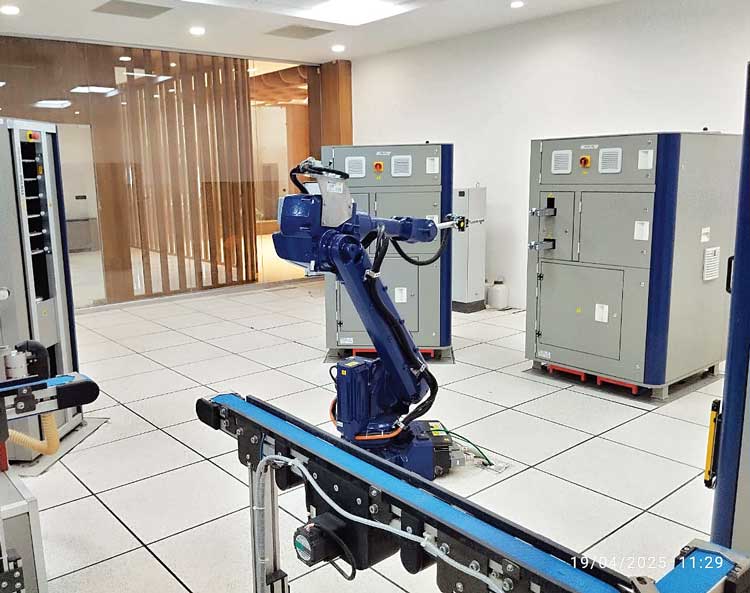
Automated Laboratory SolutionsFortunately, the capability of quality control systems has grown immensely in recent years. Where previously plants relied on the skills of their laboratory team, today automated laboratory solutions can achieve optimum consistency in representative sampling, better solid sample preparation and accurate analysis through fast, automated systems. As one can see below there has been tremendous growth in QCX/RoboLabs(R) in recent years.Fuller has been a pioneer in this field. With our Lab Automation Solution, cement plants can say goodbye to inconsistencies in quality and excess operational costs, such as a daily variation in power and fuel consumption. They are no longer held back by the skills shortage, or unable to take on the challenge of greener production for fear of undermining quality.QCX/RoboLab(R) is a quantum leap in quality control for the cement industry, delivering consistency throughout quality control operations.The QCX/RoboLab(R) laboratory concept, which utilises an industrial robot for sample handling allows for very flexible laboratory layouts and a high sample throughput.Lab Automation speeds up every aspect of quality control operations, from sampling / sample collection to accurate pellet preparation for analysis, and especially when it comes to taking control actions to achieve a desired target with QCX/BlendExpert (Raw Mix Control). Plus, by eliminating the potential for manual errors, precision is significantly increased. And the laboratory becomes a much safer environment, with fewer operators and a far reduced risk to health and safety. The advanced, user-friendly software can be tailored to your specific cement production needs, including special fuels, and supports continuous 24/7 operations.
Benefits of QCX(R) Lab Automation SystemEnhance quality controlAchieve consistent, reliable results through automated sampling, preparation, and analysis-eliminating human errors and variability.Reduce fuel and energy consumption Improve raw material consistency to optimise preheater and kiln performance, leading to lower fuel usage and energy costs.Ensure a safe and healthy work environmentMinimise exposure to hazardous tasks by automating processes and maintaining clean, dust-free laboratory and sample preparation areas.Strengthen competitive advantageDeliver superior product quality by leveraging best-in-class technology and advanced process control systems.Extend equipment lifespanStabilise operations to reduce mechanical stress and wear, increasing the durability and reliability of plant machinery.Simplify compliance and managementMeet quality standards with ease while supporting continuous improvement through automated reporting and data-driven insights.
Productivity Quality Savings SafetyFast and accurate results with consistency in operational behavior 24/7/365 Uniformity in quality control with sound chemistry that doesn't compromise on safety Reduced number of unplanned stoppages with precise chemistry recipe 2 x 350 TPH
Published by HT Digital Content Services with permission from Indian Cement Review.