
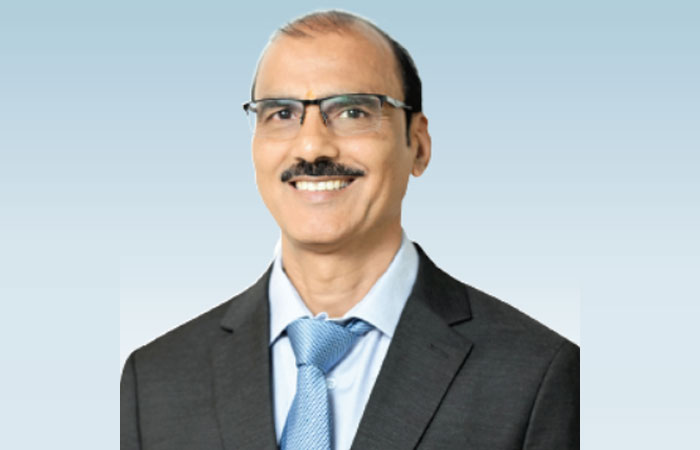
India, June 17 -- Satish Maheshwari, Chief Manufacturing Officer, Shree Cement, explains how intelligent drive systems, predictive maintenance, and digitalisation are transforming gears, drives, and motors from mechanical assets into strategic enablers of reliability, efficiency, and plant performance.
In a cement industry where a single gearbox, motor, or drive system failure can disrupt production, asset reliability has become a critical business priority. Satish Maheshwari discusses how advancements in gear design, energy-efficient motors, variable frequency drives, and Industry 4.0 technologies are helping manufacturers improve uptime, optimise energy consumption, and extend equipment life. He highlights the growing importance of predictive maintenance, condition monitoring, and lifecycle management in building resilient, future-ready cement operations.
How are modern gear, drive, and motor technologies improving efficiency and reliability in cement manufacturing operations? Modern gear, drive, and motor technologies are improving efficiency and reliability through compact, high power-density designs and optimised system integration. Advanced gear systems are designed to maintain low Hertzian contact stress and ensure positive torque transmission, which helps reduce transmission losses. The use of case-hardened gears, profile modifications, and improved surface finishing minimises friction and micro-pitting. These improvements reduce thermal loading and wear rates, thereby extending equipment service life. In addition, high-efficiency motors and drives improve power factor, load matching, and overall energy utilisation. Collectively, these advancements contribute to higher uptime, reduced maintenance requirements, and improved process reliability.
What are the biggest operational challenges cement plants face today in maintaining critical drive systems and heavy-duty motors? Cement plants face several challenges in maintaining critical drive systems and heavy-duty motors due to extreme duty cycles and highly abrasive operating environments. Large heavy-duty gearboxes with high torque ratings are often difficult to access and maintain, making reliability and maintainability important considerations. Achieving the right balance between AGMA design standards, service factor, and factor of safety is critical for ensuring long-term durability. Severe operating conditions, including dust ingress, thermal variation, and shock loads, further accelerate equipment degradation. Additionally, issues such as shaft misalignment, lubrication contamination, and vibration resonance can lead to equipment failures. Addressing these challenges requires effective condition monitoring, root cause analysis (RCA), and predictive maintenance strategies.
How is digitalisation transforming the monitoring and predictive maintenance of gears, drives, and motors in cement plants? Digitalisation is fundamentally transforming asset management in cement plants by enabling real-time monitoring, advanced diagnostics, and predictive maintenance. Industry 4.0 technologies, coupled with IIoT-enabled sensors and cloud-based platforms, provide continuous visibility into the health and performance of critical equipment. Key operating parameters such as vibration acceleration (g), velocity (mm/s), displacement are continuously monitored. Advanced diagnostic techniques, including FFT spectrum analysis, help identify issues such as gear defects, imbalance, misalignment, and bearing faults at an early stage. Cloud-based systems facilitate remote monitoring, trend analysis, and AI-driven insights, allowing maintenance teams to make informed decisions based on actual equipment conditions rather than fixed schedules. Prognostics and Health Management (PHM) models further support residual life estimation, while tools such as bearing L10 life calculations and lubrication monitoring enhance lifecycle planning. These capabilities help shift maintenance strategies from reactive to predictive, reducing downtime, improving asset availability, and optimising maintenance costs.
What role do energy-efficient motors and variable frequency drives play in reducing power consumption and operational costs? Energy-efficient motors and Variable Frequency Drives (VFDs) have become essential tools for reducing energy consumption and improving operational efficiency in cement manufacturing. Modern high-efficiency motors are designed to minimise electrical losses, including IR losses, core losses, and stray load losses. This results in better thermal performance, longer insulation life, and improved overall reliability. VFDs further enhance efficiency by enabling precise speed and torque control based on process requirements. Instead of operating continuously at full speed, equipment can run at optimal RPM levels, significantly reducing energy consumption across various applications such as fans, conveyors, and grinding systems. Additionally, VFDs help minimise inrush currents during start-up, reduce mechanical stress on equipment, and lower peak power demand. Together, energy-efficient motors and VFDs contribute to substantial energy savings, lower operating expenditure, and improved process control throughout the plant.
How are evolving production demands influencing the design and selection of gearboxes and drive systems for cement plants? Increasing production and throughput demands are driving the need for high torque-capacity, compact gearbox designs that can operate reliably under continuous-duty conditions. The design focus is increasingly centered on achieving high reliability factors and optimised service factors to support sustained plant operations. Modern gearboxes are also being engineered with modular designs that facilitate ease of maintenance during short shutdown periods. In addition to performance requirements, selection criteria now include maintainability, Mean Time to Repair (MTTR), and the availability of maintenance resources. The use of advanced materials and coatings further enhances fatigue strength and improves resistance to wear and corrosion. Overall, the industry approach is moving towards robust, efficient, and maintenance-optimised gearbox and drive systems.
In what ways can automation and smart drive technologies contribute to improved plant productivity and process optimisation? Automation plays a critical role in ensuring closed-loop process control and real-time optimisation of plant operations. Advanced DCS and PLC platforms help enhance grinding efficiency and improve throughput by enabling better control of key process parameters. Smart drives contribute by providing adaptive speed and torque control based on real-time process feedback. Their integration with SCADA systems allows centralised monitoring and control of operations across the plant. In addition, condition-based monitoring enables early fault detection and helps reduce unplanned downtime. By reducing human intervention, process variability, and operational risk, automation and smart drive technologies contribute to higher productivity, optimised energy use, and more stable process performance
How important is lifecycle management and aftermarket support in ensuring long-term performance of gears, drives, and motors? Lifecycle management is essential for ensuring the long-term reliability, availability, and maintainability (RAM) of gears, drives, and motors. Regular inspections, lubrication audits, and timely upgrades help extend Mean Time Between Failures (MTBF) and support sustained equipment performance. OEM support is equally important, providing access to genuine spare parts, technical diagnostics, and refurbishment expertise. Planned shutdowns, combined with predictive maintenance practices, help reduce the likelihood of catastrophic failures and minimise downtime. Additionally, aftermarket solutions such as retrofitting, digital upgrades, and performance optimisation initiatives help improve equipment effectiveness over time. Together, these measures contribute to a lower Total Cost of Ownership (TCO) and improved asset lifecycle performance.
Published by HT Digital Content Services with permission from Indian Cement Review.