
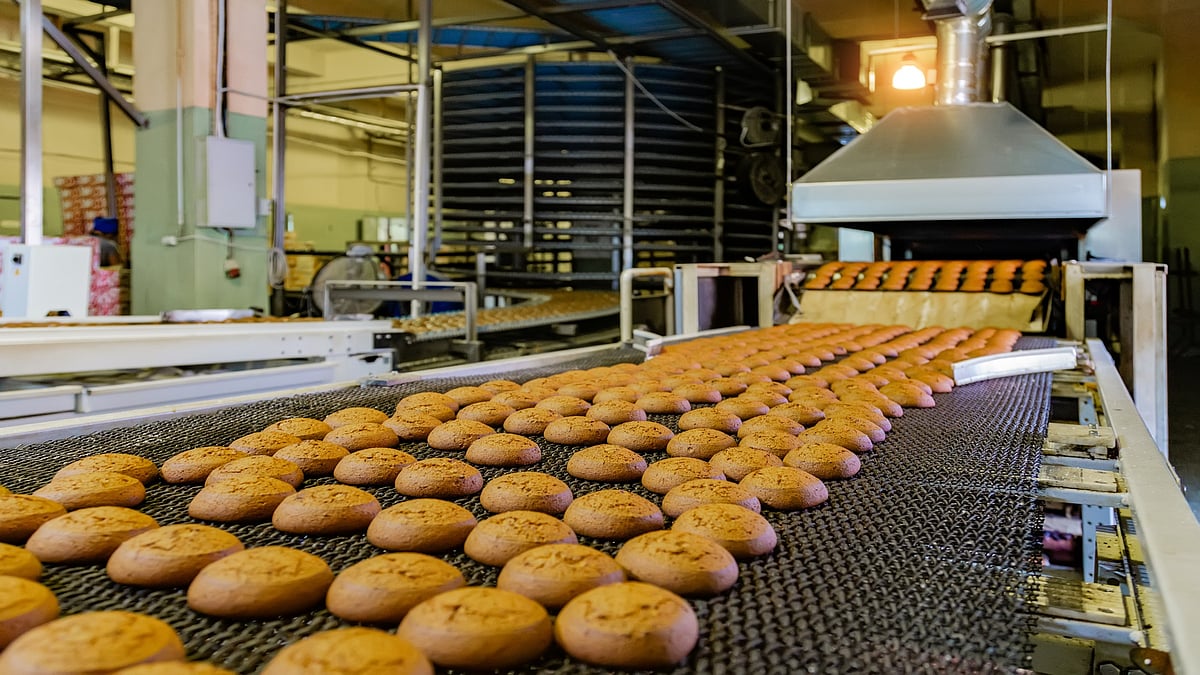
India, March 26 -- As the global food and beverage industry navigates rising complexityfrom evolving consumer demands to stricter safety standards and sustainability goalsautomation and digital transformation have become critical enablers of growth and resilience. Rockwell Automation is at the forefront of this transformation, helping manufacturers build smarter, more connected operations.
Rockwell Automation is a global leader in industrial automation and digital transformation, helping manufacturers become more connected, productive, and sustainable, said Neville Thomas Dsouza, National Sales Leader End User Discrete & Hybrid, Rockwell Automation India. Our focus is on bringing together people and technology to expand what is humanly possiblea message that resonates strongly in food and beverage, where uptime, safety, agility, and brand trust are non-negotiable.
Addressing industry challenges with integrated automation
Food manufacturers today face a unique convergence of challengesranging from workforce shortages and rising input costs to the need for faster product innovation and consistent quality. Many facilities continue to operate with legacy systems that limit visibility and slow down operations.
Food manufacturers face a unique mix of pressures, explained Dsouza. Rockwell addresses these challenges by enabling smart manufacturing through integrated automation and information.
By connecting production systems and digitizing operations, Rockwell enables manufacturers to automate manual processes, improve traceability, and enhance decision-making through real-time data. The companys approach spans the entire value chainfrom processing and packaging to warehousing and enterprise operations.
The goal is straightforward: help food manufacturers run safer, faster, and more flexiblywhile building the operational resilience needed to thrive in a dynamic market, he added.
Enhancing food safety, quality, and compliance
In an industry where safety and compliance are paramount, consistency and traceability are essential. Rockwells automation systems help reduce variability on the plant floor while ensuring robust data capture for audits and reporting.
Food safety and quality depend on consistent execution, strong controls, and traceable records, said Dsouza. Robust control systems and standardized automation reduce variability, while operational software helps capture time-stamped production and quality data.
Digitalization further strengthens responsiveness, enabling manufacturers to detect trends early and respond to deviations proactively rather than relying solely on end-of-line checks. Solutions such as Plex MES provide advanced capabilities in production execution, quality management, and recall traceability.
Driving efficiency and reducing waste
Operational efficiency remains a key focus area for food manufacturers aiming to maximize throughput while minimizing waste and downtime. Rockwells solutions help improve performance across machines, lines, and entire plants.
Food and beverage operations succeed on efficiencymaximizing throughput while minimizing downtime, scrap, and resource consumption, Dsouza noted. When manufacturers connect operations, they gain earlier insight into bottlenecks, changeover losses, and quality-related waste.
This visibility enables targeted improvements that enhance Overall Equipment Effectiveness (OEE) and stabilize production processes.
Enabling the shift to smart factories
The transition to smart, connected factories is reshaping the future of food manufacturing. Rockwells Connected Enterprise framework plays a central role in this evolution by bridging operational technology (OT) and information technology (IT).
The future of food manufacturing is connected, data-driven, and increasingly software-enabled, said Dsouza. We help customers move toward smart factories by securely connecting production systems, people, and enterprise workflows.
Cloud-based platforms like Plex MES further accelerate this transformation by enabling real-time, paperless production management and enterprise-wide visibility.
Digitalization, AI, and the rise of proactive operations
Emerging technologies such as AI, IoT, and advanced analytics are shifting food manufacturing from reactive to proactive operations.
Digitalization is shifting food manufacturing from reactive operations to proactive performance management, Dsouza explained. AI augments teams by accelerating anomaly detection and supporting faster decision-making.
These technologies enable manufacturers to improve agility, streamline changeovers, and better respond to demand fluctuations and innovation cycles.
Supporting sustainability through data-driven operations
Sustainability is no longer a separate initiative but a core operational priority. Rockwell helps manufacturers align sustainability goals with productivity improvements through better data visibility.
For food manufacturers, sustainability is increasingly tied to measurable operational outcomes, said Dsouza. Connected operations help identify where energy and materials are consumed, where scrap is generated, and where process variability impacts yield.
By reducing waste and optimizing resource use, manufacturers can achieve both cost efficiency and environmental impact reduction.
Future Trends: AI, digital twins, and greater connectivity
The adoption of advanced technologies is set to accelerate across the food industry. Trends such as AI-driven quality control, digital twins, and autonomous operations are gaining momentum.
Across food and beverage, the direction is clear: more connectivity, more intelligence, more flexibility, and greater resilience, Dsouza emphasized. The winners will be those who build strong digital and automation foundationsso emerging capabilities like AI and digital twins can be adopted pragmatically and scaled with confidence.
Through its integrated approach to automation, digitalization, and connectivity, Rockwell Automation continues to empower food manufacturers to navigate complexity, improve performance, and build future-ready operations in an increasingly competitive landscape.
Published by HT Digital Content Services with permission from FoodTechBiz.