
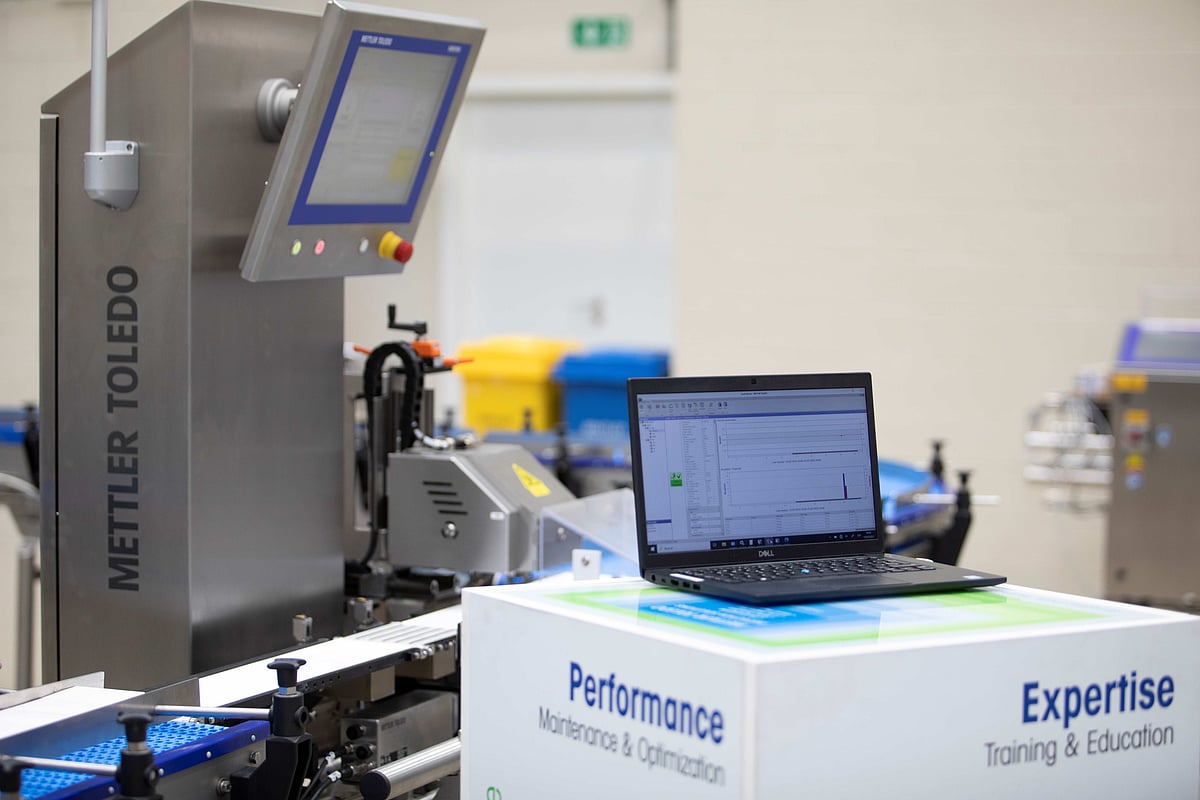
India, May 8 -- At Interpack 2026, scheduled from 713 May in Dsseldorf, global packaging and processing leaders will converge to explore the future of manufacturing. Among them, Mettler-Toledo is set to make a strong impact with its focused narrative on smarter, data-driven product inspection. In an interaction with Mr Siddharth Kachroo, Head of Sales Product Inspection, Mettler-Toledo India, we gain insight into how the company is aligning inspection technologies with the evolving demands of modern manufacturing.
Driving control in a high-pressure production environment
Manufacturers today are navigating a complex mix of rising production speeds, cost pressures, and heightened expectations around product quality and regulatory compliance. Addressing these challenges, Mettler-Toledos presence at Interpack 2026 is anchored in its theme: Inspect. Protect. Comply.
Manufacturers are managing several pressures. Production lines are running faster, cost control remains a priority, and expectations around product quality, safety and compliance continue to increase, explains Mr Kachroo. At Interpack, our focus is on how inspection can help bring greater control and consistency into production.
He emphasises that inspection is no longer a standalone checkpoint but an integrated part of production strategy: Product inspection is also becoming more closely linked to overall production performance. It is no longer just a single checkpoint, but part of how manufacturers maintain visibility, consistency and control across the line.
Regulatory demands shaping innovation
As regulatory frameworks tightenparticularly around traceability, hygiene, and documentationinspection technologies are evolving beyond detection alone.
Detection performance remains fundamental, but manufacturers also need systems that support consistent, reliable operation, automated data capture and clear audit trails, says Mr Kachroo.
Mettler-Toledo is responding by strengthening both detection capability and data management. Solutions like ProdX are central to this approach: Data management solutions such as ProdX support this by automatically recording inspection and testing activities in real-time and securely storing the data, which is easily accessible for auditing purposes.
Ensuring compliance across complex supply chains
With increasingly globalised and complex supply chains, maintaining product integrity across multiple sites is a growing challenge. Mettler-Toledo advocates a structured inspection approach.
We work with manufacturers to identify key inspection points, including designated critical control points and apply the appropriate technologies at each stage, Mr Kachroo explains.
These technologies include checkweighing, metal detection, x-ray inspection, and vision systemsoften deployed in combination. He adds, By capturing inspection data consistently, manufacturers can track performance, support traceability and respond more quickly when issues arise.
Introducing the M50 R-Series metal detector
A key highlight at Interpack 2026 will be the unveiling of the M50 R-Series metal detector, designed to meet modern production needs.
The M50 R-Series reflects how requirements around metal detection are changing, says Mr Kachroo. Sensitivity remains important, but manufacturers also need systems that are easier to use, easier to connect and better suited to modern production environments.
The system integrates intuitive operation with automation and connectivity: It combines strong detection performance with an intuitive interface and features such as automated testing and improved connectivity. This helps reduce manual intervention, improve consistency and integrate metal detection more effectively into the wider production process.
Advancing bulk inspection with X-ray technology
Another major focus is the X3 Bulk Series for x-ray inspection, specifically designed for challenging bulk product environments.
Bulk inspection presents specific challenges. Products can overlap, move unevenly and vary in density, making consistent detection more difficult, Mr Kachroo explains.
The X3 Bulk Series addresses these issues: It is designed to inspect loose and unpackaged products on conveyors and supports reliable foreign body detection even when product flow is less controlled.
Importantly, it also enhances operational efficiency: By identifying and removing only affected product, manufacturers can reduce waste, maintain yield and avoid unnecessary disruption to production.
Enhancing efficiency through integrated systems
Integrated inspection systems are gaining traction as manufacturers seek to optimise space and streamline operations.
Combination systems help simplify production lines while maintaining full inspection coverage, says Mr Kachroo.
By combining technologies like checkweighing with metal detection, x-ray, or vision inspection, these systems reduce footprint and complexity: Managing one integrated system rather than multiple standalone machines supports consistency, reduces training requirements and improves overall efficiency on the line.
The growing role of data and traceability
Data-driven manufacturing is central to Mettler-Toledos strategy, with ProdX software playing a pivotal role.
Access to reliable inspection data is becoming essential for managing quality and compliance, Mr Kachroo notes. ProdX connects inspection devices across the production line and records inspection activities in real time, storing that data to support traceability, documentation and audit readiness.
He highlights the broader impact of integration, When integrated with systems such as MES or ERP platforms, this data can also be used to support deeper analysis and continuous improvement across the production process.
The future: digitalisation, automation, and AI
Mettler-Toledo sees inspection technologies becoming deeply embedded within digital manufacturing ecosystems. Inspection will become more closely integrated with the wider production environment, says Mr Kachroo. We expect stronger connectivity between inspection systems and other production technologies.
Automation and usability will also improve: Automation will continue to improve usability, helping operators manage systems more efficiently while maintaining consistent results.
He also points to the growing accessibility of advanced technologies, AI and machine learning will become more accessible within manufacturing plants and product inspection tools, strengthening how inspection data is used across production lines, supporting faster decisions and easier compliance.
Service as a critical differentiator
Beyond equipment, lifecycle service support is a key pillar of Mettler-Toledos value proposition.
Service plays a critical role in maintaining inspection performance over time, Kachroo emphasises.Inspection systems need to operate consistently and reliably, which depends on regular maintenance, performance verification and ongoing support.
The company supports customers through a global service network and digital tools:This allows customers to address issues quickly and maintain high levels of uptime.
He also highlights initiatives like Test Before You Invest: It helps manufacturers test inspection equipment with their own products and in real factory conditions, enabling them to select the most appropriate solution with confidence.
A broader vision for inspection
Summing up Mettler-Toledos showcase at Interpack 2026, Mr Kachroo underscores a shift in how inspection is perceived.
We want visitors to understand how inspection supports the broader performance of their production operations, he says. It is not only about detecting contaminants. It is about maintaining product quality, supporting compliance and having clear visibility of what is happening across the line.
He concludes with a clear message, At Interpack, we are demonstrating how inspection can be applied across critical control points to support more consistent, efficient and well-managed production. Ultimately, it is about giving manufacturers the confidence and control they need to run their operations effectively.
Published by HT Digital Content Services with permission from FoodTechBiz.