
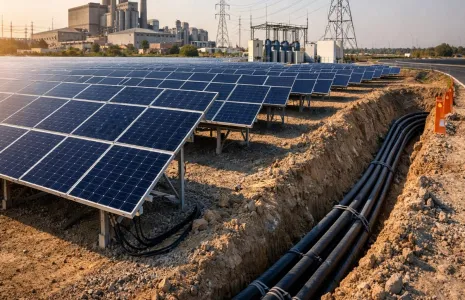
Mumbai, Aug. 26 -- Rhetan TMT has commissioned one megawatt (MW) captive solar plant at its Kadi, Gujarat facility. The Ahmedabad-based TMT bar maker confirmed the unit began feeding power for its own use after installation completed in July. The ground-mounted unit required two approvals before operation, registration from the Gujarat Energy Development Agency and permission from the National Highways Authority of India to lay an underground electrical cable across a national highway. With those clearances in place the plant now supplies electricity directly to the company rather than to the grid.
The company regards energy costs as significant, accounting for nearly 20 per cent of its overall cost base for continuous rolling mill operations. The captive plant has been commissioned to cover part of that requirement while reducing dependence on external supply and stabilising production economics. Rhetan has not disclosed expected monetary savings from the solar installation but described the step as aimed at strengthening the energy economics of manufacturing. The managing director indicated the move will bring renewable power more directly into day to day production.
This commissioning follows other operational developments at the firm, including Bureau of Indian Standards certification for Fe500D, Fe550 and Fe550D grades of TMT bars obtained last month. That certification enables the company to supply higher grades of reinforcement steel to government and public sector infrastructure projects where BIS approval is mandated. Together the solar project and the certifications are intended to lower operating costs and to open access to new customer segments that demand certified products. For a mid sized regional steel manufacturer these measures are designed to improve competitive pricing over time.
The project also illustrates a broader trend among manufacturers to adopt on site renewable generation as a tool to manage energy expenditure and meet procurement conditions for institutional clients. By placing generation at the point of consumption the company aims to capture operational benefits while aligning production with environmental considerations without specifying further targets. Stakeholders will watch how the initiatives affect supply contracts and cost structure as they are integrated into routine operations.
Published by HT Digital Content Services with permission from Construction World.