
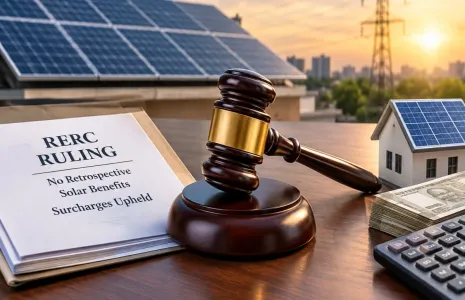
Mumbai, Nov. 20 -- The Rajasthan Electricity Regulatory Commission (RERC) has ruled that a rooftop solar project installed before the Rajasthan Solar Energy Policy, 2019, came into force cannot claim exemptions or concessions under the policy retrospectively. The decision was issued in Petition No. RERC/2392/2026 filed by Agrawal Metal Works against Jaipur Vidyut Vitran Nigam and Rajasthan Urja Vikas and IT Services.
The dispute involved a demand notice of Rs. 56.85 mn issued by Jaipur Vidyut Vitran Nigam for fixed charges, cross-subsidy surcharge, additional surcharge, electricity duty and water conservation cess. The charges followed the installation of a rooftop solar plant at Agrawal Metal Works' manufacturing facility in Jaipur.
Agrawal Metal Works, a copper and copper alloy products manufacturer, had signed a power purchase agreement with Sun Source Energy in May 2018 for a 1.78 MW DC rooftop project under the Renewable Energy Service Company model. Developed behind the consumer's meter, the project received electrical inspection clearance in February 2019. The company argued that it qualified for benefits under the 2019 policy and related grid-interactive regulations, and that installation details had been submitted to the distribution company within the prescribed timelines.
Jaipur Vidyut Vitran Nigam opposed the petition, stating that the plant predated the policy and therefore could not receive its benefits. It also disputed the alleged submission of mandatory installation information and questioned the authenticity of a June 30, 2021, letter presented as evidence of intimation. RERC held that determining whether the letter had been received involved disputed facts that should be examined by the Consumer Grievance Redressal Forum or another competent authority.
The Commission said fixed-charge liability arising from non-intimation could apply only until June 30, 2023, or February 8, 2024, when the distribution company formally acknowledged awareness of the installation. It further held that electricity procured from a third-party Renewable Energy Service Company developer falls under open access regulations, making both surcharges applicable during the relevant period. RERC said electricity duty and water conservation cess were outside its jurisdiction and disposed of the petition.
Published by HT Digital Content Services with permission from Construction World.