
Mumbai, Aug. 7 -- Rajasthan has emerged as the leading state in deploying decentralised solar power under PM KUSUM, recording 1,236 MW of decentralised solar capacity since 2021-22 and ranking third nationally in standalone solar pump installations, according to information presented in the Lok Sabha. The Minister of State for New and Renewable Energy replied to questions from Members of Parliament Rahul Kaswan and Brijendra Singh Ola and attributed the performance to strong state participation and growing farmer awareness. The account noted sustained implementation across districts.
Component A, which promotes decentralised solar power plants of up to two MW on farmers' land, has seen Rajasthan commission more than 1,236 MW since 2021-22. In the first quarter of FY 2026-27 the state added 500.09 MW, representing nearly 74 per cent of the 673.97 MW installed across India in the period. Officials said the concentrated additions reflected focused deployment and state coordination.
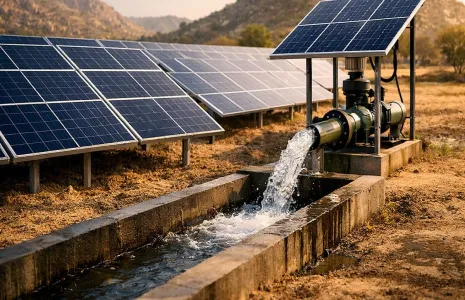
Under Component B Rajasthan installed 127,639 standalone solar pumps between 2020-21 and June 2026, while Maharashtra leads with 551,971 pumps followed by Haryana with 194,969 and Uttar Pradesh and Jharkhand completing the top five. Nationwide, more than 1.149 million (mn) standalone solar pumps have been installed under the scheme. The state installed 27,701 pumps during the current financial year up to June, after 33,713 pumps in FY 2025-26 and 31,588 in FY 2022-23.
Under Component C, focused on solarisation of grid connected agricultural pumps and feeders, Rajasthan solarised 168,000 agricultural pumps during FY 2025-26 and an additional 29,887 pumps in the current financial year up to June. The Centre said PM KUSUM is demand driven and allocations are based on proposals submitted by states and their implementation performance, with factors such as farmer participation, land availability, timely state financial contribution and feeder segregation affecting outcomes. A third party evaluation by PTC India Ltd found that PM KUSUM accelerated decentralised renewable energy deployment, improved irrigation reliability and increased farmers' incomes by around 40 per cent through solar powered irrigation systems.
Published by HT Digital Content Services with permission from Construction World.