
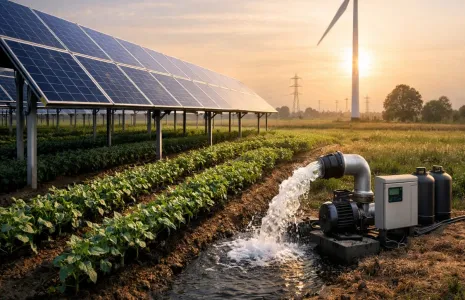
Mumbai, Sept. 15 -- The Union government will launch the second edition of the PM-KUSUM scheme to enable farmers to generate renewable energy alongside crops, Union Minister Pralhad Joshi said on Thursday. PM-KUSUM 2.0 will introduce a model for decentralised renewable energy generation in rural India and is intended to allow continued agricultural activity on the same land. The minister made the remarks on the sidelines of a curtain-raiser for the seventh Agrivoltaics World Conference 2026, scheduled in New Delhi from October 21 to 23.
An official indicated that PM-KUSUM 2.0 is expected to include a dedicated 10 gigawatt (GW) agri photovoltaic component to promote co-location of solar panels with crops. The outlay for the second version is expected to be higher than the first edition, the official added. The Indo?German Cooperation on Agrivoltaics invited proposals from stakeholders including farmers, farmer organisations, renewable energy developers and public institutions.
Proposals will be considered for technical support, viability gap funding and research instrumentation across existing and planned agrivoltaic projects, according to event organisers. The scheme, originally launched in 2019 with an outlay of Rs 344.22 billion (bn), seeks to promote renewable energy in agriculture and help farmers reduce irrigation costs. PM-KUSUM had set a target of adding 34,800 megawatt (MW) of solar capacity by March 2026.
Officials described PM-KUSUM 2.0 as an effort to scale decentralised rural renewables and to support agri photovoltaic systems that maintain crop productivity while generating power. The move is framed as part of wider policy measures to bolster rural renewable infrastructure and to engage local stakeholders in energy transitions. Further operational details and the formal announcement timeline remain subject to government confirmation.
Published by HT Digital Content Services with permission from Construction World.