
Mumbai, July 10 -- Prime Minister Narendra Modi has dedicated the HPCL Rajasthan Refinery Ltd's (HRRL) Integrated Refinery-cum-Petrochemical Complex at Pachpadra, Balotra, Rajasthan, marking the commissioning of India's first greenfield integrated refinery-cum-petrochemical complex. Developed as a joint venture between Hindustan Petroleum Corporation Ltd (HPCL) and the Government of Rajasthan, the refinery has a capacity of 9 million metric tonnes per annum (MMTPA).
Speaking at the inauguration, the Prime Minister said the refinery would strengthen India's energy security while generating long-term employment opportunities in the region.
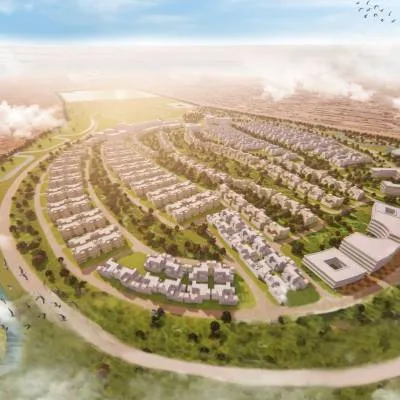
Complementing the refinery is the HRRL Township at Barmer, designed by CP Kukreja Architects. Spread across 248 acres in the Thar Desert, the township has been planned as a climate-responsive residential community to support the refinery's workforce. It integrates residential, institutional, civic and recreational infrastructure while addressing the region's extreme climatic conditions through passive design and sustainable planning.
The master plan draws inspiration from Rajasthan's traditional johad water-harvesting system, around which housing clusters, public amenities and landscaped spaces have been organised. Environmental measures include 100 per cent rooftop rainwater harvesting, a 2-million-litre-per-day sewage treatment plant with dual plumbing for water reuse, 12 recharge pits, solar-powered street lighting, xeriscaping with native plant species and the plantation of over 5,000 indigenous trees. According to the project team, these measures reduce potable water demand by 45 per cent and lower energy demand by 38 per cent through passive cooling strategies.
The township has received the HUDCO Design Award and a 4-Star GRIHA rating under the Large Developments category for its sustainable planning and climate-responsive design.
Architectural features include high thermal mass construction, shaded fenestration, recessed openings, high solar reflectance index (SRI) roof coatings, cross-ventilation, internal courtyards and the use of traditional elements such as jaalis and jharokhas to improve thermal comfort. More than 30 per cent of the site has been retained as functional open space, with over 75 acres dedicated to landscaping, pedestrian movement and community areas.
The development also incorporates schools, anganwadis, retail facilities, a guest house, club, auditorium, township offices and security infrastructure connected through a pedestrian-friendly network, creating an integrated urban environment alongside the refinery.
Published by HT Digital Content Services with permission from Construction World.