
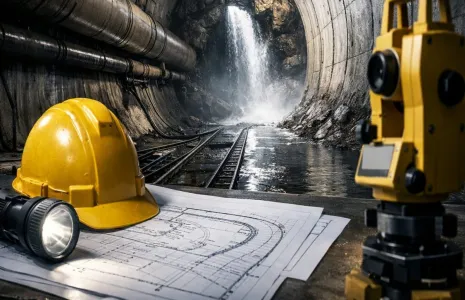
Mumbai, July 21 -- Chief Minister Mohan Yadav will inspect the Sleemanabad water tunnel in Katni district on Friday, a project described as the country's longest of its kind. The tunnel, one of the state's most ambitious irrigation undertakings, has reached the final stage of completion with only a one-metre breakthrough remaining. It is engineered to convey Narmada water by gravity through the Vindhya mountain range into the Son River basin. The scheme is being overseen by state departments responsible for irrigation and water resources.
The structure spans 11.952 km and is a key component of regional water transfer infrastructure. Upon completion 0.245 mn hectares across nearly 1,450 villages in Jabalpur, Katni, Maihar, Satna, Rewa and Panna districts will receive permanent irrigation facilities. The arrangement is intended to transform cropping patterns and bolster the agricultural economy of the Vindhya and Mahakaushal regions. The gravity-fed design removes dependence on energy-intensive pumping for large stretches of the network.
Officials describe the tunnel not merely as a mechanical conduit of concrete and stone but as a bridge with symbolic value for the region. Local folklore holds that the Narmada and Sonbhadra rivers originate in the Maikal range at Amarkantak and flowed in opposite directions, a separation that the scheme symbolically addresses. The project combines engineering scale with cultural resonance in communications from the state. Communications have highlighted both practical benefits and the project's symbolic restoration of the rivers' historical link.
The chief minister's inspection forms part of final verification and oversight ahead of formal commissioning arrangements by state agencies. Completion of the Sleemanabad tunnel will add a major gravity-fed conduit to the state's irrigation network and reduce reliance on lift irrigation for the beneficiary districts. Authorities have underscored the long-term economic and social benefits that permanent water supply will bring to farming communities. Local administrations will co-ordinate distribution networks to translate tunnel capacity into farm-level supply.
Published by HT Digital Content Services with permission from Construction World.