
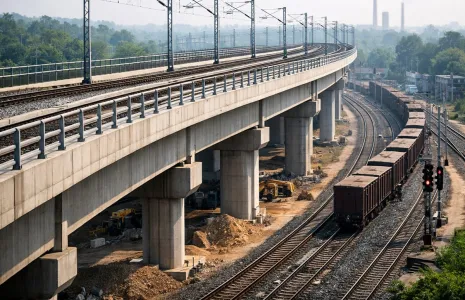
Mumbai, July 7 -- Indian Railways has approved construction of a four point five nine km rail flyover from Bondamunda A Cabin to Bondamunda Link B Cabin in South Eastern Railway at a cost of Rs one point three five billion (Rs 1.35 bn).
The project will decongest the Rourkela-Bondamunda section, a key industrial corridor with rising mining and steel output. The sanction follows analysis of mixed heavy freight and passenger movements through Bondamunda yard. The scheme is part of targeted measures to boost freight capacity.
The section is expected to see growth as SAIL expands the Barsua-Taldih-Kalta mining complex and as Rourkela Steel Plant increases production, alongside planned doubling of this High-Density Network (HDN) route. The flyover will provide grade separation to enable freight trains to bypass passenger lines and reduce crossing conflicts. This engineering measure aims to smooth train paths and lower delays that constrain throughput.
Segregation of heavy freight from passenger operations at Bondamunda Yard will raise line capacity and operational reliability while improving train punctuality. The flyover design will allow continuous movement of long freight rakes without interference from passenger scheduling, thereby lowering detention times and enhancing asset utilisation. Delivery will require coordinated signalling and yard remodelling to integrate the new structure with existing tracks.
Upon commissioning the scheme is expected to enable handling of eight million tonnes per annum (eight mn tpa), strengthening evacuation of minerals and finished industrial products from the corridor. The project has been listed under the Energy, Mineral and Cement Corridor initiative to expedite freight movement and support industrial growth. South Eastern Railway will manage implementation timelines and technical details as part of project execution planning. The approval reflects Indian Railways' emphasis on targeted capacity augmentation to meet rising freight demand.
Published by HT Digital Content Services with permission from Construction World.