
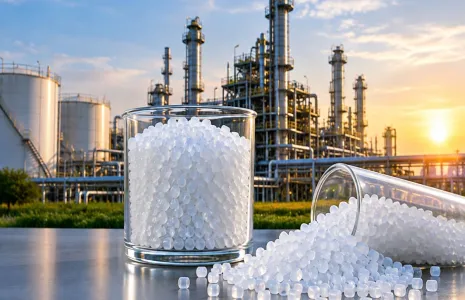
Mumbai, Oct. 6 -- Indian Oil's Gujarat refinery at Koyali is expected to begin producing polypropylene by the end of the current financial year, with the 500,000 t-a-year unit intended to meet part of India's domestic demand and reduce imports. The project forms part of a broader expansion that will raise the refinery's crude-processing capacity to 18 mn t per annum.
The refinery can process 18 mn t of crude at the primary-processing stage, but has not yet sustained that level because secondary facilities required to convert crude streams into finished products are still being completed. Its current operating capacity is about 13.7 mn t, while the expanded level is expected to be achieved by the end of FY27.
The polypropylene unit will use propylene produced through Indian Oil's in-house INDMAX technology. The INDMAX unit has a capacity of about 2.75 mn t a year and is designed to deliver a propylene yield of about 18 per cent of feed, compared with roughly 6 to 10 per cent from a conventional fluid catalytic cracking unit. About 500,000 t of material that could otherwise have become fuel will be converted into polypropylene.
The expansion has already delivered two grassroots facilities this year: a vacuum distillation unit and a lube oil base stock unit with capacity of about 270,000 t. Construction of the polypropylene facility is at an advanced stage. The project was initially estimated at Rs. 175 bn, while later reports placed the cost at about Rs. 190 bn; the refinery's executive director, Biplob Biswas, said Indian Oil had not recorded a cost overrun so far.
Koyali has also started producing NOBS, a speciality chemical, and began exporting it shortly after production commenced. The refinery makes niche products such as aviation gasoline AVGAS 100LL and specialised defence fuels. It also operates a hydrogen dispensing facility and is testing hydrogen buses with Tata Motors, with four buses operating in Delhi after completing their run-in period. The company is gradually moving towards petrochemicals and speciality products as fuel demand is expected to plateau over the next decade.
Published by HT Digital Content Services with permission from Construction World.