
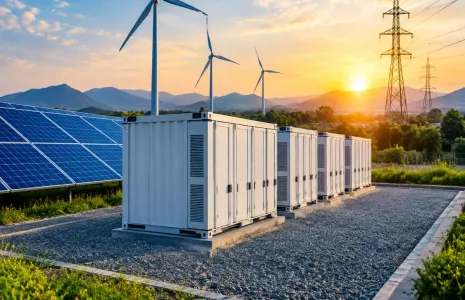
Mumbai, Nov. 5 -- India's target of achieving 500 GW of renewable energy capacity by 2030 depends on the rapid expansion of long-duration energy storage (LDES), with viability gap funding (VGF) in FY28 identified as a critical enabler, according to a report by the India Energy Storage Alliance (IESA) and Customized Energy Solutions. The report said the focus must now move beyond capacity addition towards integrating and optimising renewable resources.
LDES is needed to support grid stability, renewable integration and energy resilience by storing surplus electricity and dispatching it during periods of high demand or weak generation. India curtailed 2.3 terawatt-hours (TWh) of solar power during eight months in 2025 because of grid and storage constraints, highlighting the need for greater flexibility and reduced renewable energy wastage.
The LDES Council estimates that global requirements will reach 8 terawatts (TW) of capacity, equivalent to 140 TWh of storage, by 2040. Against this, 117 GW was operational globally in 2025, meaning deployment must rise nearly 50-fold. Meeting the requirement is expected to involve USD 4 tn in capital investment and could generate about USD 540 bn in annual system-wide savings.
India's Central Electricity Authority has projected a battery energy storage system requirement of 34.5 GWh by FY2027. While 9.3 GWh has been commissioned and 195 GWh of projects have been awarded or put out to tender, the pipeline is concentrated on short-duration systems, creating a need to diversify into technologies capable of extended grid balancing and resource adequacy.
The report identified flow batteries, iron-air batteries, pumped hydro, compressed air and thermal energy storage as options for different applications. It said India also needs a formal statutory definition of LDES and dedicated funding for projects offering eight hours or more of storage. Policy support, technology-neutral investment and new business models were identified as necessary to accelerate deployment.
Published by HT Digital Content Services with permission from Construction World.