
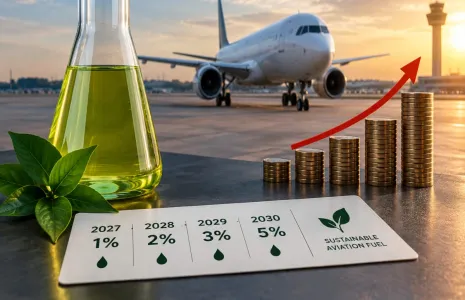
Mumbai, Nov. 9 -- India's draft sustainable aviation fuel (SAF) policy will require airlines to use a 1 per cent blend in 2027, with the mandate rising to 2 per cent in 2028, 3 per cent in 2029 and 5 per cent in 2030. The proposal is expected to increase carriers' fuel costs as SAF currently costs 2 to 3 times more than conventional aviation fuel.
The draft, prepared by the civil aviation ministry, forms part of India's efforts to reduce aviation emissions under the Carbon Offsetting and Reduction Scheme for International Aviation, administered by the UN aviation agency. India's participation in the scheme makes the proposed use of blended aviation fuel mandatory from January 2027.
The initial effect on airline finances is likely to be limited because the required blend will be small, but the pressure could grow as the targets rise. IndiGo, India's largest carrier, reported a net loss of Rs. 18.79 bn in the September quarter, while its fuel bill increased 67.2 per cent to Rs. 99.67 bn. The government is also considering support measures, including a Rs. 5 bn innovation fund, to encourage production.
SAF can be produced from agricultural waste and used cooking oil, and can reduce lifecycle emissions by up to 80 per cent compared with conventional jet fuel. It can be used in existing aircraft engines if it meets prescribed standards, but the effect on fares will depend on availability, production costs, competition and the extent to which airlines can pass on higher expenses.
The policy would place supply obligations on fuel companies, while airlines would be required to use the fuel. Suppliers could meet targets through physical blending or by purchasing credits, and airlines would have to source at least 90 per cent of fuel for international flights from Indian airports. The government plans to support feedstock collection, storage, blending and distribution. India could produce about 10 mn tonnes of SAF annually by 2040, requiring investment of $70-85 bn. The policy is expected to undergo consultation before finalisation.
Published by HT Digital Content Services with permission from Construction World.