
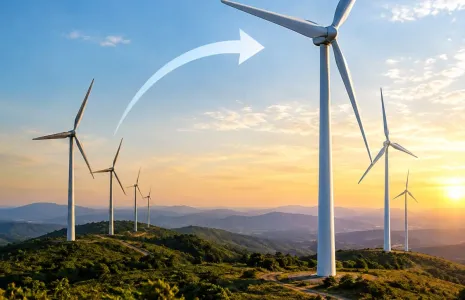
Mumbai, Nov. 16 -- India is examining a plan to repower 5-8 GW of existing wind capacity by replacing ageing turbines with larger, more efficient machines, aiming to raise electricity generation at established sites without requiring additional land. The proposal is being developed as the country seeks to expand renewable power while managing land and grid constraints.
The Indian Wind Turbine Manufacturers Association (IWTMA) has identified the capacity for immediate repowering, with generation at the selected sites potentially rising by nearly 50 per cent, its chief executive Aditya Pyasi said. The association is discussing an implementation plan with the Centre and state governments, with Gujarat, Maharashtra and Karnataka identified as priority wind markets.
Under the proposal, turbines with capacities of up to 2 MW would be replaced by modern units ranging from 3 MW to 5 MW. The approach is intended to reduce land acquisition and right-of-way pressures, since newer machines can produce more power from the same locations. Bloomberg reported the development.
Wind power is important to India's electricity system after sunset, but installations have trailed solar because of land availability challenges and limited battery storage. India added a record 6.3 GW of wind capacity in 2025, although deployment remains below the pace needed to meet the country's 2030 clean energy target of 500 GW.
The Ministry of New and Renewable Energy estimated in 2023 that about 25 GW, nearly 40 per cent of installed wind capacity at that time, consisted of projects using turbines smaller than 2 MW. Such sites can be upgraded with turbines exceeding 5 MW, which can reach stronger wind currents and generate more electricity from the same land area. Internationally, about 178 GW of wind projects commissioned before 2010 are expected to become eligible for retrofitting by 2030, according to the International Renewable Energy Agency, which regards repowering as a way to expand renewable capacity.
Published by HT Digital Content Services with permission from Construction World.