
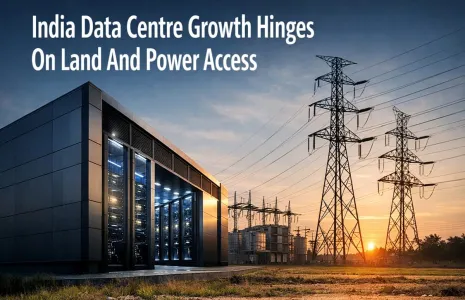
Mumbai, July 28 -- JM Financial has set out an outlook in which India's data centre sector is poised for significant expansion as artificial intelligence (AI), cloud computing and enterprise digitalisation drive demand. The report describes the domestic industry as still nascent despite robust long-term prospects, and it identifies land acquisition, power availability and execution complexity as the factors most likely to shape growth. It states that rising AI workloads and enterprise demand underpin a multi-year investment cycle.
According to the analysis, developers with existing land banks and grid connectivity are positioned to accelerate deployment and gain a competitive edge over those that lack ready sites. Access to land and power is presented as the single biggest differentiator for project timelines and cost structures, and relationships with utilities and regulators are said to materially influence outcomes. The report warns that procurement delays and permitting complexity could slow projects even where financing is available.
It outlines a debate over business models, noting that traditional colocation offers stable revenue via long-term contracts while integrated full-stack infrastructure can deliver higher revenue per megawatt (MW) and stronger customer retention but carries greater technology risk and capital intensity. Providers are described as weighing capital expenditure models against operating expenditure leasing to balance strategic control with execution risk. The document suggests that decisions on capex and opex will vary by firm strategy and access to capital.
Sustainability considerations are highlighted as another major constraint because increasing AI compute drives higher power consumption, prompting enterprises to prioritise energy efficiency and renewable power sourcing. The report indicates that securing renewable supply through procurement arrangements is expected to become an important competitive factor and that maintaining a low power usage effectiveness metric will remain a goal. It also contrasts strategies among leading integrated technology firms, with some focusing on leasing AI-ready infrastructure and others pursuing full-stack AI offerings combining centre assets, compute infrastructure and models. Overall, JM Financial concludes that the sector's long-term outlook is favourable but that land, power, renewable energy and execution efficiency will determine which players emerge as leaders.
Published by HT Digital Content Services with permission from Construction World.