
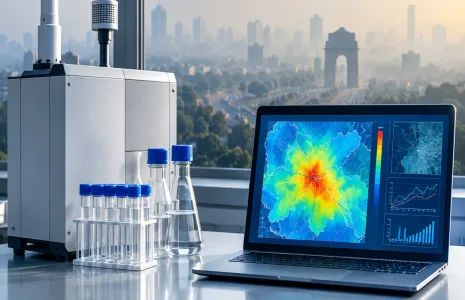
Mumbai, Oct. 29 -- The Central Government has inaugurated the Integrated Atmospheric Chemistry and Aerosol Toxicity Analysis Laboratory (AATAL), described as the world's first facility dedicated to air pollution analysis for the Delhi National Capital Region. The laboratory is designed to forecast pollution levels and analyse their composition at a spatial resolution of 400 metres over the next 72 hours.
AATAL will assess the composition and sources of pollutants, their relative contributions and potential health implications. Its real-time information and advanced forecasts are intended to support timely, targeted measures against deteriorating air quality instead of relying only on general pollution-level assessments.
Union Minister of State for Science and Technology and Earth Sciences Jitendra Singh said Delhi NCR had been selected because of the serious public concern over air pollution. He said the facility would enable authorities to understand not only pollution levels in particular areas but also the origins and composition of the pollutants affecting them.
The laboratory has been established under Mission Mausam to strengthen scientific understanding of atmospheric pollution and provide evidence for air quality management. It combines atmospheric measurement instruments, detailed chemical analysis, pollution source identification and decision-support capabilities in an integrated framework.
The facility can examine atmospheric gases and aerosols, including fine particulate matter known as PM2.5, metals, toxic elements and other components. Scientists will use the data to study how pollutants interact and change in the atmosphere and how individual components contribute to the overall pollution burden. Singh said transportation was contributing approximately 25 per cent of Delhi's pollution at the time of the inauguration, while the overall pollution level was around 180.
AATAL is integrated with IITM's AIRWISE, or Air Quality Warning and Integrated Decision Support System for Emissions. The system combines forecasts, observations and source-apportionment data to support pollution management. It provides forecasts across 400-metre areas for 72 hours, helping authorities assess how conditions may vary across Delhi and identify sources likely to drive worsening air quality in specific locations.
Published by HT Digital Content Services with permission from Construction World.