
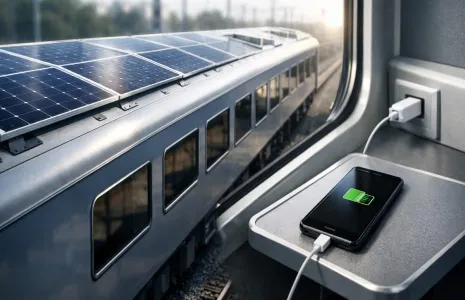
Mumbai, July 28 -- North Central Railway has introduced its first solar-powered coach fitted with rooftop solar panels to power onboard systems and provide charging points for passengers. The development marks a step in Indian Railways' efforts to adopt cleaner and more sustainable technologies for day-to-day operations. The coach demonstrates a practical application of renewable energy within passenger rolling stock.
The panels capture sunlight and convert it into electricity that is routed to lights, fans and other essential electrical equipment inside the coach. Generated power will also feed dedicated charging outlets that allow passengers to top up mobile phones and portable electronics during travel. The configuration reduces reliance on conventional supply while improving energy efficiency of onboard services. The arrangement is intended to complement existing power sources rather than replace them completely.
Passengers are expected to benefit from reliable charging without depending entirely on station facilities or backup power. The facility is targeted at enhancing convenience on long-distance routes where access to power can be intermittent. The move may also support evening and night services by ensuring essential lighting and ventilation remain functional through solar contribution. Crew and maintenance teams will monitor the systems to ensure consistent performance and safety standards.
The introduction follows other green initiatives such as hydrogen-powered traction recently trialled by the national network, and it forms part of a broader sustainability agenda. By offsetting some onboard electricity demand with renewable generation, the coach demonstrates how small-scale solar installations can be integrated into rail operations. Further evaluation of performance in service will determine scalability across more coaches and routes in future. Data gathered from in-service trials will inform decisions on wider adoption and integration with network operations.
Published by HT Digital Content Services with permission from Construction World.