
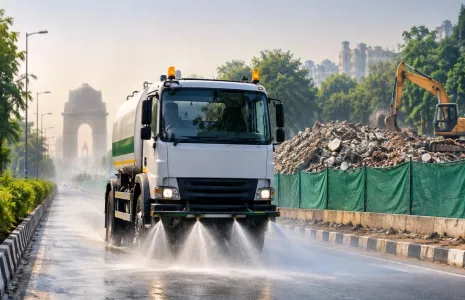
Mumbai, Oct. 27 -- The Municipal Corporation of Delhi (MCD) has intensified measures to combat air pollution through deep cleaning of roads, dust suppression and strengthened enforcement across the capital. Deep cleaning of identified dust-prone roads is under way in all 12 zones, while field teams have been directed to address violations contributing to pollution.
The civic body has designated construction and demolition (C&D) waste dumping sites in all 250 wards to prevent illegal disposal and improve monitoring. A Standard Operating Procedure (SOP) has been prepared and circulated for these sites, requiring dust and wind-breaking walls at least 3 metres higher than the maximum height of material heaps, along with complete covering or regular wetting of materials such as stone aggregates.
The prescribed measures also include specialised fine-nozzle water sprinkling systems across dumping areas and full covering of vehicles transporting C&D waste. Pan-tilt-zoom (PTZ) cameras have been installed at all 125 sites, providing the Delhi Pollution Control Committee (DPCC) with direct feeds for round-the-clock monitoring. Joint Enforcement Teams are checking biomass burning, construction-related dust, unapproved fuels and illegal dumping of waste.
In line with directions from the Commission for Air Quality Management (CAQM), the MCD is working to bring C&D activities within the MALBA Portal to improve compliance monitoring. It has deployed 167 water sprinklers and 40 mobile anti-smog guns (ASGs) on roads, with deployment linked to the different stages of the Graded Response Action Plan (GRAP). A further 20 ASGs are installed at MCD facilities, including C&D processing plants, dumpsites and Waste-to-Energy facilities, while 20 serve high-rise buildings.
Vehicles have been provided to DPCC enforcement teams for inspections across all zones. An interim provision of Rs. 0.5 mn has been released for each zone, and vehicles assigned to special magistrates may also support enforcement and litter-picker operations. MCD Commissioner Sanjeev Khirwar said the programme would require sustained action, strict enforcement and close monitoring, with zonal officers responsible for timely corrective measures and measurable improvements in Delhi's air quality.
Published by HT Digital Content Services with permission from Construction World.