
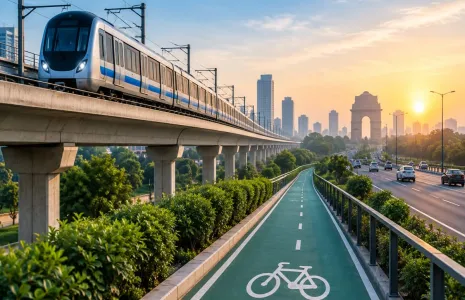
Mumbai, Oct. 29 -- The Delhi Development Authority has proposed expanding the capital's Metro network from 416 km to 695 km under the Master Plan for Delhi 2047. The strategy also includes nearly 200 km of dedicated cycle tracks, alongside measures intended to reduce congestion and improve connections between different modes of transport.
The proposals were discussed at the 11th stakeholder meeting on the plan, held on the directions of Lieutenant Governor Taranjit Singh Sandhu. Representatives from the Municipal Corporation of Delhi, Public Works Department, Delhi Traffic Police, Transport Department, National Highways Authority of India and Delhi Metro Rail Corporation took part in the discussions.
The plan envisages expanding the Namo Bharat regional rapid transit network across the National Capital Region from 82 km to 383 km. Transport hubs at Sarai Kale Khan, Anand Vihar and Kashmere Gate have also been proposed to connect regional rail services, Metro stations and other transport facilities. The measures are intended to improve travel within Delhi and between the capital and neighbouring cities.
The transport strategy places emphasis on last-mile connectivity, safer street design, pedestrian facilities and improved accessibility for persons with disabilities. Proposed infrastructure works include new road links, underpasses, elevated corridors, missing road connections and junction improvements to address gaps and ease movement at congested locations.
Parking is being considered a citywide management issue, with area-specific plans and parking management zones proposed for locations facing high traffic pressure. The framework also includes an integrated system for parking planning, operation and regulation, as well as artificial intelligence-based traffic monitoring and management. An integrated Metropolitan Transport Authority for Delhi has been proposed to improve coordination among agencies.
The latest meeting forms part of the DDA's three-month consultation programme with government departments and other stakeholders. The discussions cover transport planning, infrastructure development and urban mobility, while implementation will depend on subsequent planning, inter-agency coordination and approvals for individual projects.
Published by HT Digital Content Services with permission from Construction World.