
India, Oct. 30 -- Mentioning "medical tourism" used to bring to mind a pretty specific scene. You'd imagine someone hopping on a flight to a tropical getaway for cheap veneers or a quick cosmetic refresh, squeezing in a couple of beach days before heading home. That mental picture is completely out of date.
Today, crossing borders for healthcare is mostly about urgent, high-stakes decisions. People are booking long-haul flights because a family member needs specialized cancer treatment, a neurosurgical consultation, or a complex joint replacement that is either unavailable at home or wildly expensive.
Global metrics show that 14 to 16 million people travel overseas for medical care every year. Yet, finding simple things like itemized quotes or surgeon qualifications often takes weeks of back-and-forth emails with clinic reps. The demand for international care has exploded, but getting transparent data on foreign hospitals is still far more work than it should be.
The High Price of Opaque Information
If you try looking for a foreign clinic on your own, you mostly get ad-heavy landing pages, PR write-ups, and cherry-picked reviews. Getting a clear look at actual surgical outcomes or exact pricing is a completely different story.
Money is clearly the primary reason people seek medical care abroad. Data from US health economics indicates that patients can save between 40% and 80% on major surgeries compared to paying out of pocket at home. While these savings are enticing, they are insignificant if you find yourself in a facility that compromises on basic safety, equipment, or staff training.
Unexpected bills can be a real headache. The quote may include the procedure itself but often excludes costs for things like anesthesia, blood work, or an extra day or two in the recovery ward. When you add language barriers and slow email replies to the mix, too many people end up booking treatments without ever seeing an itemized breakdown of what they're actually paying for.
Cutting Through the Noise: The Power of Direct Comparison
This is where structured healthcare services start making a real difference. Instead of forcing patients to keep twenty browser tabs open – juggling foreign currencies, unfamiliar medical terms, and conflicting clinic websites – centralized platforms pull all that crucial information into one spot.
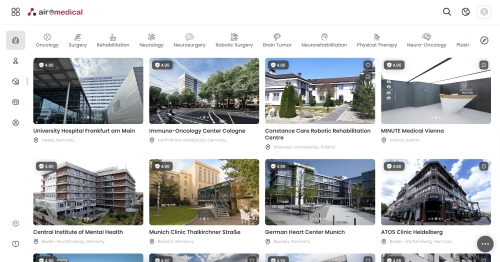
Having everything in one place transforms decision-making. When you can compare clinics side by side, you no longer have to rely on instinct or flashy brochures. Instead, you can examine concrete data, such as the number of procedures a surgeon performs annually, the diagnostic equipment available on-site, and what is included in their base price. Regardless of whether you are looking for a clinic with advanced robotic equipment or a specialized oncology team, this makes it much easier to find options that do not meet your needs.
International hospital comparison tools give you a clear picture of clinic accreditations, doctor experience, and operational standards, free from typical marketing hype.
Decoding Credentials: What Every Patient Must Check
Choosing an institution with modern architecture is one thing, but checking who will actually be holding the scalpel is what ensures patient safety. In international medicine, trusting the statements made by a hospital on its homepage is a dangerous gamble.
There is a good reason why patient surveys consistently show that more than 68% of medical travelers place verified international accreditation – like Joint Commission International (JCI) or ISO certifications – at the top of their checklist when evaluating a provider.
These stamps of approval prove that an institution actually follows strict infection controls, safety protocols, and ongoing quality assessments. Just as important is verifying individual surgeons' backgrounds, board certifications, and actual experience with specific procedures.
That’s why independent rankings and verified healthcare hubs have become so vital to the modern medical travel journey. The airomedical.com platform is an important layer of vetting, checking medical licenses, clinical accreditations, and screening health facilities prior to being listed. These independent services hold institutions to the highest standards, so that patients can spend their time evaluating legitimate, high-quality medical centers, rather than dangerous wild cards.
Virtual Second Opinions: The New Pre-Travel Safeguard
A few years ago, flying overseas for surgery meant landing in a city you didn't know and meeting your surgeon for the first time on pre-op day. That was stressful for obvious reasons. Today, almost nobody does that anymore. Most people start with a video call from their kitchen table.
The process is quite simple. You upload your MRI scans and blood work, and an overseas specialist reviews them before you even check flight prices. If they see something that makes travel a bad idea, you find out immediately – saving you thousands of dollars on a useless flight. If it's a go, you walk through the procedure step by step together. A quick chat like that usually clears up more doubts than hours of digging through clinic marketing.
The True Cost Breakdown: Hidden Expenses to Watch For
Ask anyone who has traveled for care about their biggest frustration, and they will almost certainly mention money. Specifically, the gap between the initial quote provided by a clinic sales team and the actual itemized bill handed over at the end of their stay.
Most unexpected costs in foreign clinics stem from what they exclude from their quoted prices. A surgery package may appear to be a great deal online, but it seldom includes all necessary expenses. Patients often arrive for treatment only to discover that pre-operative blood tests, basic scans, or anesthesiologist fees were not included in the initial price. Additionally, there are smaller costs that can accumulate quickly, such as pain medication, surgical braces, or the need for an extra night or two in the hospital if recovery takes longer than anticipated. By the time patients are discharged, that initially low estimate can look quite different.
That is why it is so important to obtain a detailed offer in advance. When a clinic is required to disclose its actual prices before boarding a flight, you can create a realistic budget, easily arrange international bank transfers, and focus on the treatment instead of dealing with disputes over receipts in the hospital lobby.
Post-Treatment Continuity: The Forgotten Stage of Care
A successful therapy abroad is only part of the story. The real challenge often starts a few weeks later, when you walk into your local doctor’s office back home for a routine checkup. If your discharge paperwork is missing or hard to read, following up on your recovery becomes tricky very fast. To play it safe, they often have to repeat expensive blood work or scans just to verify how you are healing. Having crisp, translated records flips that script entirely. When you walk back into your local clinic with a translated discharge sheet and a direct doctor-to-doctor contact number, your GP doesn't have to guess. They just pick up where the hospital left off without putting you through another round of pointless tests.
From Research to Recovery: The Full Journey
Choosing where to go for treatment is really just chapter one of a much longer story. How smoothly the rest of the journey goes often determines the overall success of the medical outcome and the patient’s peace of mind.
Organizing a trip for surgery comes with a ton of hidden chores. Getting medical charts translated and securing visas is hard enough on its own. Doing all that while trying to book flights for a patient who can barely sit upright for a few hours is a nightmare. Once you land, you still have to deal with taxi drivers, foreign hospital intake forms, and doctors who might only speak basic English.
This logistical maze is why comprehensive digital platforms have become so vital for today's medical traveler. By offering a fully supported path for planning treatment abroad, these services strip away administrative friction. Patients receive dedicated case managers who look after every single detail – from initial pre-travel consultations all the way to post-treatment follow-ups after returning home – making sure care remains seamless throughout the entire process.
The New Standard in Global Healthcare
People travel abroad for various types of medical care today – whether that's advanced oncology, cardiac procedures, fertility treatments, or dental work. For many, it’s simply the only way to access specialized help without enduring long waits or incurring substantial debt. The main issue has never been the quality of medicine abroad. It has always been the uncertainty. Dealing with foreign clinics, unverified reviews, and unexpected costs is an unnecessary burden when your health is at stake.
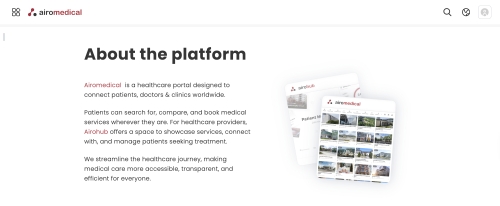
That is why patients turn to healthcare hubs like Airomedical. Instead of leaving you to figure out clinics on your own, they throw verified doctor specs, full price sheets, and travel help into a single dashboard. When you can actually review hard data before handing over a deposit, the whole process loses its scare factor. Booking care abroad goes from a blind leap of faith to just another logical decision for your health.
References
Al-Ahmadi, H., & Thompson, R. E. Financial transparency and unexpected out-of-pocket costs in cross-border healthcare: A multi-center patient survey. Journal of Global Health Economics and Policy. 2022.
Dr. Volvak Marta & Dr. Ahmed F. Best Hospitals In Germany - TOP 25. Airomedical. Updated 2025.
Lunt, N., Smith, R., Exworthy, M., Green, S. T., Horsfall, D., & Mannion, R. International patient mobility and the global market for medical travel: Trends, metrics, and governance. World Health Organization & OECD Publishing. 2021.
Kozina J. & Dr. Volvak Marta. Top 10 Best Cancer Hospitals In Germany. Airomedical. Updated 2026.
Medical Tourism Association (MTA). Global Medical Tourism Patient Survey & Cost Comparison Index. MTA Research Publications. 2023.
Whittaker, A., & Speier, A. (2021). The burden of opacity: Information asymmetry and credential verification in cross-border medical markets. Social Science & Medicine. 2021.
Disclaimer: This is a Press Release distributed by HT Syndication. For queries write to contentservices@htdigital.in